Authored by Andrew Korybko via Substack,
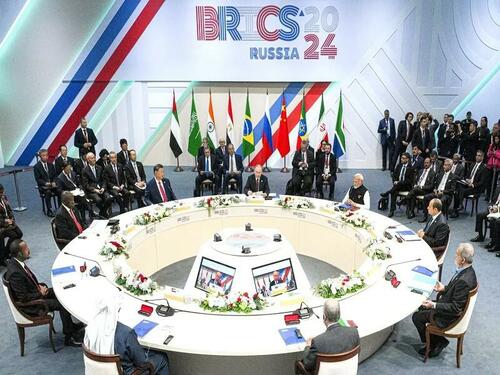
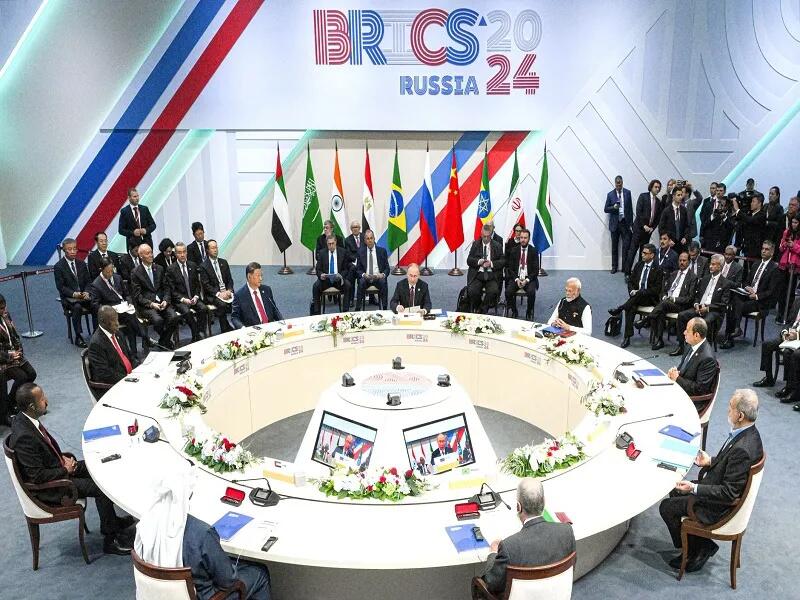
Over a week has passed since the latest BRICS Summit in Kazan so it’s possible to assess what exactly it achieved now that the dust has settled. The primary takeaway is the Kazan Declaration, which Director General of the prestigious Russian International Affairs Council (RIAC) Andrey Kortunov described as “a manifesto for the new world order”. His praise shouldn’t be taken lightly since he’s an archetypical realist who also earlier tempered expectations about what BRICS was capable of agreeing to.
Titled “What BRICS Cannot and What It Can Deliver”, Kortunov explained that: “BRICS cannot become a global economic integration project”; BRICS will not turn into a multilateral political or security alliance of an anti-Western nature”; BRICS is not likely to contribute a lot to resolving disputes between its members or disputes between its members and third parties”; and “BRICS will never become an analogue to G7.”
He then juxtaposed these assessments with his expectations that “BRICS can promote trade and investments among its members, as well as contribute to economic and social development of these members”; “BRICS could help to shape common non-Western approaches to global problems”; “BRICS is capable of contributing to the dialogue of civilizations”; and “BRICS can become an important source of ideas and proposals for UN, G20 and other universal bodies.”
This background places his description from the introduction into context, which will now be elaborated on. According to Kortunov, “For the first time in BRICS’ history, the Declaration sets out in detail the group’s shared vision of the current state of the international system, the common or overlapping approaches to the fundamental global problems of our time and to acute regional crises, and the contours of a desirable and achievable world order as the members of the group currently see it.”
He then immediately added that “While the document does not provide specific timetables for individual tasks or roadmaps for specific areas of work, it does cover a number of key objectives that the group should or could pursue over the next few years.” In his assessment, “there is a clear balance between the security and development agendas”, which he considers to be a deliberate choice “to maintain its very broad mandate” instead of focusing on purely economic and financial affairs.
He thus surmised that “BRICS intends to position itself as a multitasking laboratory of global governance, where new algorithms of multilateral cooperation and innovative models for solving the world’s major economic and political problems can be tested, including trade, finance and strategic stability.” To that end, BRICS is balancing between reforming the Western-centric world order and creating alternative institutions, and it’s the latter which excites the group’s enthusiasts the most.
Before proceeding, however, it’s important to clarify a few matters. Putin declared prior to the summit that a common BRICS currency isn’t currently being considered and then he said during the event that Russia isn’t fighting against the dollar. Kremlin spokesman Peskov later added that BRICS as a whole isn’t trying to defeat the dollar either and that their financial messaging service won’t be an alternative to SWIFT. These policy reminders bring the analysis around to discussing the group’s three main initiatives.
Sputnik published a handy guide here about BRICS Bridge, BRICS Clear, and BRICS Pay, which are correspondingly a financial messaging service, an independent blockchain-based depository system, and a cashless payment service. As was earlier written, they don’t aim to replace their Western antecedents but simply to create alternatives for others to use in order to hedge against the risk of the West one day weaponizing these existing platforms against them like they did against Russia from 2022 onward.
None of them have yet to be rolled out, but progress was made on their creation and eventual implementation during the summit. The same goes for Russia’s proposals to set up grain and precious metals exchanges, which could in theory help form the foundation for a new currency or at least a common unit of account that some have simply called “the unit”. This could consist of a combination of commodities and a basket of members’ currencies, but it’ll likely take years to agree upon, if ever.
Much more successful was BRICS’ bestowing of partnership status on around a dozen countries, though no official list has yet to be published, but some countries like Cuba already celebrated receiving this status while others like Venezuela were upset that they didn’t get it (in this case due to Brazil’s veto). Even so, it was explained last month that “BRICS Membership Or Lack Thereof Isn’t Actually That Big Of A Deal”, namely because any country can voluntarily coordinate their financial policies with BRICS.
In other words, while this distinction is prestigious and being snubbed like Venezuela was by Brazil is thus a deep insult, it doesn’t really matter whether any country participates in discussions on financial multipolarity processes as an official member, observers as a partner, or hears about the outcome afterwards. All cooperation is voluntary so anyone – be they a member, partner, or non-associate – can either implement BRICS’ proposals or decline if they feel that they don’t meet their national interests.
Seeing as how one’s ties with BRICS therefore don’t really matter either way, the group’s partnership expansion is thus purely symbolic, which means that nothing of tangible significance was agreed to during last week’s summit. The same came be said about every prior summit apart from the Fortaleza one in 2014 where members agreed to create the New Development Bank (NDB), which is the only tangible manifestation of BRICS’ efforts to create alternative institutions, but it’s also clearly imperfect.
NDB President Dilma Rousseff confirmed in July 2023 that “The NDB reiterated that it is not planning new projects in Russia and operates in compliance with applicable restrictions on international financial and capital markets.” Simply put, the NDB that Russia itself co-founded complies with the US’ sanctions against it, thus making this less of a real alternative to Western institutions and more of a complement. That might also have to do with China, where it’s based, complying with most Western sanctions.
“Russia & China’s US-Provoked Payment Problems Caught Most BRICS Enthusiasts By Surprise” after RT revealed the extent of these long-running challenges in early September here once they began to reach critical proportions following the latest US pressure on China at the time. Although India is reportedly defying these restrictions and is on pace to become the world’s third-largest economy by 2030, without China doing the same, BRICS as a whole will struggle to create truly alternative institutions.
China has been more cautious about provoking the US’ threatened secondary sanctions than India due to it being considered by the US to be a systemic rival, the perception of which it doesn’t want to inadvertently confirm, hence why it’s complied with so many of the sanctions so far. In fact, Russia's Special Presidential Representative for SCO Affairs Bakhtiyor Khakimov revealed last week that his country can’t even pay its dues because the bank is located in China and they also only use dollars.
If the political will was present, then China would have devised a workaround by now instead of dragging the issue on for so long that Khakimov felt compelled to complain to the public about it, which just goes to show how strictly China is complying with the sanctions inside BRICS and even the SCO. To be sure, bilateral trade continues to grow so some alternative channels have been created, but they’re seemingly segmented based on industry (ex: energy, tech) and don’t facilitate payments to others like the NDB.
Reflecting on everything that was shared, both Kortunov’s insight and that which followed, the latest BRICS Summit was symbolic just like every prior one apart from 2014’s that led to the creation of the clearly imperfect NDB. BRICS’ purely voluntary nature means that it’ll never become what its enthusiasts expect since there are too many asymmetries between its members. There’s also no realistic chance of BRICS making compliance with its proposals mandatory either since that would lead to its dissolution.
These observations greatly limit what BRICS could foreseeably achieve, but they don’t rule out the creation of more alternative institutions like those represented by BRICS Bridge, BRICS Clear, and BRICS Pay. Grain and precious metals exchanges are also possible, but in those cases, only on the basis of minilaterals within BRICS that are then given the group’s branding after everyone else agrees. A common BRICS currency or a common unit of account is a much longer-term goal that’s unobtainable for now.
The disappointing precedent established by the NDB’s compliance with US sanctions makes one worry about just how much of a true alternative the abovementioned institutions that Russia seeks to also co-found will be. There’s no doubt that Russia learned from that experience so nobody should assume that it already invested the time and resources required for creating these new institutions without first devising a way to prevent them from sanctioning it too, but it remains to be seen how this will work.
The conclusion is that it’s a lot easier to talk about creating truly alternative institutions than actually doing so, which means that BRICS will likely just remain a talking club, or a “multitasking laboratory of global governance” as Kortunov diplomatically described it. That’s not to downplay the group’s role since it’s important for major and developing non-Western countries to discuss pressing issues of the evolving world order, especially economic-financial ones, but that’s not the same as what enthusiasts expected.
At the end of the day, the Alt-Media Community went overboard hyping up BRICS and the latest Kazan Summit, only for nothing of tangible significance to emerge from the first since 2014’s decision to create the clearly imperfect NDB that later sanctioned Russia while the second had no tangible outcome at all. The latter did indeed lay the basis for creating more alternative institutions, although it’s unclear when they’ll be unveiled and how Russia will ensure that they don’t sanction it like the NDB ended up doing.
The Kazan Summit therefore wasn’t a failure, and in fact, it succeeded in its only realistic goal all along of gathering its members and partners together to discuss ways to voluntarily accelerate financial multipolarity processes such as through the increased use of national currencies. The outcome was always going to be more symbolic than tangible due to the group’s purely voluntary nature, though some observers had false expectations and thus feel bitter, but now they know what BRICS is really about.
Authored by Andrew Korybko via Substack,
Over a week has passed since the latest BRICS Summit in Kazan so it’s possible to assess what exactly it achieved now that the dust has settled. The primary takeaway is the Kazan Declaration, which Director General of the prestigious Russian International Affairs Council (RIAC) Andrey Kortunov described as “a manifesto for the new world order”. His praise shouldn’t be taken lightly since he’s an archetypical realist who also earlier tempered expectations about what BRICS was capable of agreeing to.

Titled “What BRICS Cannot and What It Can Deliver”, Kortunov explained that: “BRICS cannot become a global economic integration project”; BRICS will not turn into a multilateral political or security alliance of an anti-Western nature”; BRICS is not likely to contribute a lot to resolving disputes between its members or disputes between its members and third parties”; and “BRICS will never become an analogue to G7.”
He then juxtaposed these assessments with his expectations that “BRICS can promote trade and investments among its members, as well as contribute to economic and social development of these members”; “BRICS could help to shape common non-Western approaches to global problems”; “BRICS is capable of contributing to the dialogue of civilizations”; and “BRICS can become an important source of ideas and proposals for UN, G20 and other universal bodies.”
This background places his description from the introduction into context, which will now be elaborated on. According to Kortunov, “For the first time in BRICS’ history, the Declaration sets out in detail the group’s shared vision of the current state of the international system, the common or overlapping approaches to the fundamental global problems of our time and to acute regional crises, and the contours of a desirable and achievable world order as the members of the group currently see it.”
He then immediately added that “While the document does not provide specific timetables for individual tasks or roadmaps for specific areas of work, it does cover a number of key objectives that the group should or could pursue over the next few years.” In his assessment, “there is a clear balance between the security and development agendas”, which he considers to be a deliberate choice “to maintain its very broad mandate” instead of focusing on purely economic and financial affairs.
He thus surmised that “BRICS intends to position itself as a multitasking laboratory of global governance, where new algorithms of multilateral cooperation and innovative models for solving the world’s major economic and political problems can be tested, including trade, finance and strategic stability.” To that end, BRICS is balancing between reforming the Western-centric world order and creating alternative institutions, and it’s the latter which excites the group’s enthusiasts the most.
Before proceeding, however, it’s important to clarify a few matters. Putin declared prior to the summit that a common BRICS currency isn’t currently being considered and then he said during the event that Russia isn’t fighting against the dollar. Kremlin spokesman Peskov later added that BRICS as a whole isn’t trying to defeat the dollar either and that their financial messaging service won’t be an alternative to SWIFT. These policy reminders bring the analysis around to discussing the group’s three main initiatives.
Sputnik published a handy guide here about BRICS Bridge, BRICS Clear, and BRICS Pay, which are correspondingly a financial messaging service, an independent blockchain-based depository system, and a cashless payment service. As was earlier written, they don’t aim to replace their Western antecedents but simply to create alternatives for others to use in order to hedge against the risk of the West one day weaponizing these existing platforms against them like they did against Russia from 2022 onward.
None of them have yet to be rolled out, but progress was made on their creation and eventual implementation during the summit. The same goes for Russia’s proposals to set up grain and precious metals exchanges, which could in theory help form the foundation for a new currency or at least a common unit of account that some have simply called “the unit”. This could consist of a combination of commodities and a basket of members’ currencies, but it’ll likely take years to agree upon, if ever.
Much more successful was BRICS’ bestowing of partnership status on around a dozen countries, though no official list has yet to be published, but some countries like Cuba already celebrated receiving this status while others like Venezuela were upset that they didn’t get it (in this case due to Brazil’s veto). Even so, it was explained last month that “BRICS Membership Or Lack Thereof Isn’t Actually That Big Of A Deal”, namely because any country can voluntarily coordinate their financial policies with BRICS.
In other words, while this distinction is prestigious and being snubbed like Venezuela was by Brazil is thus a deep insult, it doesn’t really matter whether any country participates in discussions on financial multipolarity processes as an official member, observers as a partner, or hears about the outcome afterwards. All cooperation is voluntary so anyone – be they a member, partner, or non-associate – can either implement BRICS’ proposals or decline if they feel that they don’t meet their national interests.
Seeing as how one’s ties with BRICS therefore don’t really matter either way, the group’s partnership expansion is thus purely symbolic, which means that nothing of tangible significance was agreed to during last week’s summit. The same came be said about every prior summit apart from the Fortaleza one in 2014 where members agreed to create the New Development Bank (NDB), which is the only tangible manifestation of BRICS’ efforts to create alternative institutions, but it’s also clearly imperfect.
NDB President Dilma Rousseff confirmed in July 2023 that “The NDB reiterated that it is not planning new projects in Russia and operates in compliance with applicable restrictions on international financial and capital markets.” Simply put, the NDB that Russia itself co-founded complies with the US’ sanctions against it, thus making this less of a real alternative to Western institutions and more of a complement. That might also have to do with China, where it’s based, complying with most Western sanctions.
“Russia & China’s US-Provoked Payment Problems Caught Most BRICS Enthusiasts By Surprise” after RT revealed the extent of these long-running challenges in early September here once they began to reach critical proportions following the latest US pressure on China at the time. Although India is reportedly defying these restrictions and is on pace to become the world’s third-largest economy by 2030, without China doing the same, BRICS as a whole will struggle to create truly alternative institutions.
China has been more cautious about provoking the US’ threatened secondary sanctions than India due to it being considered by the US to be a systemic rival, the perception of which it doesn’t want to inadvertently confirm, hence why it’s complied with so many of the sanctions so far. In fact, Russia’s Special Presidential Representative for SCO Affairs Bakhtiyor Khakimov revealed last week that his country can’t even pay its dues because the bank is located in China and they also only use dollars.
If the political will was present, then China would have devised a workaround by now instead of dragging the issue on for so long that Khakimov felt compelled to complain to the public about it, which just goes to show how strictly China is complying with the sanctions inside BRICS and even the SCO. To be sure, bilateral trade continues to grow so some alternative channels have been created, but they’re seemingly segmented based on industry (ex: energy, tech) and don’t facilitate payments to others like the NDB.
Reflecting on everything that was shared, both Kortunov’s insight and that which followed, the latest BRICS Summit was symbolic just like every prior one apart from 2014’s that led to the creation of the clearly imperfect NDB. BRICS’ purely voluntary nature means that it’ll never become what its enthusiasts expect since there are too many asymmetries between its members. There’s also no realistic chance of BRICS making compliance with its proposals mandatory either since that would lead to its dissolution.
These observations greatly limit what BRICS could foreseeably achieve, but they don’t rule out the creation of more alternative institutions like those represented by BRICS Bridge, BRICS Clear, and BRICS Pay. Grain and precious metals exchanges are also possible, but in those cases, only on the basis of minilaterals within BRICS that are then given the group’s branding after everyone else agrees. A common BRICS currency or a common unit of account is a much longer-term goal that’s unobtainable for now.
The disappointing precedent established by the NDB’s compliance with US sanctions makes one worry about just how much of a true alternative the abovementioned institutions that Russia seeks to also co-found will be. There’s no doubt that Russia learned from that experience so nobody should assume that it already invested the time and resources required for creating these new institutions without first devising a way to prevent them from sanctioning it too, but it remains to be seen how this will work.
The conclusion is that it’s a lot easier to talk about creating truly alternative institutions than actually doing so, which means that BRICS will likely just remain a talking club, or a “multitasking laboratory of global governance” as Kortunov diplomatically described it. That’s not to downplay the group’s role since it’s important for major and developing non-Western countries to discuss pressing issues of the evolving world order, especially economic-financial ones, but that’s not the same as what enthusiasts expected.
At the end of the day, the Alt-Media Community went overboard hyping up BRICS and the latest Kazan Summit, only for nothing of tangible significance to emerge from the first since 2014’s decision to create the clearly imperfect NDB that later sanctioned Russia while the second had no tangible outcome at all. The latter did indeed lay the basis for creating more alternative institutions, although it’s unclear when they’ll be unveiled and how Russia will ensure that they don’t sanction it like the NDB ended up doing.
The Kazan Summit therefore wasn’t a failure, and in fact, it succeeded in its only realistic goal all along of gathering its members and partners together to discuss ways to voluntarily accelerate financial multipolarity processes such as through the increased use of national currencies. The outcome was always going to be more symbolic than tangible due to the group’s purely voluntary nature, though some observers had false expectations and thus feel bitter, but now they know what BRICS is really about.
Loading…