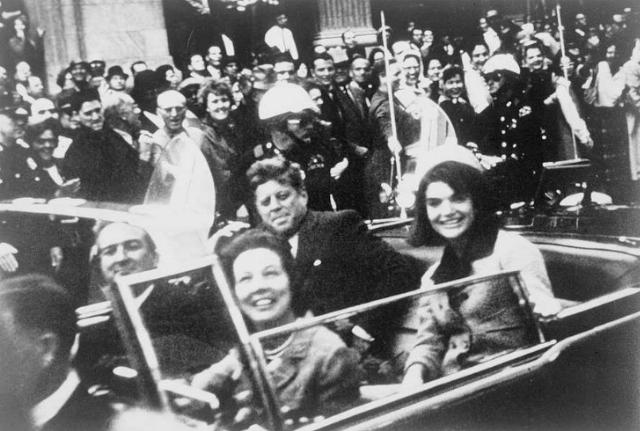
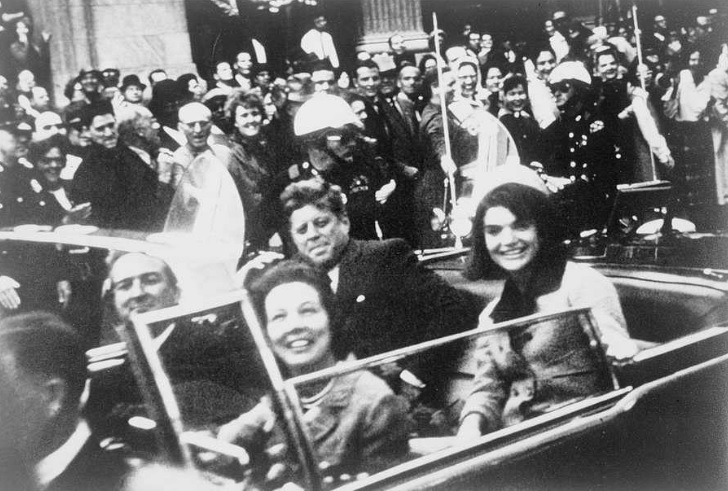
Victor Hugo King
If John Connally were the intended target, most of the wild conspiracy theories of the assassination that have been circulating for decades (and selling books) collapse of their own weight.The Warren Commission’s basic conclusion was that Lee Harvey Oswald shot President Kennedy from the 6th floor of the Texas School Book Depository (TSBD) and that there was no evidence of any conspiracy.
Yet the Trump Administration’s recent release of thousands of pages of JFK assassination material may well support the skeptic’s theory that Oswald didn’t act alone and that nefarious U.S. intelligence agencies may have been involved in the planning and execution of the assassination.
In that regard, a Congressional hearing (May 24, 2025) heard testimony about possible CIA involvement in an assassination cover-up.
But what if both the Warren Commission and the conspiracy theorists are wrong about what really happened in Dealey Plaza? What if President Kennedy were actually killed by mistake and what if the real target was Governor John B. Connally? That’s the fascinating theory of retired IBM engineer Pierre Sundborg who maintained that Lee Oswald had the means, motive, and opportunity to shoot John Connally. (Pierre Sundborg, Tragic Truth: Oswald Shot Kennedy by Accident).
Motive
Sundborg argued that Lee Oswald held a strong grudge against John Connally—but none against JFK—that stemmed from Lee’s discharge from the U.S. Marines. Oswald had served only 3 years in the Marines when he applied for a “dependency discharge” based on his mother’s dire financial condition (Warren Report 688). The Marines went ahead and granted Oswald an early release and an “honorable” discharge, but then later changed it to “undesirable for reasons of unfitness” after he fled to Russia (Warren Commission Hearings XIX 699).
The Marines claimed that Oswald had renounced his U.S. citizenship in Russia (he hadn’t) and that he had threatened to reveal military secrets since he had been a radar operator in Japan (Warren Report 683). In his letters protesting the change in his discharge status, Oswald asserted that neither allegation was true and that the discharge change, therefore, had been “unfair and prejudicial.” He also wrote that he intended to “employ all means to right this great mistake….” (Warren Report 710). Indeed he would.
Oswald sent two separate hand-written letters of appeal to the Navy. The first was directed to “John B. Connally, Secretary of the Navy” who forwarded it to the U.S. Marine authorities, who then summarily rejected Oswald’s appeal (Warren Commission Hearings XIX 693). Strike one. When Oswald left Russia and was back in Texas, he sent a far-longer letter to the Navy Discharge Review Board with the same request (Warren Commission Hearings XVII 651–657). But Lee Oswald was killed (by Jack Ruby) before the Navy ruled on the matter. Strike two.
Oswald’s several letters to the Navy were filled with moral outrage over the way his Marine discharge had been handled. (The Marines operate under the authority of the Navy). He argued that his service in the Marines had been honorable—debatable as he had been court-martialed twice (Warren Report 684)—and that his private activity after he left the military (his temporary residence in Russia) broke no U.S. laws. As a consequence, he requested that his discharge circumstances be reviewed and demanded that the “damage that had been done to me and my family” be repaired (Warren Report 710). But it never was. Strike three.
This discharge issue was important for several reasons. The first is that Oswald always admired his older brother Robert, and Robert Oswald had served a full 6-year term in the Marines and had been honorably discharged. Yet younger brother Lee would forever bear the family shame of an undesirable discharge (a “yellow sheet discharge”) because he had been declared “unfit.” The second is that Oswald understood that “undesirable” on his service record would hinder any serious employment opportunities (true) and, perhaps, even prevent him from getting a driver’s license back home in Texas. John Connally, by the way, was now the governor of Texas.
But even aside from the discharge controversy, Oswald likely resented John Connally for purely political reasons. Connally, unlike Jack Kennedy, was a far-right conservative on domestic and foreign policy issues. Oswald, the self-proclaimed “hunter of fascists” (House Select Committee on Assassinations, XII 256) may well have considered him the same way he fashioned General Edwin Walker: a proto-fascist that needed to be eliminated. After all, by November 22, 1963, Oswald had already taken a rifle shot at Walker…and missed.
Same shooter, same rifle, same political motivation.
All of these factors are relevant to understanding Lee Oswald’s deep-felt resentment toward Navy and Marine authorities and—given Oswald’s eccentric personality—toward John Connally himself.
Finally, there may exist some “best evidence” that Oswald planned to kill John Connally. After the assassination, two Secret Service agents—James M. Howard and Charles Kunkel—recovered Oswald’s diary from Marina Oswald. The two agents read through the diary several times before they turned it over to the FBI. They maintained that Oswald had scribbled a “kill list” on one of the pages and that John Connally’s name (among others including General Edwin Walker) had been on that list (Tragic Truth, pp 533–548). They also claimed that when several pages of the diary were published later by the Warren Commission, the kill list page had been suspiciously removed. The missing page rip is actually visible in the photo exhibit (Warren Commission Hearings, Exhibit 18). That page has never been recovered.
Means and Opportunity
If John Connally really were the target, why didn’t Oswald shoot as the motorcade approached the Texas School Book Depository (TSBD)? That would have been the easier shot. The answer is remarkably simple: Connally could not be seen clearly. (Tragic Truth, pp 530–532). Three factors obscured Connally from the sniper’s nest: one, the large front windshield of the Lincoln with the upturned visors; two, SS Agent Roy Kellerman, who was seated in front of John Connally; and three, a large metal bracket used to secure the “bubble top” which, of course, was not in place. Can’t see him…can’t shoot him.
However, once the motorcade moved past the TSBD down Elm Street, the car windshield, Agent Kellerman, and the roof brace were no longer an issue. Three shots were then fired from the sniper’s nest in approximately 6–8 seconds. The first shot missed the Lincoln limo completely; a fragment hit a bystander in the cheek. The second shot struck JFK in the upper right shoulder area, passed through his throat, hit John Connally in the right back, and continued on to damage his chest, ribs, and wrist. (Nellie Connally immediately pulled her husband toward her and down, probably saving his life.) The third shot—likely aimed where Connally was a moment earlier—went on to strike JFK in the upper right posterior of the skull (Zapruder frame 312).
In conclusion, Lee Oswald had strong motives to shoot John Connally but not JFK. Moreover, he was shooting with a cheap bolt-action rifle and 4-power scope that was slightly “misaligned”—House Select Committee on Assassinations Vol. VII 371-372 assert this: “[T]he very slight misalignment of Oswald’s scope may actually have aimed the rifle slightly toward Kennedy if the scope was centered on Connally….” Thus, it is reasonable to conclude that John Connally—and not President Kennedy—may well have been the intended target of the assassination.
Final Thoughts
If John Connally were the intended target, most of the wild conspiracy theories of the assassination that have been circulating for decades (and selling books) collapse of their own weight.
No one fired any shots from the grassy knoll or from the storm drain. The Zapruder film was not altered to hide shots from the front. There was no pre-autopsy surgery of JFK’s head wounds at Bethesda. The U.S. intelligence community was not involved in the planning and execution of the assassination. And, most importantly, Kennedy was not murdered to affect any “regime change”, although changes in U.S. foreign policy may well have been an unintended consequence of the killing.
The fact remains that we don’t need any conspiracy theory to understand the tragic events in Dallas. Occam’s razor, motive, physical evidence (the rifle, bullet casings, etc.) and plain common sense can best explain the assassination. According to Tragic Truth, Lee Harvey Oswald was probably just a malcontent with a grudge who intended to murder John Connally (he almost did) but ended up killing JFK instead.
Dom Armentano is Professor Emeritus in Economics at the University of Hartford in Connecticut. He is the author of “Antitrust & Monopoly: Anatomy of a Policy Failure”. Aside from writing hundreds of articles and op/eds on regulatory policy over the years, he has also written often on events surrounding the Kennedy assassination.
<img alt captext="Victor Hugo King” src=”https://conservativenewsbriefing.com/wp-content/uploads/2025/06/a-jfk-assassination-riddle-was-john-connally-the-target.jpg”>
Image: Public domain.