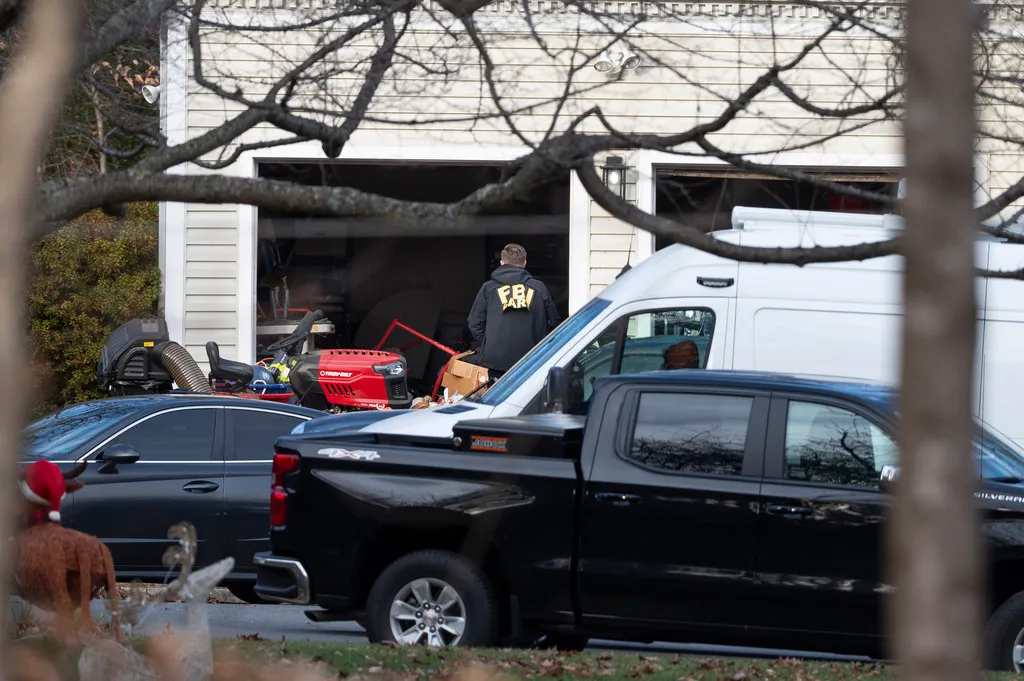
A Virginia man charged with planting pipe bombs outside the Democratic and Republican National Committee headquarters on the eve of the Jan. 6 Capitol riot had allegedly been stockpiling bomb components for more than a year before placing the bombs, even continuing to purchase parts afterwards, according to a newly unsealed FBI affidavit.
Federal agents arrested Brian Cole Jr., 30, of Woodbridge, early Thursday morning. Cole faces charges of transporting explosives across state lines with intent to kill or injure and attempted malicious destruction, with officials saying additional counts are possible.
The FBI said in the affidavit that cellphone location data and a license plate capture of Cole’s in the area on the night of the crime also helped them identify Cole as the pipe bomb suspect.
According to an affidavit dated Dec. 3, Cole’s bank and credit card records show that as early as fall 2019, Cole began purchasing the same electrical wire, battery connectors, kitchen timers, steel wool, end caps, and galvanized pipe used in the devices planted on Jan. 5, 2021. The FBI stated that he made purchases from Home Depot, Lowe’s, Walmart, and Micro Center stores across northern Virginia, and that records link him to the exact brands and manufacturers used in the bombs.
Investigators say he bought at least six galvanized pipes matching the bomb casings, 14 end caps, multiple 9-volt battery connectors from a distributor that sold fewer than 8,000 nationwide, and two white kitchen timers matching those recovered at the scene. Agents also detailed a series of purchases of tools—wire strippers, sandpaper, a machinist’s file, and safety gear—consistent with home manufacturing.
Strikingly, Cole continued buying bomb components even after Jan. 6, including more galvanized pipe, timers, and batteries purchased between Jan. 21 and Jan. 23, 2021, according to the affidavit.
Surveillance trail and cell-tower mapping
The affidavit lays out a detailed reconstruction of the pipe bomber’s movements between 7:34 p.m. and 8:18 p.m. on Jan. 5, 2021. Surveillance footage released years ago by the FBI showed a masked figure in a gray hoodie, Nike Air Max Speed Turf sneakers, gloves, and glasses carrying a backpack through Capitol Hill’s residential blocks.
A forensic height analysis conducted in 2021 placed the bomber at approximately 5’7”, within one inch of Cole’s recorded height.
The FBI’s Cellular Analysis Survey Team matched pings from Cole’s cellphone to specific towers and near the RNC and DNC at times that align almost perfectly with the movements caught on surveillance video. A license plate reader also captured his 2017 Nissan Sentra as it turned off I-395 into the Capitol Hill area, minutes before the footage shows the suspect appearing on foot.
Cole had limited spending history in Washington, D.C., but the FBI cited a notable Dec. 14, 2020, restaurant purchase he made three weeks before the pipe bombs were placed. The restaurant was located directly across from Rumsey Court, the same alley where the bomber was filmed walking shortly before planting one of the devices.
FBI leadership touts case after years of scrutiny
FBI Deputy Director Dan Bongino, who has said the case was a top priority since joining the bureau in March, said at a news conference that the arrest was the result of grinding forensic work, rather than new leads. In fact, FBI and DOJ leaders stated that they collected no new evidence in the case and instead solved it by examining existing evidence from the Biden DOJ.
“You’re not going to walk into our capital city, put down two explosive devices and walk off into the sunset,” Bongino said. “We were gonna track this person to the end of the earth.”
Attorney General Pam Bondi said there was “no new tip” and “no new witness” that led to the identification of a suspect, adding that the bureau and its partner agencies succeeded only after revisiting evidence long in hand. The case had become a symbol of the FBI’s investigative lapses under former Director Christopher Wray, stoking speculation about the political motives of the FBI’s failure to follow the evidence it had.
FBI Director Kash Patel said agents sifted through three million lines of data, including years of cell-tower records and video surveillance.
“When you develop evidence, you get a search warrant. When you get a search warrant, you get an address. When you get an address, you hit the house, and that’s what we did,” Patel said.
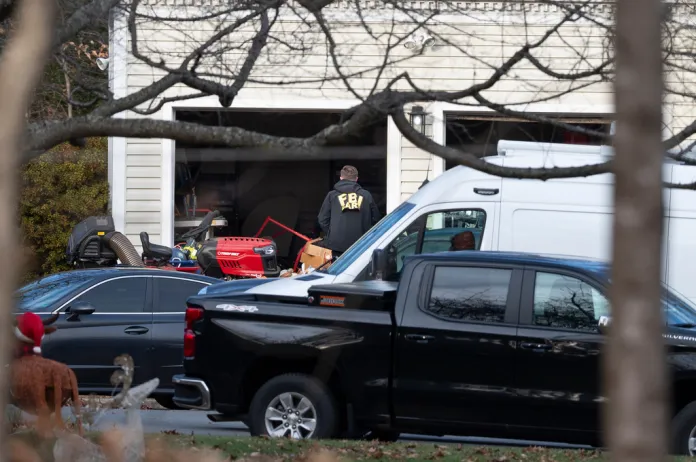
Federal agents raided Cole’s home Thursday, sealing off the quiet cul-de-sac as bomb technicians searched his residence and car.
A politically charged cold-case breakthrough
The bombs were discovered separately but nearly simultaneously around 1 p.m. on Jan. 6, 2021, just as Congress began certifying former President Joe Biden’s electoral victory. Investigators later determined that both then-Vice President-elect Kamala Harris and then-House Speaker Nancy Pelosi (D-CA) passed within feet of the devices hours before they were found.
A House Republican report released earlier this year blasted the FBI for making “little meaningful progress” in the case after February 2021, accusing the bureau of diverting resources and providing Congress with “no substantive updates.”
Before joining the FBI, Bongino himself had publicly suggested the bombing was an “inside job.” Bondi leaned into that frustration Thursday, saying the case “languished for four years” until the Trump administration revived it.
Still, significant questions remain for the current administration despite the DOJ’s success at finally finding a suspect. It’s unclear why the current administration required more than 10 months to solve the case if such compelling evidence was already available to the FBI, and officials declined on Thursday to answer questions about when officials finally zeroed in on Cole or whether anyone else was involved or knew about Cole’s plans.
JAN. 6 PIPE BOMBS SUSPECT ARRESTED USING NO ‘NEW INFORMATION’: DOJ
During a press conference at the DOJ headquarters on Thursday afternoon, officials repeatedly declined to answer specific questions, vowing that future court filings would address many of the public’s questions about the FBI’s handling of the case.
Cole made his initial appearance at the federal courthouse in Washington, D.C., on Thursday afternoon.