In various forms, affordability played a major role in the winning state campaigns of center-left candidates such as Govs.-elect Mikie Sherrill (D-NJ) and Abigail Spanberger (D-VA). It also propelled a self-proclaimed democratic socialist, New York Mayor-elect Zohran Mamdani, to the leadership of the largest U.S. city, a major global financial hub. A year earlier, the affordability issue played a crucial role in President Donald Trump’s 2024 win.
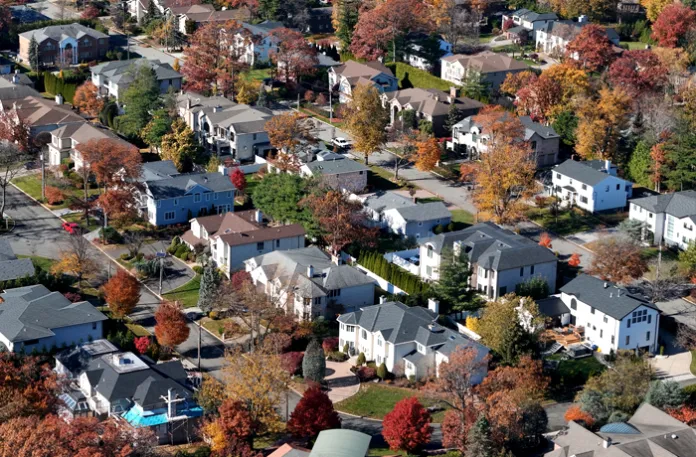
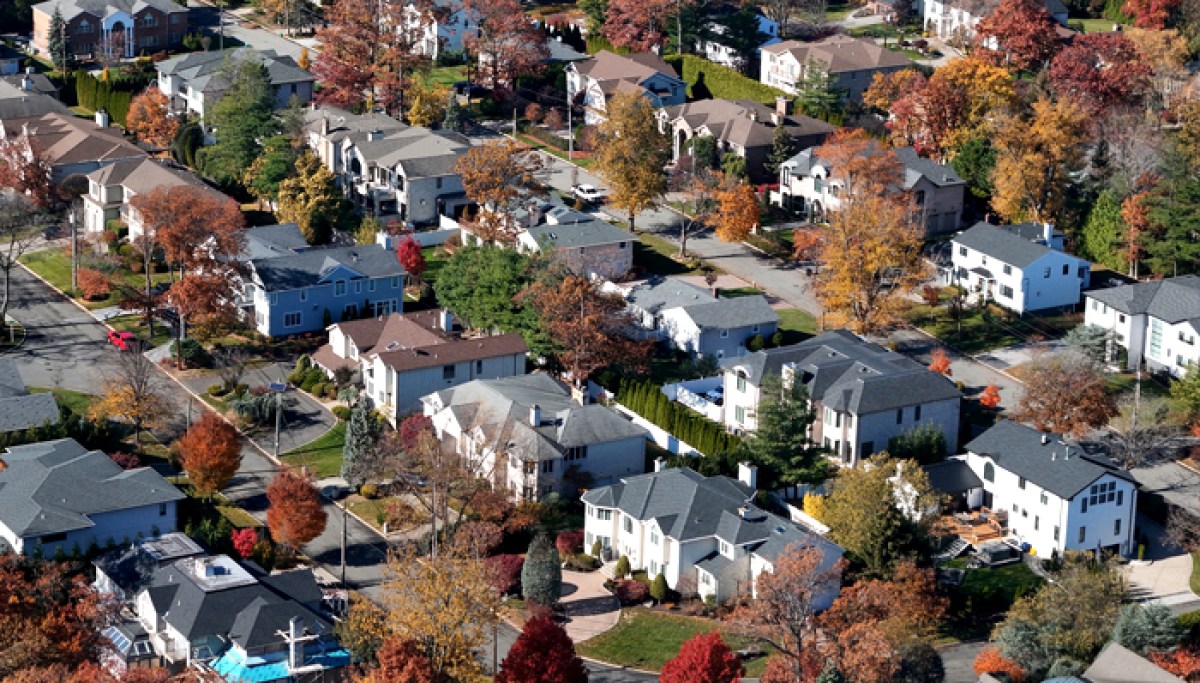
A central element of the affordability problem in recent years has been the high cost of housing, to the point where many people are prevented from living in the communities where they would like to be. Housing shortages increase the cost of living, prevent millions from “moving to opportunity,” and curtail people’s ability to “vote with their feet.”
The problem of housing affordability is attracting increasing public attention. But many politicians in both parties continue to promote policies that make it worse: rent control in the case of many leftists, such as Mamdani, and tariffs and deportation of immigrants when it comes to Republicans, led by Trump. Both parties would do better to drop the counterproductive snake oil and instead focus on eliminating exclusionary zoning and other regulatory restrictions, which are the main causes of the crisis.
How the housing crisis blocks people from ‘voting with their feet’
Historically, millions of Americans have found greater liberty and opportunity through mobility. Historical examples include settlers moving to the West, black people escaping Jim Crow segregation by going north, workers in the 20th century heading to regions with greater employment opportunities, LGBT people moving to more tolerant urban jurisdictions, and many more.
In addition to finding job opportunities and escaping oppressive policies, mobility enables people to vote with their feet for the policies they prefer on issues such as taxes, education, crime control, and others. We often think of ballot box voting as the key to political choice. But foot-voting is a superior option on two important dimensions.
First, an individual ballot-box voter has only an infinitesimal chance of influencing electoral outcomes and thereby affecting policy — in all but the smallest localities, the odds are usually many thousands or millions to one. A choice that has almost no chance of having any effect isn’t much of a choice at all.
Second, the near-powerlessness of individual ballot-box voters also incentivizes them to make little or no effort to become informed about political issues. Surveys consistently show that voters are often ignorant about basic aspects of the political system and government policy.
By contrast, when people vote with their feet, their decisions have a very high likelihood of decisively affecting the policies they live under. And for that very reason, as described in detail in my book Free to Move: Foot Voting, Migration, and Political Freedom, foot voters tend to make more thoughtful and better-informed decisions than ballot-box voters.
Unfortunately, in recent decades, foot voting opportunities in America have greatly diminished, primarily because of high housing prices that block millions of people from “moving to opportunity” in the regions they would otherwise prefer to live in. The working class, lower-middle class, and racial and ethnic minorities in particular have been severely affected.
Experts across the political spectrum recognize that the primary cause of this housing shortage is exclusionary zoning, which bars the construction of various types of housing and imposes other regulatory restrictions. Some 70% of all residential land in the United States is zoned for single-family homes only, barring the multifamily housing that would be affordable to lower-income people. Other common cost-increasing restrictions include parking lot mandates, minimum lot sizes, and more.
Would-be movers are far from the only victims of these “not in my backyard” policies. Exclusionary policies prevent workers from moving to areas where they would be more productive, thereby making us all poorer. In a notable recent article, economists Gilles Duranton and Diego Puga find that the abolition of exclusionary zoning restrictions in seven major urban areas would increase the nation’s aggregate output by nearly 8%. Nationwide reform would likely have a still bigger effect.
While NIMBY policies are often seen as benefiting current homeowners in restricted areas, many of them actually stand to benefit from deregulatory reform. They can gain from the resulting growth and innovation, as well as lower housing costs for their children, among other effects.
Surveys show that much support for exclusionary zoning is driven not by careful calculations of self-interest, but by public ignorance about the effects of these policies. For example, a new study by legal scholar Chris Elmendorf and his coauthors has shown that large numbers of voters wrongly believe that new construction actually increases housing prices rather than reducing them, and are willing to change their minds if presented with relevant evidence. Thus, we can potentially transcend the current conflict between NIMBYs and “yes in my backyard” zoning reform advocates, though widespread ignorance will not be easy to overcome.
Dangerous snake-oil remedies
Overwhelming evidence indicates that exclusionary zoning and other regulatory restrictions are the main cause of the housing crisis and that deregulation is the best remedy. But many politicians and activists persist in promoting supposed solutions that are likely to make the situation worse.
On the left, Mamdani promotes greatly expanded rent control. Activists in other states promote similar ideas. This is despite decades of evidence showing rent control exacerbates housing shortages, a reality recognized by economists across the political spectrum.
Jason Furman, a onetime chairman of former President Barack Obama’s Council of Economic Advisers, emphasizes that “rent control has been about as disgraced as any economic policy.” Swedish social democratic economist Assar Lindbeck famously said, “Rent control appears to be the most efficient technique presently known to destroy a city — except for bombing.” A recent meta-analysis in the Journal of Housing Economics found that while rent control slows rent increases, it also greatly reduces the quantity and quality of available housing.
In response to diminishing income caused by rent control, landlords reduce the number of units they put on the market, cut back on upgrades and maintenance, or both. New York’s existing rent control regulations already exacerbate housing shortages to the point of forcing property owners to leave some 25,000 rental units vacant because the cost of repair and upkeep exceeds potential profits from restricted rent. Mamdani’s proposal would make things even worse.
On the Right, politicians such as Vice President JD Vance claim that illegal migration is the cause of high housing prices and advocate mass deportation as the solution. The reality is the exact opposite. Studies show that mass deportations actually increase prices and exacerbate housing shortages because undocumented immigrants disproportionately contribute to the construction workforce. This supply-side effect outweighs the possible price-lowering impact of reducing demand.
Fear caused by Immigration and Customs Enforcement raids further reduces construction, as workers become afraid to show up to their jobs. After a raid on a construction site in one Chicago neighborhood, a property owner told the New York Times that “construction in this entire neighborhood is now stopped because everyone is so fearful.”
The Trump administration’s tariff policies, supposedly intended to bolster the economy, also exacerbate the housing crisis by making construction more expensive. Massive new tariffs on construction materials, such as lumber, are likely to increase construction costs and home prices significantly. The National Association of Home Builders estimates that Trump’s new tariffs will increase the cost of building a “typical” new home by almost $11,000. That figure does not account for new tariffs on building materials imposed in recent weeks.
Curbing exclusionary zoning will enable us to build plentiful new housing for immigrants and natives alike, as the U.S. successfully did in the 19th and early 20th centuries, before exclusionary zoning became prevalent. And, if given the chance, new immigrants can make even greater contributions to that construction. Construction will also be faster and cheaper if we drop trade barriers, thereby enabling builders to import materials from those countries that can produce the best combination of price and quality.
Fortunately, not all recent election winners promote counterproductive housing policies. Spanberger understands that local zoning rules are a major cause of the housing crisis and promises to lower costs by incentivizing the state’s local governments to ease restrictions. I worry that her proposals do not go far enough. She would do well to support legislation categorically barring or at least severely limiting local exclusionary zoning policies, as advocated by leading housing policy experts and the state’s YIMBY advocates.
Whether Spanberger delivers on her housing promises remains to be seen. Outgoing Gov. Glenn Youngkin (R-VA) also promoted zoning reform but ultimately achieved little. But, unlike Mamdani, Spanberger at least seeks to move things in the right direction. In recent years, several states have enacted useful reforms. But we need much more.
MAGAZINE: NEW YORK BRACES FOR MAYOR ZOHRAN MAMDANI
Political action to reform zoning can be usefully combined with constitutional litigation. Professor Josh Braver and I have argued that most exclusionary zoning violates the takings clause of the Fifth Amendment, and that the time is ripe to pursue this issue in the courts. In many states, exclusionary zoning can also potentially be challenged under various state constitutional provisions.
Instead of peddling snake oil, our political leaders should deregulate housing construction and make it as easy as possible for builders to secure the labor and materials they need. That will empower immigrants and native-born citizens alike to “vote with their feet,” become more productive, and boost the economy for everyone.
Ilya Somin is a professor of law at George Mason University, the B. Kenneth Simon Chairman in Constitutional Studies at the Cato Institute, and author of Free to Move: Foot Voting, Migration, and Political Freedom and Democracy and Political Ignorance: Why Smaller Government Is Smarter.