Democrats are facing intraparty primary battles over which direction the party should take to regain power from the GOP-controlled House and Senate next year.
Primary battles between progressive and centrist lawmakers reflect the tension between party members over what strategy is best to win over disaffected voters who backed the Republican Party during the 2024 elections.
Insurgent far-Left candidates say elder Democrats are not combative enough to take on President Donald Trump and the GOP. This contrasts with establishment Democrats, who argue that a counter-platform targeting Republicans over the economy is the path forward to power.
The entrance of Rep. Jasmine Crockett (D-TX) into the Senate primary battle in Texas against Democratic state Rep. James Talarico has already led to frustration among Democrats that they will lose a seat they must flip if they are to have any chance of winning back control of the upper chamber.
Democrats have also bemoaned that Democratic Tennessee state Rep. Aftyn Behn’s progressive ideology, which included support for defunding the police, may have cost the party the seat against Rep. Matt Van Epps (R-TN) for the state’s 7th Congressional District.
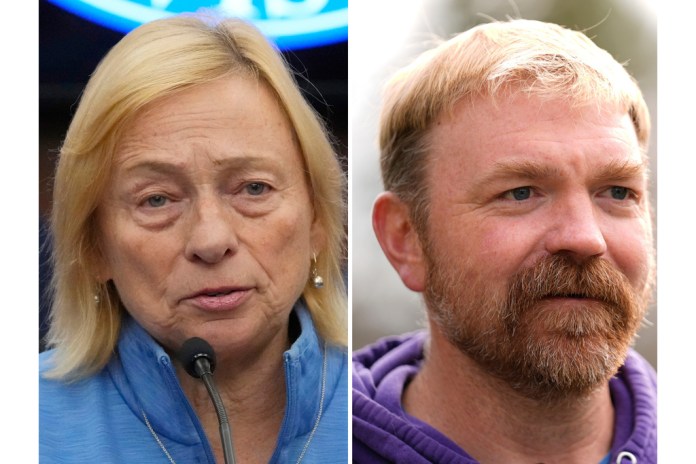
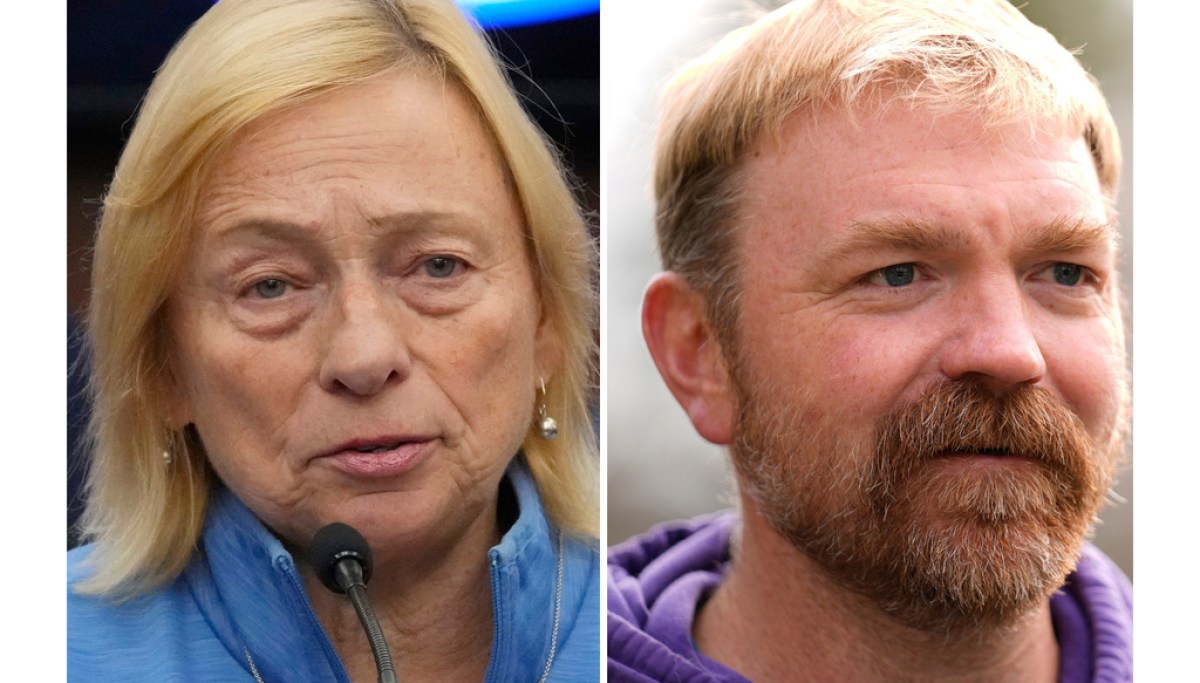
Democratic Senate candidate for Maine Graham Platner’s primary battle against term-limited Gov. Janet Mills (D-ME), who is backed by Senate Minority Leader Chuck Schumer (D-NY), has been hit by controversy after the revelation of past racist, sexist, and homophobic comments, as well as a tattoo closely resembling a Nazi symbol.
Anger over which Democratic candidates are supported by the party’s campaign arms, both formally and informally, has spilled out into the public.
DEMOCRATS HEAD INTO 2026 WITH WIND IN THEIR SAILS AS REPUBLICANS CAN’T GET OUT THEIR OWN WAY
“I think that the Democratic Party has done a poor job recently of deciding which candidates can win and which can’t,” Randy Jones, a Democratic strategist, told the Washington Examiner.
Jones argued that the “biggest mistake” Democrats can make right now is “trying to put our thumb on the scale” in the primaries, particularly when the party is suffering from a popularity problem. “This is not the time for us to play politics in primaries,” he added. “This is the time for us to get our base excited again about participating in the process. And I think we should stay out of the way.”
Democrats are reportedly furious over the Democratic Senatorial Campaign Committee’s lack of effort to prevent Crockett from entering the race, following former Democratic Texas Rep. Colin Allred’s withdrawal. Meanwhile, they are annoyed that they have meddled too much in the Iowa Senate primary, supporting Democratic state Rep. Josh Turek over Democratic state Sen. Zach Wahls and Nathan Sage, the executive director of the Knoxville Chamber of Commerce.
How big is the Democratic tent?
Other Democrats have counseled that each race requires a candidate tailored to the demographics of voters who will decide the election. Socialist New York City Mayor-elect Zohran Mamdani was better suited to win in the deep-blue city compared to the more moderate Govs.-elect Abigail Spanberger (D-VA) and Mikie Sherrill (D-NJ) in their respective states.
“I don’t think there’s like a one-size-fits-all for the country as we head into midterm,” said Kaivan Shroff, a 2024 delegate for former Vice President Kamala Harris.
Frustrated with establishment Democrats, more progressive candidates are challenging incumbents in primary elections. New York City Comptroller Brad Lander, a Mamdani supporter, is challenging Rep. Dan Goldman’s (D-NY) reelection bid. Notably, Rep. Alexandria Ocasio-Cortez (D-NY), a “squad” member who supported Mamdani’s race, declined to say who she is supporting.
Rep. Katherine Clark (D-MA), the second-in-command House Democrat, is being primaried by organizer and former Waltham City Councilman Jonathan Paz, who said Democratic leaders are “failing” the party. Democrat Nida Allam, a progressive, is challenging Rep. Valerie Foushee (D-NC), with support from former Democratic National Committee Vice Chairman David Hogg’s Leaders We Deserve.
However, Shroff also cautioned that Democrats need to do more research into the candidates running for office to avoid embarrassing new stories, such as Platner and Behn’s past controversial statements, as well as Virginia Attorney General-elect Jay Jones’s past violent text messages in which he suggested former Virginia House Speaker Todd Gilbert, a Republican, should receive two bullets in the head.
“Some of these ‘outsider,’ atypical candidates that are exciting people and are resonating with people simply are not vetted to the extent that other more moderate or mainstream candidates within the party who either have held some local office before or gone through some sort of vetting process are,” Shroff said. “And I think that comes with, of course, risk, because you never know what’s going to come up then.”
Democrats are also facing questions about whether digital-savvy lawmakers, who can go viral on social media and raise vast amounts of money, are best positioned to flip GOP-controlled seats.
After entering the Texas Senate primary, Crockett has faced criticism over past comments. For example, she has said Latino voters who vote for Trump have a “slave mentality.” However, even before her Senate campaign launch, she had raised more than $6.5 million in 2025.
Dallas Jones, a Democratic strategist based in Houston, warned that far-leaning Democrats may not perform as well in southern states.
“While we’re the big tent party, there are different compartments in that tent, and they’re all different,” Jones said. “Progressivism, as we see it, below the Mason-Dixon line, which is where a lot of my work exists and has existed, it doesn’t necessarily sell.”
Behn’s loss during the red-leaning Tennessee special election by just 8.6%, after Trump won the district by 22 points in 2024, was a “huge victory,” according to Jones. However, a moderate candidate could have been tighter, or Democrats may have prevailed, he added.
The centrist group Third Way has pushed Democrats to move away from radical ideology in an effort to win red-leaning districts next year.
“There’s been a lot of conversation since that race, and, frankly, a lot of frustration, because there were absolutely folks touting the race in Tennessee as this is what happens when voters get a candidate running unapologetically on bold progressive economics,” Kate deGruyter, senior director of communications of Third Way.
“And it turned out that those politically toxic positions are like anvils, and that is the reason why we have yet to see far-left endorsed candidates flip a single red seat in the entirety of the Trump era,” she continued.
GOP ad makers have used some of the more controversial positions of the far-left to attack the national Democratic brand to “devastating effect,” deGruyter said.
DEMOCRATS NEED TO TEMPER THEIR EXPECTATIONS OF A 2026 BLUE WAVE, DATA SHOW
Liam Kerr, co-founder of the centrist group WelcomePac, said it’s incumbent upon the centrist movement to stage insurgent battles to wrest the Democratic Party from the power of the left-leaning faction. That may include conservative Democrats similar in style to former West Virginia Sen. Joe Manchin.
“Progressives have built an effective outrage, marketplace, and business model, and centrists need to step it up,” Kerr said. “No one’s going to solve the centrist problem on a whiteboard or in a pitch meeting; it’s all by rolling up your sleeves and going out and trying something new and rallying people to your cause, and sometimes, yes, losing but then picking yourself back up again.”