The House of Representatives is one step closer to passing all 12 appropriations bills after leaders soothed a conservative rebellion on Wednesday, promising a removal of an “egregious” state project request and allowing a separate vote on one of the three government funding bills.
The chamber voted 214 to 212 on a procedural rule to advance the Energy and Water, Interior and Environment, and Commerce, Justice, and Science bills for a final vote on Thursday. But tucked into the rule was language that cleaves the Commerce, Justice, and Science bill from the original three-bill “minibus,” and it will now receive its own vote.
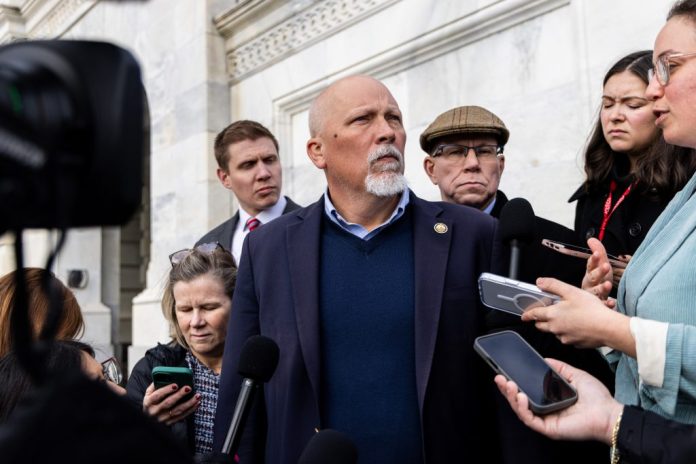
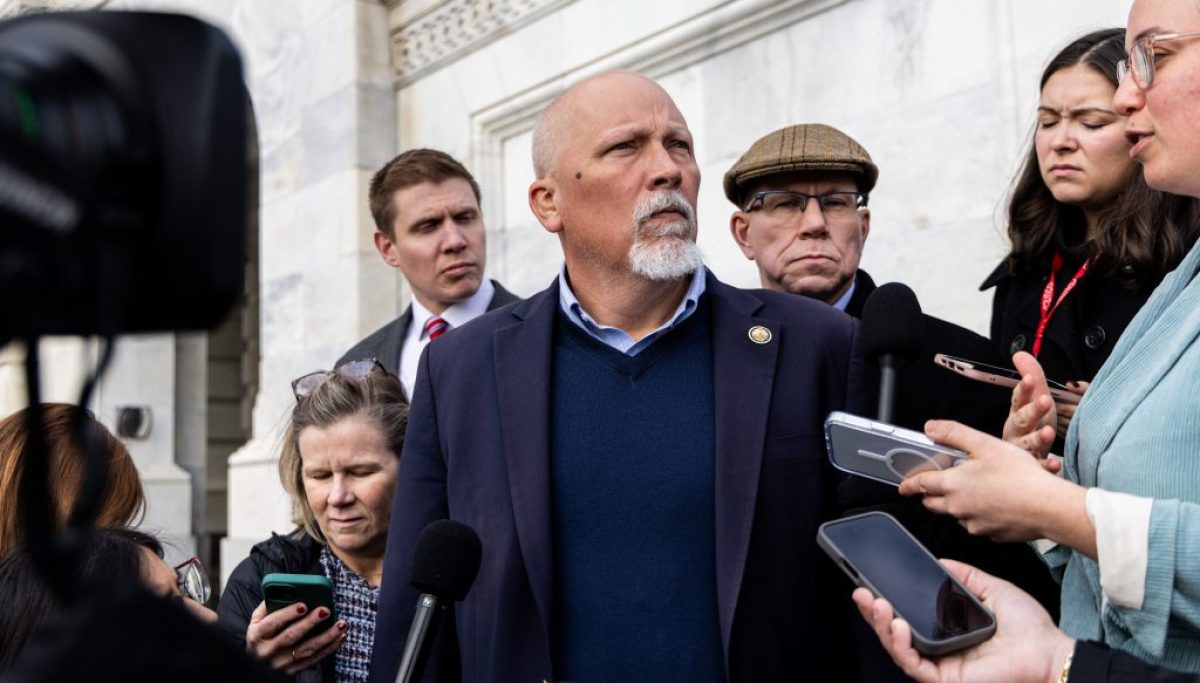
This came after fiscal hawks, led by Rep. Chip Roy (R-TX), raised concerns about several community project funding requests, or earmarks, and threatened to block a rule vote if one, in particular, from Rep. Ilhan Omar (D-MN), was not removed.
During the vote, a large gathering was present on the floor, including Roy, House Appropriations Chairman Tom Cole (R-OK), Speaker Mike Johnson (R-LA), Freedom Caucus Chairman Andy Harris (R-MD), and caucus members Reps. Andrew Clyde (R-GA) and Scott Perry (R-PA). A handful of Freedom Caucus members initially withheld their votes, as has become customary lately, but eventually voted ‘yes’.
Roy and Cole confirmed ahead of the vote that while there will be separate, final passage votes for the Commerce, Justice, Science; Energy and Water Development; and Interior and Environment bills, they will be “smashed” back together and sent to the Senate as a three-bill minibus.
Roy said he was unhappy that the commerce bill never received its own vote in the House and that they didn’t have a chance to amend it. Therefore, he wanted to give members the option to vote “more favorably” on the energy and interior bills but vote “no” on the commerce bill.
“Separating those was important,” Roy said. “But I think there are some concerns that we should have done more on that front and have more ability to amend.”
Cole defended the final bills to reporters, noting that the legislation has been “negotiated in good faith with our friends on the other side.”
“Everybody had to give something,” Cole said.
To get conservatives on board, Roy said there will be “modifications” to correct the report that will remove Omar’s earmark, which calls for a little over $1 million in funding for the Justice Empowerment Initiative by Generation Hope.
He celebrated this removal on X.
“Chalk one up for the good guys,” he wrote. “Proud to work the last two days to stop the outrageous Ilhan Omar $1 million Somali earmark. Much more to do.”
When asked why that earmark, in particular, was a red line, Roy pointed to the growing fraud scandal in Omar’s home state of Minnesota. Republicans have focused much of their attention on the state’s large Somali community, as most of the fraud defendants from ongoing federal investigations are of Somali descent. Omar is the first Somali-American to be elected to Congress.
“What we’ve seen in the last week…a million-dollar earmark for a Somali-led organization in Minnesota strikes me as a bad direction for us to go with respect to earmarks,” Roy said.
Appropriations Committee ranking member Rosa DeLauro (D-CT) told the Washington Examiner Democrats are looking into the details of removing Omar’s earmark and “we’ll see what the result is going to be on it.”
Cole said he sympathizes with DeLauro, noting that he’s had to have conversations with Republicans in the past about removing earmarks to protect the entire bill.
“I can’t afford to have a million-dollar project jeopardize a $184 billion bill,” he said.
Cole noted that Omar’s request is coming at a “politically sensitive time.”
“You just tell a member, ‘Look, this could bring the whole bill down, it needs to come out. We’ll work with you and see what we can do in the future going forward, but we have to move,’” the chairman said.
The passage of the three appropriations bills would bring Congress one step closer to avoiding another government shutdown, as both Republican and Democratic appropriators do not want to pass another continuing resolution.
The White House issued a statement of support for the minibus on Wednesday, stating that if “this bill were presented to the President in its current form, his senior advisers would recommend that he sign it into law.”
The speaker said during the weekly GOP press conference on Wednesday morning that he expects another minibus to come up for a vote next week, covering the following slate of appropriations bills, as the deadline to pass all funding legislation is Jan. 30.
Cole echoed comments from Senate Appropriations Committee Chairwoman Susan Collins (R-ME) that the next minibus would likely be State-Foreign Operations, Homeland Security, and Financial Services, which he thinks is the “best package to move forward.”
That would leave Defense, Labor-Health and Human Services, and Transportation-Housing and Urban Development for the final package, with Defense and Labor-HHS likely to be the most contentious bills.
Cole said, “I hope not,” when asked if he thinks a CR will be necessary. However, he noted that the House’s current schedule has members in recess for the final week of January, and only two weeks in January overlap with the Senate’s schedule.
“That sort of stuff becomes difficult,” Cole said. “But I would like to get all our work done before our members go home. …It’s aspirational until you finish it.”