One of the finalists to be President Donald Trump’s pick to lead the Federal Reserve has supported raising the corporate tax rate and said the United States needs higher immigration, putting him at odds with some of the administration’s policy positions.
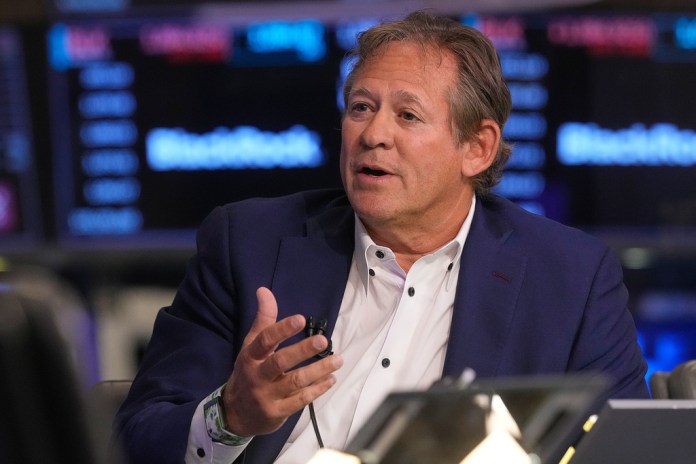
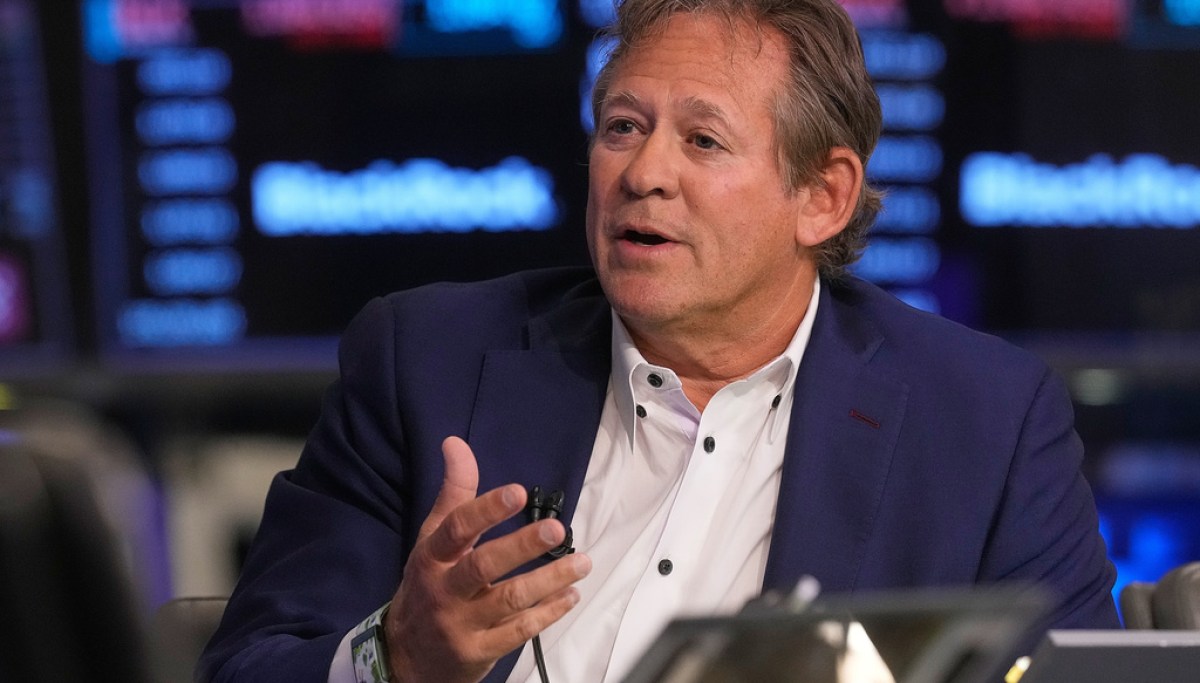
Rick Rieder, BlackRock’s chief fixed income strategist, has emerged as one of the leading candidates to replace outgoing Fed Chairman Jerome Powell. A look at past interviews with Rieder shows that he has held policy views that diverged from those of the White House.
DOJ INVESTIGATION COULD PUSH POWELL TO HOLD ON TO HIS SEAT AT FED
Rolling back Trump corporate tax rate cut
Trump’s signature legislative achievement of his first term in office was the 2017 Tax Cuts and Jobs Act, which slashed the corporate tax rate from 35% to 21%, a reform that Trump and Republicans at the time said would generate economic growth.
Former President Joe Biden pushed Congress to raise the corporate tax rate to 28%. That effort was not successful, but Rieder, at the time, said that he thought the rate should be raised and pushed back on concerns that doing so would hurt the economy.
“I think 21% is too low,” Rieder told CNN back in 2021, shortly after Biden entered office.
Notably, on the campaign trail in 2024, Trump at various times flirted with lowering corporate taxes further. However, no changes to the headline corporate rate were included in the Republicans’ One Big Beautiful Bill Act, which passed Congress last year and implemented many tax cuts.
Before the election, President Donald Trump talked about cutting the headline corporate tax rate from 21% to 20% at one point, and he endorsed reducing the rate to 15% for companies that make their products in America.
Rieder said he thought the economy could “definitely” tolerate higher corporate taxes.
“The U.S. economy is amazingly resilient,” he said, “And, in fact, will perform well when you get some of this income redistribution and consumption at an easier and a better place, particularly for lower and middle income.”
The potential Fed pick said that a modest increase in the corporate rate wouldn’t “really hurt cashflows” for companies and “allows us to maintain a lower debt profile for the overall country.”
Higher immigration
Since Trump 2.0 began, the administration has made curbing immigration one of its foremost priorities. The government has touted its deportation efforts and has bashed the Biden administration as being too lax on illegal immigration.
Last month, the Department of Homeland Security announced that, since Trump entered office for his second term, DHS enforcement operations have resulted in the deportation of more than 605,000 illegal immigrants. Additionally, the administration claims that nearly 2 million illegal immigrants have voluntarily self-deported since January 2025.
Rieder, like many leading economists, has spoken about the need for immigration in the past. For instance, in a 2023 interview, he talked about the need for labor, particularly given the aging U.S. population and retirements, causing changes in the workforce.
“I think in most economies around the world, you need immigration,” Rieder said. “It’s part of why Japan was so tough for so long. They had very rigid immigration guidelines. Immigration helps.”
The Trump administration has cracked down on illegal immigration and also tightened restrictions on certain work-related immigration programs. At times, Trump himself has said that the economy needs more immigrant workers. In the past, though, he has also endorsed legislation to significantly reduce immigration levels.
Rieder’s candidacy
The Washington Examiner asked Rieder whether he still holds those views, but did not receive a response.
Still, while Rieder’s past views on taxes and immigration might be seen as clashing with the administration, the other leading candidates for Fed chair have also expressed past views that run counter to the White House’s current policy positions.
“Until an announcement is made by President Trump, any reporting about the Federal Reserve Chairman nominations process is pointless speculation,” White House spokesman Kush Desai said when contacted by the Washington Examiner.
And Rieder’s chance of being chosen to lead the central bank seems to have risen in recent days. Trump interviewed the BlackRock strategist last week, and it reportedly went well.
The other three in the running are National Economic Council Director Kevin Hassett, Fed Governor Christopher Waller, and former governor Kevin Warsh. Trump, though, recently said he wanted to keep Hassett at the NEC.
Prediction markets have shown Rieder’s odds of being picked rising.
Warsh is still the front-runner, with the odds of him being picked clocking in at 48% on the prediction platform Kalshi. Rieder’s odds have jumped to 28%, above Waller and Hassett.
The situation with Powell’s replacement became a bit more complicated this month after it was revealed that the Department of Justice launched a criminal investigation into Powell. Powell announced that the central bank recently received grand jury subpoenas related to testimony he gave to the Senate last year about renovation cost overruns of the Fed headquarters building in Washington, D.C.
Powell said the inquiry was a pretext to pressure him to lower interest rates, threatening the Fed’s independence.
Retiring Sen. Thom Tillis (R-NC), a member of the Senate Banking Committee, vowed to block Trump’s nominees to the Fed and whoever he nominates to replace Powell until the legal matter has concluded.
POWELL WILL ATTEND SUPREME COURT HEARING ON TRUMP POWER TO FIRE FED GOVERNOR
This month, Rieder told CNBC he would like to see interest rates lowered to 3% and stressed the importance of an independent Fed chair.
“I think that anybody who’s in that seat, that is an independent seat,” he said. “That is a seat that you report to, I would argue, to your constituents, which is the country.”