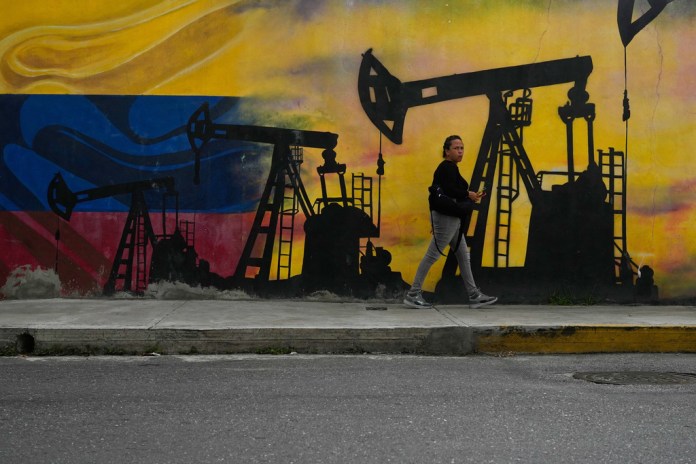
The Trump administration will begin allowing Venezuela to sell oil subject to U.S. sanctions in the near future with the revenue initially going to specific government services subject to Washington’s oversight.
Secretary of State Marco Rubio offered insight into the administration’s strategy for handling the sale of Venezuelan oil and what will happen with the money from sales during Wednesday’s Senate Foreign Relations Committee hearing.
“The funds from that will be deposited into an account that we will have oversight over,” Rubio told senators, adding that the U.S. Treasury would control the process and that they will ensure Caracas “spend[s] that money for the benefit of the Venezuelan people.”
The Venezuelan government will submit a budget to Washington of the funds it needs every month for things like funding for law enforcement, sanitation workers, and the daily government operations.
Since the mission to capture and arrest former dictator Nicolas Maduro earlier this month, the U.S. has sought to exert leverage over the remaining government to ensure they begin cooperating with the Trump administration and in the president’s interests for America. The U.S. has leverage through a military quarantine of its oil similar to but distinct from a blockade, Rubio said.
“There is oil that is sanctioned that cannot move from Venezuela because of our quarantine,” the secretary said. “And so what we did is we entered into an arrangement with them, and the arrangement is this. On the oil that is sanctioned and quarantined, we will allow you to move it to market. We will allow you to move it to market at market prices – not at the discount China was getting. In return, the funds from that will be deposited into an account that we will have oversight over.”
The money the U.S. is holding for Venezuela from a sale of its oil in a bank account in Qatar allows the U.S. to disburse the funds in the account without interference from other creditors who claim they are owed money from Venezuela.
He specified that the administration does not intend to subsidize investments into the oil industry in Venezuela and characterized the current setup as an “interim step.”
Under the Maduro regime, Venezuela sold oil to China primarily at a significantly discounted price and then used that revenue to pay only those involved in keeping the scheme afloat, Rubio said. Venezuela was also an active participant in Russia and Iran’s shadow fleet system designed to transport oil in violation of Western sanctions and maritime law.
CUBA REGIME CHANGE, IRAN FALTERING: FIVE TAKEAWAYS FROM RUBIO’S TESTIMONY TO CONGRESS
U.S. forces have seized seven oil tankers near Venezuela that had been sanctioned for involvement with the shadow fleet.
The Trump administration is now working with Maduro’s vice president, Delcy Rodriguez, who assumed the presidency after his arrest in early January. She initially appeared to be a willing partner for the U.S. but has recently expressed frustration with the administration’s persistent pressure.