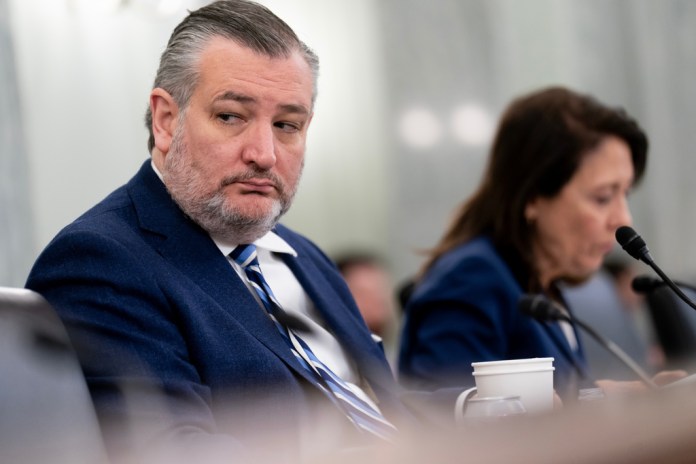
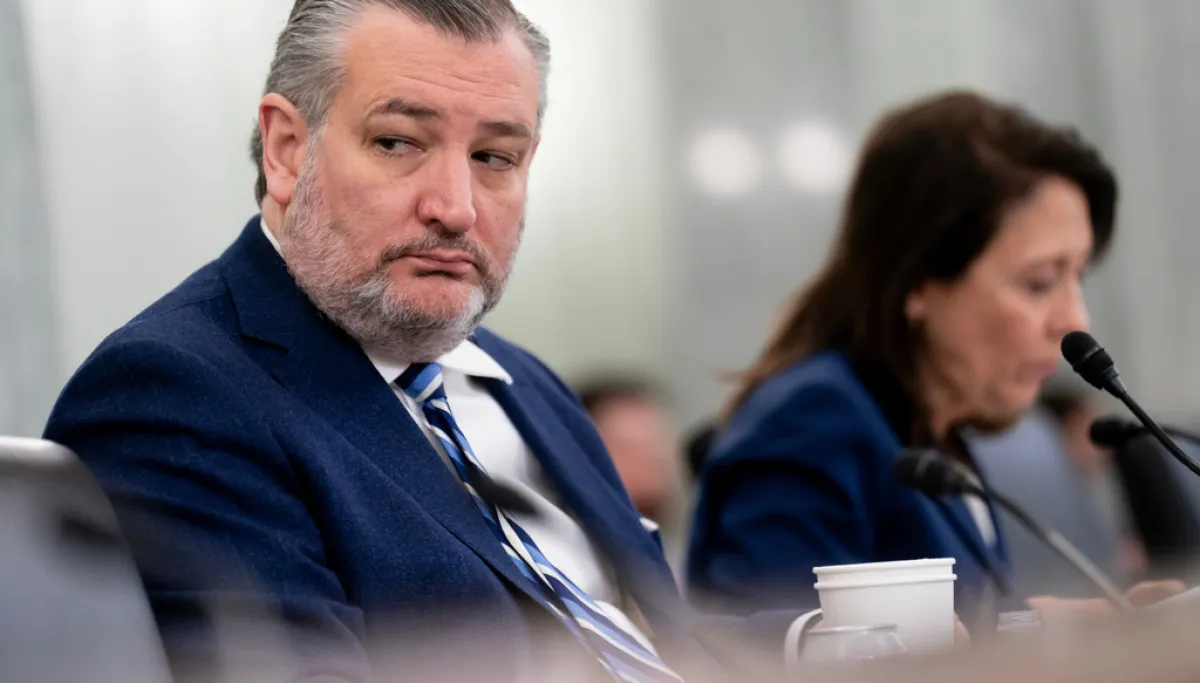
Lawmakers from both parties signaled deep skepticism Tuesday toward a proposed merger between Nexstar Media Group and Tegna, warning that the deal could concentrate unprecedented power over local TV news even as supporters argue broadcasters need scale to survive in a digital marketplace dominated by Big Tech.
At a heated Senate Committee on Commerce, Science, and Transportation hearing, senators pressed a panel of media executives and policy experts, including Newsmax CEO Christopher Ruddy, National Association of Broadcasters President Curtis LeGeyt, former Federal Communications Committee general counsel Thomas Johnson, and Report for America co-founder Steve Waldman, on whether the merger would hollow out local journalism rather than save it.
“If the Nexstar-Tegna deal goes through, a single company will control 265 stations capable of reaching 80% of all the television households,” said Sen. Maria Cantwell (D-WA), the committee’s ranking Democrat. “To me, that is not more local voices. That is fewer.”
Committee Chairman Ted Cruz (R-TX) framed the debate as a collision between outdated law and modern media realities.
“If there’s one thing that’s clear,” Cruz said, “current media ownership rules were written in a vastly different technological age.”
Still, Cruz acknowledged the stakes for local communities, asking whether raising the ownership cap would ultimately strengthen or weaken local news and viewpoint diversity.
The hearing came just days after President Donald Trump publicly backed the merger, marking a reversal from his earlier skepticism and escalating a regulatory fight that has drawn intense lobbying from both supporters and opponents.
“We need more competition against THE ENEMY, the Fake News National TV Networks,” Trump wrote Saturday on Truth Social. “GET THAT DEAL DONE!”
“Letting Good Deals get done like Nexstar-Tegna will help knock out the Fake News because there will be more competition, and at a higher and more sophisticated level,” he added.
Trump had criticized the deal in November, warning that if it allowed “the Radical Left Networks to ‘enlarge,’ I would not be happy.” His latest endorsement signals a notable shift as regulators weigh loosening ownership restrictions that currently block the merger.
Critics of the merger seized on the moment to warn that consolidation could leave communities with fewer independent reporters. “You have less content, less diversity of news,” Ruddy told lawmakers, arguing that previous mergers have combined newsrooms and reduced on-the-ground coverage.
Supporters countered that streaming platforms and tech giants financially squeeze broadcasters, and that scale is necessary to preserve local journalism.
“The only way to ensure that communities across this country have local news is to give those owners some scale,” said LeGeyt. More than half of stand-alone broadcast news operations are already unprofitable, he said.
A merger that hinges on the FCC
Under current federal rules, no broadcaster may own enough TV stations to reach more than 39% of U.S. households. But since last June, the FCC, at the direction of Commissioner Brendan Carr, has been reviewing whether to keep, raise, or eliminate that Reagan administration-era ownership cap.
The Nexstar-Tegna merger cannot move forward unless the agency changes that limit, making the ownership-cap review one of the most consequential and least understood regulatory decisions now underway in Washington.
In September 2025, the FCC began its required four-year review of broadcast ownership rules and is now seeking public comment on whether limits, such as the national ownership cap, should stay in place. Whatever the agency decides will directly determine whether the Nexstar-Tegna merger moves forward.
Nexstar already owns more than 200 stations, the largest portfolio of any broadcaster. Tegna owns 64 more. If regulators relax the cap and approve the deal, the combined company would control 265 stations across 44 states and Washington, D.C., giving Nexstar nearly twice the national reach current rules allow and dramatically reshaping the landscape of local TV.
Lawmakers question impact on consumer costs
Senators from both parties focused on whether consolidation would ultimately raise costs for viewers, with critics arguing the merger would increase broadcasters’ leverage to demand higher retransmission fees from cable and satellite providers, costs that are typically passed on to consumers.
Ruddy testified that retransmission fees now account for more than half of broadcast industry revenue and have exploded over the past decade as station groups have grown larger through mergers.
“Since 2010, retrans fees have risen more than 2,000%,” Ruddy said. “If milk prices had risen at the same rate, a half gallon of milk today would cost almost $40.”
He argued that bigger station groups can threaten to pull popular local channels during negotiations, forcing distributors to accept higher payments that ultimately show up in monthly cable bills. “Ultimately, who gets screwed, frankly, is the consumer,” Ruddy said. “We have to pay those bills.”
Republicans also pressed witnesses on whether large broadcast groups are using their size to extract favorable financial terms. Cruz zeroed in on Nexstar’s carriage leverage, questioning why its cable channel NewsNation reportedly receives higher fees than competitors with larger audiences.
“Assuming those data are correct,” Cruz said, “do you have any explanation for why that would be the case other than market power?
Ruddy responded that the disparity reflects consolidation-driven leverage, arguing that station groups can use broadcast dominance to influence cable negotiations.
Supporters of the merger pushed back, saying retransmission fees reflect market negotiations in an industry under intense pressure from streaming services that are siphoning away viewers and advertising revenue.
LeGeyt told lawmakers that retransmission revenue across the industry has actually declined in recent years and rejected claims that broadcasters hold outsize pricing power.
“No broadcaster has market power in this media landscape,” he said, pointing to competition from companies such as Google, Netflix, Amazon, and Apple.
The future of local journalism
Much of the hearing centered on the fragile state of local news.
Waldman, founder of the nonprofit organization Rebuild Local News, warned lawmakers that communities with fewer reporters see measurable civic consequences.
“Studies show that areas with less local news have more corruption, more government waste, less civic involvement,” Waldman said. “We need more human reporters living in the communities, accountable to and listening to their neighbors.”
He cautioned that consolidation can create the illusion of multiple independent stations while relying on the same underlying newsroom: “You have the mirage of lots of diverse voices, but the reality of less and less original reporting.”
Cantwell said the core question is not whether broadcasters need help competing with Big Tech, but how to do so without sacrificing local voices.
“We can’t be for a merger just to get bigger,” she said. “We have to protect diversity and local journalism.”
Uncertain path forward
The merger’s fate now rests with federal regulators, and the outcome will determine not only Nexstar’s expansion plans but the future shape of local TV ownership nationwide.
Several senators emphasized that Congress, not the FCC, set the 39% national ownership cap, raising questions about whether regulators can lawfully approve a deal that exceeds it without legislative action.
“Just because large corporations like Nexstar and Tegna want to merge doesn’t mean they can simply ignore the laws that Congress has put in place,” Sen. Jacky Rosen (D-NV) said.
Any transaction would require approval from both the Justice Department and the FCC, agencies now led by Trump-appointed officials. Their decisions will determine whether the merger can proceed and whether the decades-old ownership limit remains intact.