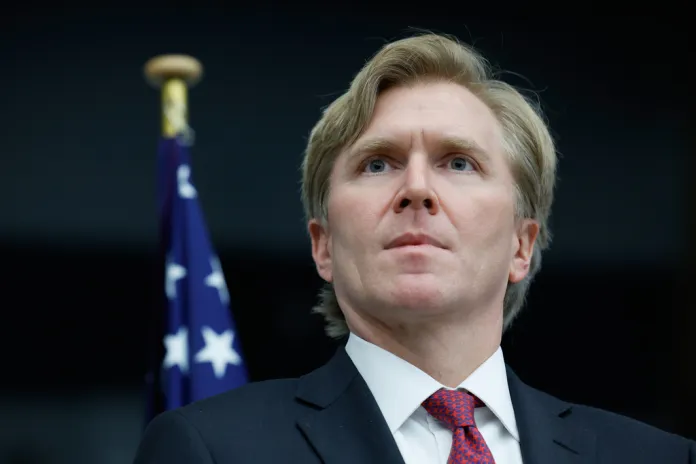
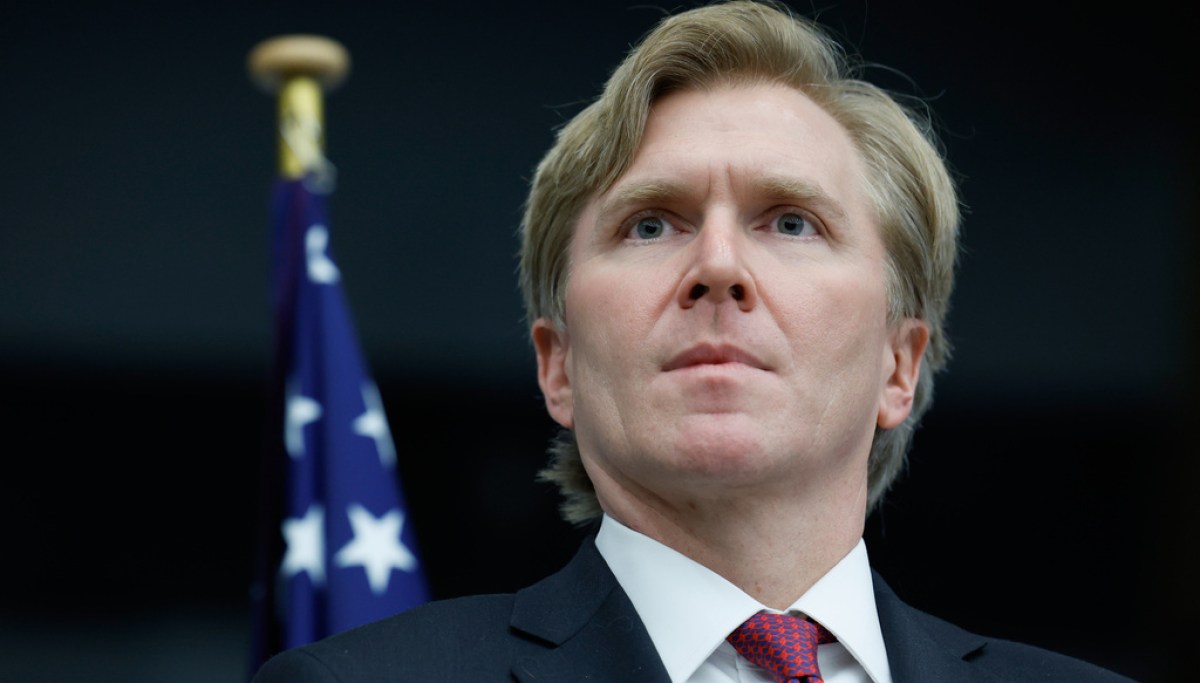
Undersecretary of War for Policy Elbridge Colby said the United States is not looking to “boss” other nations around, and is instead pressing ahead with a more “realistic” foreign policy agenda.
“We’re not looking to boss everybody around. We’re not looking to become this great empire of the world. We’re saying we want to have a favorable balance of power where countries can chart their own future,” he said at the Munich Security Conference on Saturday.
The “America First” strategy is one of “common sense,” Colby contended, saying the pragmatic vision extends to countries such as China, which the administration is “looking at in a clear-eyed way, with the goal of a favorable balance of power and stability.”
“We’re not communists in the Trump administration,” he said. “But it’s also not our job to say what the government of China is.”
Instead, Colby pushed for a “stability model,” where the U.S. ups its military as a deterrence and allies take ownership in respective regions, including by stepping up defense spending and incentivizing foes against forming alliances countering NATO. It’s similar to the foreign policy philosophy Colby espoused when he unveiled the U.S. vision for a “NATO 3.0″ to replace “NATO 2.0” in response to changing world dynamics earlier this week.
“We’re saying, let’s all be in a place where we’ve got a good buffer of assurance,” Colby said. “And of course, the Americans are going to be everywhere, but we’re going to be doing it in a way that’s linked to practical military planning. And then the other side, or whatever, those other powers are all going to see that, and they’re going to say, ‘Today’s not the day. I’m better off going with that stability model that we’re all about, where it’s better to keep jaw-jawing, rather than more warring.’”
Colby said he sees foreign policy similar to running a business, with partners expected to pull their weight in operations and funding. He praised European leaders for increasing defense spending in recent months and expressed optimism at what he’s hearing from NATO partners at the Munich summit, suggesting “momentum” is building in the administration’s favor. Earlier this week, German Chancellor Friedrich Merz told attendees that they need to step up internal partnerships and decrease “excessive dependency” on the U.S., urging them to build a “strong, self-supporting European pillar.”
“Overall, the frame was, I would say, from him, was very much leaning in and saying, ‘Let’s get down to business. Let’s be practical,’” Colby said of Merz’s speech. “A practical discussion, almost like a business-like discussion about, all right, how do we make sure that this operation is sustainable over the long term, that everybody’s pulling their weight?” he added, referencing Treasury Scott Bessent’s recent assertion that since 1980 the U.S. has spent $22 trillion more on defense than the rest of NATO.
“There’s sort of a market-to-market element here, which is like, hey, wait a minute. This has been way out of whack. Let’s get down to basics,” he said.
Longstanding allies have expressed alarm that the U.S. position means it is backing away from the world stage and its alliance with Europe, putting a transactional philosophy above a commitment to democracy. Merz this week called for officials to “repair and revive trans-Atlantic trust” during his Munich address.
Secretary of State Marco Rubio sought to reassure NATO members during his own keynote address at the Munich summit, though he continued to assert that the U.S. has no desire to be Europe’s “polite and orderly caretakers.”
“For us Americans, home may be in the Western Hemisphere, but we will always be a child of Europe,” he said.