The conflict in Iran has sent natural gas prices soaring in Europe, thanks to a major gas exporter pausing production and key shipping routes closing, threatening a broader global energy crisis.
The strikes on Iran by the United States and Israel, as well as Iran’s counterattacks, have caused major disruptions across liquefied natural gas markets, causing prices to jump in regions, particularly Europe, that rely on imports.
European natural gas futures settled up another 20% at about €53.60 per megawatt, or around $63, Tuesday after soaring over 50% the day before. The Northeast Asia LNG benchmark, the Japan/Korea Marker also reached a one-year high on Monday at 43 euros, or $49.83 per MWh, according to CNBC.
The price jump comes after Qatar’s state-owned energy giant QatarEnergy suspended all LNG production on Monday after an Iranian drone hit its facilities at Ras Laffan and Mesaieed.
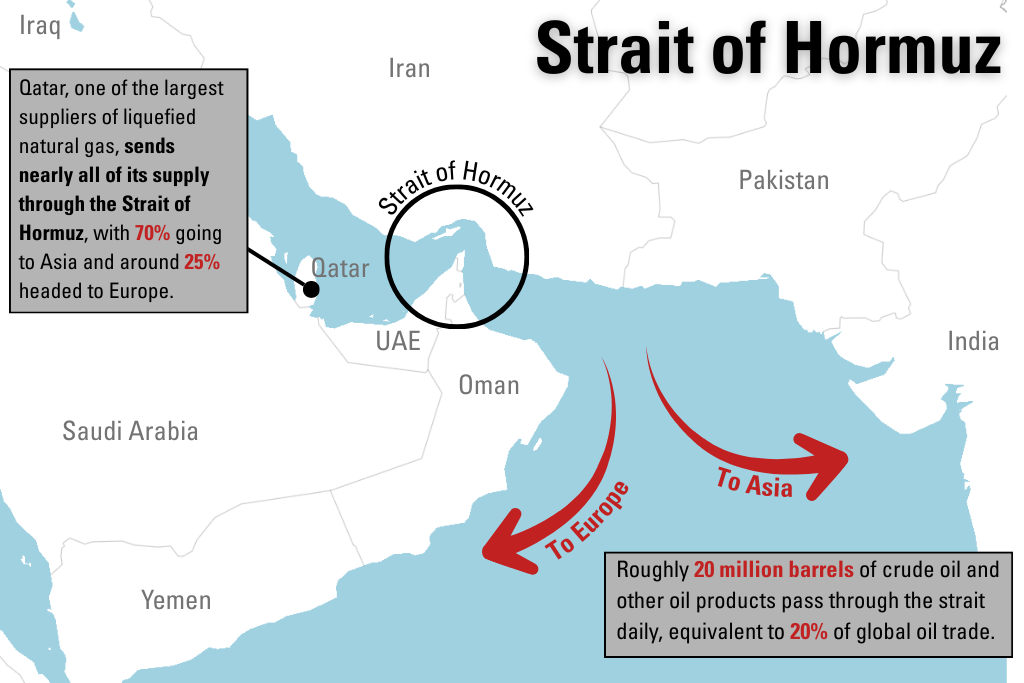
Many countries rely on LNG from Qatar, which exported more than 70% of its production to Asia and 25% to Europe in 2022.
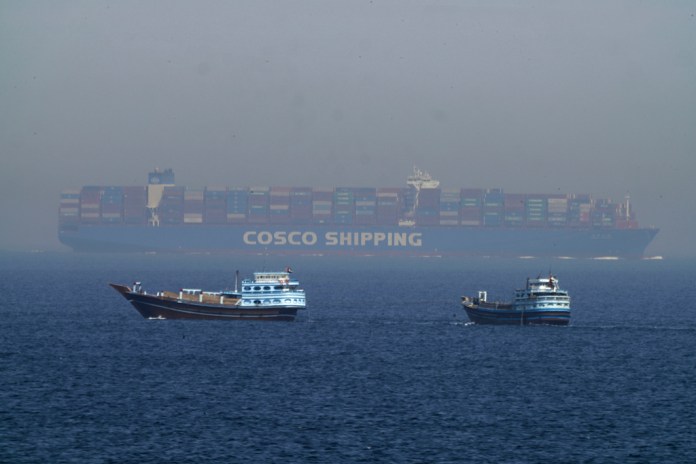
In addition, the conflict has prompted the Islamic Revolutionary Guard Corps to effectively close the Strait of Hormuz to maritime vessels, shutting down a key global route for transporting oil and gas exports. About 20% of global LNG supply passed through the strait, primarily from Qatar.
Goldman Sachs analysts said that a monthlong pause in LNG transit supply through the strain could send European prices and spot Asia LNG to surge 130% to $25 per million British thermal units.
Ira Joseph, a senior research associate at Columbia Center on Global Energy Policy, told the Washington Examiner that Europe and Asia do not have the storage levels to address long-term disruptions.
Joseph said that, although Asia is a major growth market for LNG, it does not have storage capacity outside of China. On the other hand, Europe has a significant amount of storage, but its storage levels are at the lowest in nearly a decade to end the winter, he said.
Bloomberg reported earlier this year that Europe has been withdrawing natural gas at the fastest pace in five years.
Fortunately for Europe, the warmer months are arriving, which means countries are drawing far less from storage, Joseph said. However, he added that storage levels, particularly in Germany and the Netherlands, remain critically low.
“They’re getting a little lucky with the weather,” Joseph said. “Otherwise, they would probably have to import more LNG at a really significant premium in order to cover demand.”
Joseph noted that China is one of the largest buyers of LNG from Qatar.
He said China’s actions will be critical, noting that Beijing has imposed significant tariffs on the U.S. LNG and it remains to be seen whether it would lower these tariffs to avoid punishingly high prices.
Dr. Ramanan Krishnamoorti, a professor at the University of Houston, told the Washington Examiner that China is well stocked with natural gas and will continue to get natural gas from Russia.
“I think if the war is less than 30 to 45 days, China’s probably not going to be impacted greatly,” Krishnamoorti said. He added that India could be significantly impacted, as it was looking to grow its supply and doesn’t have a lot of storage available.
“If Qatari gas is disrupted because of damage to their infrastructure, that’s going to have long term impacts on both India and China,” Krishnamoorti said.
Krishnamoorti noted that LNG is a globally traded commodity, so prices will soar, including in the U.S., if supply is taken offline.
He added that the U.S. LNG will likely be exported, rather than kept for domestic use.
TRUMP OFFERS ASSISTANCE TO OIL SHIPPERS TO HALT PRICE SPIKE FROM IRANIAN THREAT
President Donald Trump on Tuesday revealed a plan to restart transportation of oil and gas through the strait, offering financial and logistical support to shippers navigating the waters around Iran.