Iran and its proxiescontinue to launch strikes, including against oil tankers in the Gulf, while Israel says they scored "extensive" hits.
The post **Livewire** Operation Epic Fury Day Thirteen: U.S.-Owned Oil Tanker Among Those Hit By Iranian Drone Boats appeared first on Breitbart.
The military operation against Iran entered its thirteenth day on Thursday. Iran and its proxies in Lebanon continue to launch strikes, including against oil tankers in the Gulf, while Israel says they scored “extensive” hits on IRGC infrastructure overnight.
****
**Wednesday’s live updates below. All updates in Eastern time**
14:20 PM: Loading…
One of the big controversies of President Trump’s strikes on Iran was the total refusal of the British government to support its ally in any way, even blocking the U.S. from launching strikes from U.S. airbases on British soil. That has gone by the wayside now, although Starmer isn’t shouting from the rooftops about it.
But the work is going on close to the perimeter wire at RAF Fairford, and British press photographers have snapped some interesting shots of USAF personnel maintaining and loading B-1 lancers with JDAMs, converted Vietnam-era ‘dumb’ bombs. Adding a tail and a rudimentary guidance suite makes for a very cost effective munition, and as we’ve seen already the USAF is operating in practically uncontested airspace, making laser-guiding these perfectly effective.
In more challenging airspace, there is even a new and improved JDAM now being fielded, the ‘ER’ — or ‘extended range’ — which adds a pair of deployable wings to the bomb, turning it into a glider. This is useful if you can’t get right over your target and want something you can stand off with, and lob at your enemy before turning tail and heading home. We’ve seen a lot of these in Ukraine where neither side has managed to achieve air superiority, but they would be overkill for Iran, most likely.
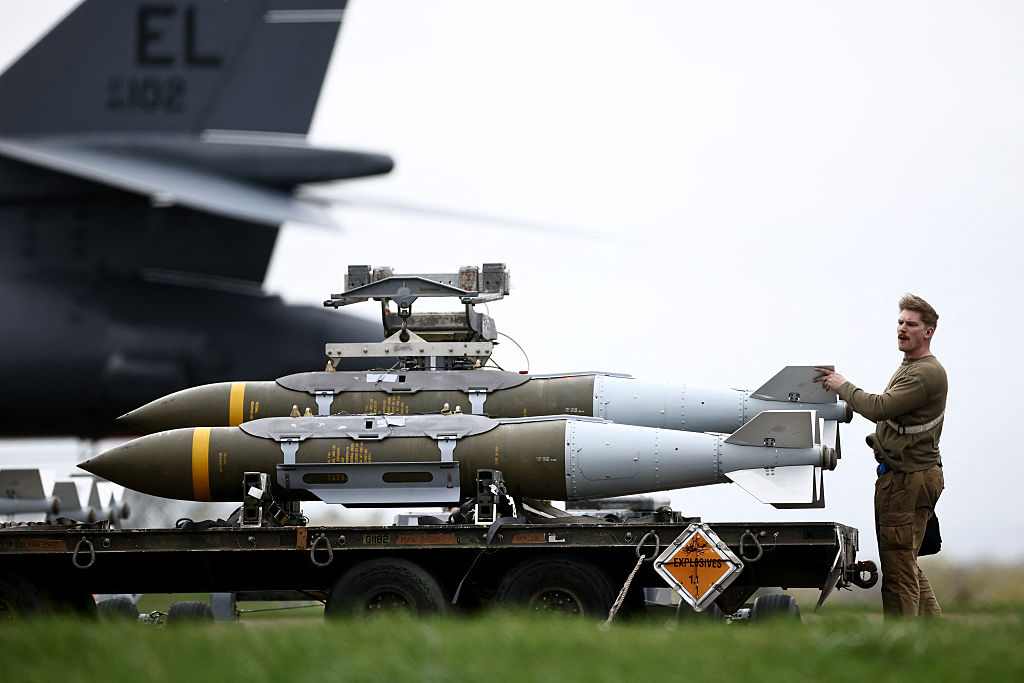
USAF military ground personnel prepare Joint Direct Attack Munitions (JDAM) for a US Air Force (USAF) B-1 Lancer bomber jet on the tarmac at RAF Fairford in south-west England on March 12, 2026. Fairford is one of two bases, along with the Diego Garcia facility in the Indian Ocean, that the UK has given the US permission to use for “specific defensive operations into Iran” to destroy Iranian missiles at source, the British defence minister said in a statement. (Photo by Henry NICHOLLS / AFP via Getty Images)
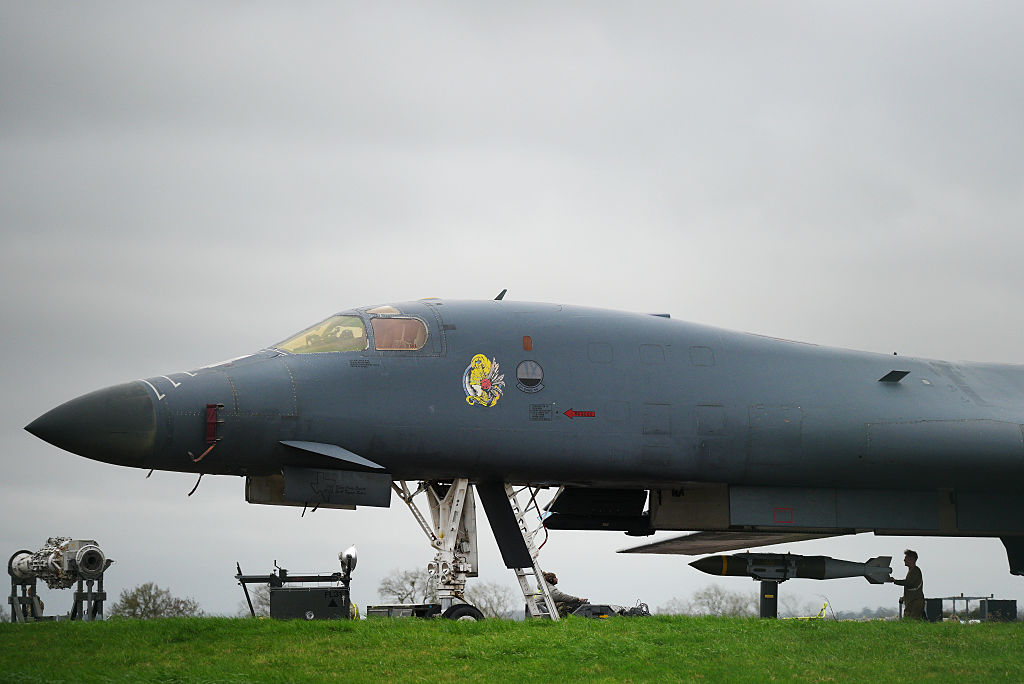
FAIRFORD, ENGLAND – MARCH 12: Munitions, believed to be JDAM bunker-busting bombs, are loaded into a US Air Force B-1B Lancer bomber at RAF Fairford on March 12, 2026 in Fairford, England. Since UK Prime Minister Keir Starmer allowed the US to use British bases to launch defensive strikes against Iranian missile sites, a variety of US military aircraft including B52 bombers, and B-1 bombers, have arrived at RAF Fairford in Gloucestershire. (Photo by Christopher Furlong/Getty Images)
14:05 PM: Iran doesn’t want war “imposed” upon it
Agence France Presse has spoken to Iran’s Deputy Foreign Minister Majid Takht-Ravanchi who portrayed his country as an innocent, put-upon victim of America and said “We do not want to be treated like this again in the future”, complaining the U.S. struck Israel last year and then did it again eight months later. He is reported to have told the wires service: “We want to see that war is not going to be imposed again on Iran”.
Le Figaro states he said, further: “Before the war began, on several occasions we informed our neighbors that if America participated in aggression against Iran, all American interests and bases would be legitimate targets for Iran… We are acting in self-defense. We will continue to act in self-defense for as long as necessary”.
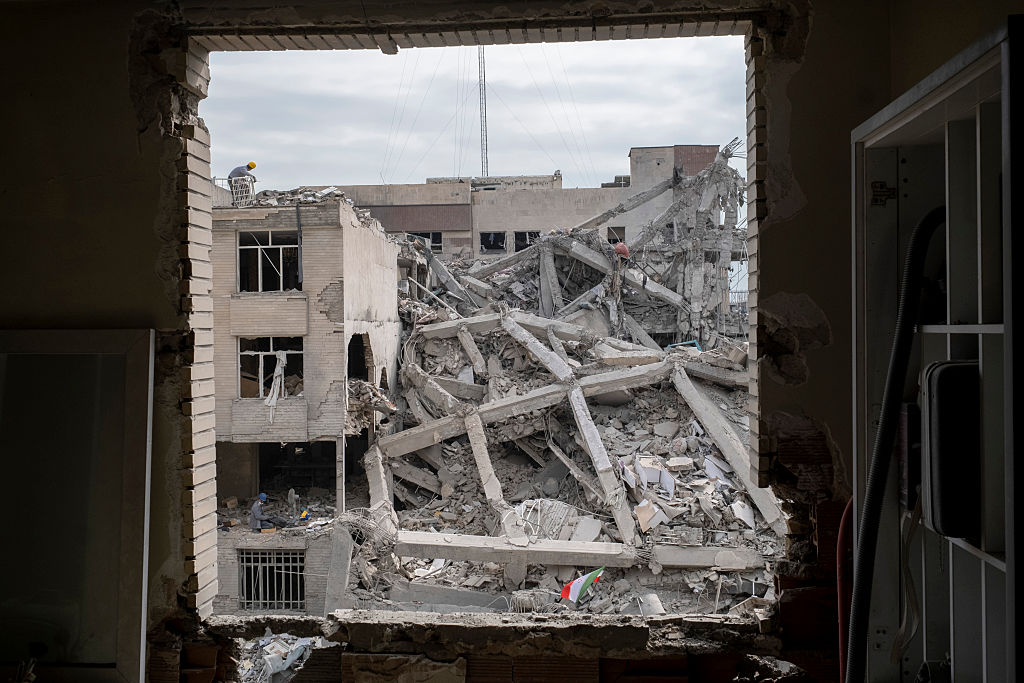
An Iranian man works on the ruins of buildings that were destroyed during the U.S.-Israeli military campaign that struck a residential area on Monday, March 9, in Tehran, Iran on March 12, 2026. MORTEZA NIKOUBAZL/NurPhoto (Photo by Morteza Nikoubazl/NurPhoto via Getty Images)
13:15 PM: CENTCOM update
We’ve got the new readout from CENTCOM on the status of strikes. U.S. forces have now hit “approx” 6,000 targets in 13 days, they say, including over 90 Iranian vessels “damaged or destroyed”. Naval warfare has been a prominent element of the conflict so far, and CENTCOM notes this is made up of over 60 ships and over 30 minelayers.
It is notable the number of “ships” sunk hasn’t changed from around 60 in days, reflecting the United States having hit or sunk practically every large craft Iran has already. But the sting is in the tail, we reported on the ‘Mosquito Fleet’ of 1,000 or more small Iranian bomb boats which are easily dispersed and hidden, and hard to detect. There’s much mopping up to be done yet, lest we see more oil tankers struck in the Gulf.
13:10 PM: Iran lands a cyberattack on America
Iran, long a malign influence in cyber, has landed what appears to be its first major cyber attack since the U.S.-Israel strikes began almost two weeks ago. Iranian hackers are thought to have hit medical device manufacturer the Stryker Corporation, deleting their data and disabling their phones. Our tech reporter Lucas Nolan has a full report on this development.
13:05 PM: Senior Iranian commander eliminated
The IDF says it has “eliminated” Ali Muslim Tabaja, an Iranian paramilitary commander who also fought with Hezbollah, they said. He, his deputy commander, and other officers were killed in an airstrike in Lebanon overnight. The Times of Israel cites an IDF spokesman who aid: “Last night, while they were managing the fire toward Israel, they were eliminated within seconds”.
Other named leaders claimed killed by the IDF were Hezbollah commander Abu Ali Riyan, a “central figure responsible for coordinating operations, recruiting operatives, and managing its weapon supply chain”, and IRGC-Hezbollah liason officer Abu Dharr Mohammadi in Beirut.
11:55 AM: Cardboard Khameni… where is the supreme leader?
Iran minted a new supreme leader after they lost the last one, but he hasn’t been seen or heard from yet, which some people are taking as slightly suspicious. After we heard claims that he’d been in an ‘incident’ and was ‘injured’, speculation rose again, and to some he has come to be known as the ‘cardboard Khameni’.
Now Iran state media offers proof of life for Mojtaba Khamenei. No photographs, video, or audio though: just a written statement, and a belligerent one at that. He, or his ghost-writer, declared; that Tehran will “avenge the blood of Iranians”.
It was claimed he said: “The revenge we seek is not only for the martyrdom of the great leader of the revolution… Every member of the nation who is martyred by the enemy becomes an independent case for revenge… Certainly the lever of blocking the Strait of Hormuz must continue to be used”.
Our John Hayward has written about it here.
11: 15 AM: Two injured in blaze aboard the USS Gerald R. Ford
The 5th Fleet has gone to the lengths of telling us that there was a fire in the ship’s laundry of the nuclear supercarrier USS Gerald R. Ford. Two injured, although not critically and they are in stable condition. The notification comes amid claims and counter claims between Iran and the U.S., with Tehran constantly claiming to have hit American carriers with missiles, and even to have sunk them.
It’s a mystery why such claims are repeatedly made when demonstrably false, but aircraft carriers are incredibly potent symbols of Western power and the thought of sinking one must be worththe juice in the squeeze to some nations. That Argentina was able to secretly sink a British aircraft carrier in the Falklands War of 1982, and the world didn’t notice because London was able to sneakily build a replacement and rush it into service is a myth that persists among some to this day.
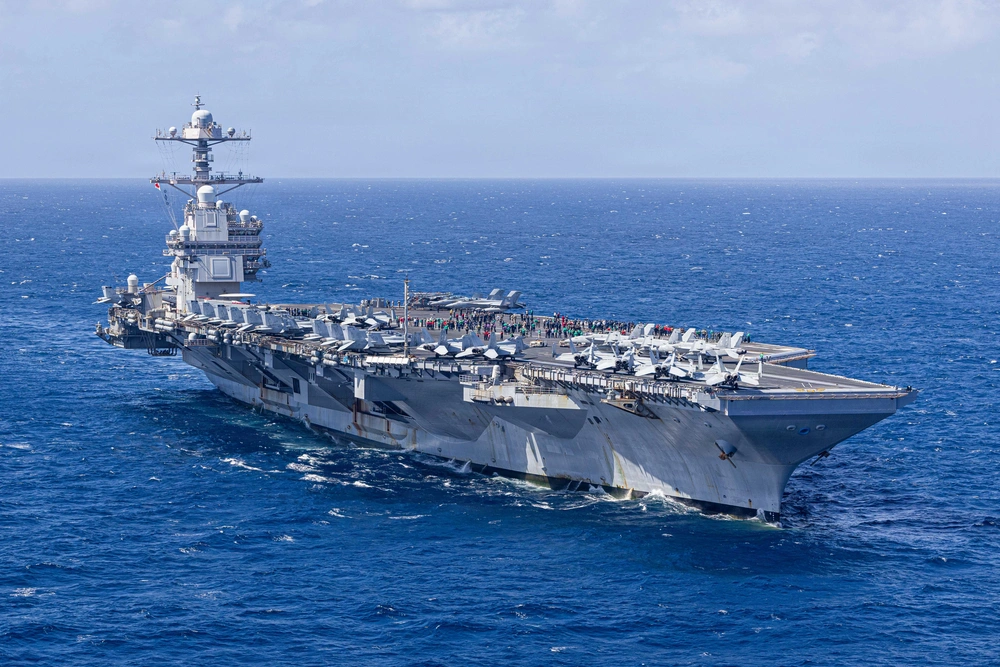
USS Gerald R. Ford (CVN 78) photographed in January / US NAVY / Seaman Apprentice Nathan Sears
09:30 AM: More FLIR footage
CENTCOM hasn’t been shy with its compilations of strike footage which continue to illustrate the degree to which the United States is operating in uncontested airspace: the videos are showing strikes of remarkable accuracy, called in by the familiar flicker of laser designators.
A good example of this is footage we got from CENTCOM overnight showing the laser designator painting a patch right at the wing stems of a Russian-made Ilyushin 76 transport jet. The munition tumbles down onto the beam and detonates, neatly cutting the wings off with comparatively little blast damage, other than the fuel cooking off. In any case, the job is done.
We get more video this morning too, returning again to the familiar footage of Iran’s apparently very considerable number of mobile missile and rocket launchers. Taking out the launchers is a key mission for the U.S. and they seem to be hunting them down as and where they find them. As noted the other day there’s a certain amount of hide-and-seek going on — a lot of these strikes seem to be on launchers peeking out from beneath bridges, the mouths of tunnels, and treeline cover.
08:55 AM: Arrests made after American Embassy bombing
The U.S. Embassy in Oslo, Norway, was rocked by an explosion in the early hours of Sunday morning. Now, Norwegian police have made their first arrests, taking in three Iraqi-origin brothers on suspicion of terror offences. The improvised explosive device was “very powerful”, police have now said, stating the lack of apparent damage is down to the heavily fortified design of the American building. Read the full story here.
06:50 AM: Iran is launching sea drones against oil tankers
At least three oil tanker ships have been struck by Iran in the Gulf overnight, one off the coast of the UAE and two off Basra, Iraq. We have some images of one of the strikes in Iraq and they are very dramatic, with a huge fireball filling the air.
The BBC states one of the ships struck off the Iraqi coast, the Safesea Vishnu, is US-owned but is Marshall Islands flagged. The practice of flagging is to allow ship owners to operate their craft under lower regulatory burdens and while paying fewer costs. It has now been long accepted but a persistent conversation in maritime security circles is how long the net providers of maritime security like the United States and United Kingdom will be content to provide expensive defensive cover to ship owners who fly the cheapest flag of convenience.
It isn’t like the Marshall Islands can protect shipping on the high seas, it doesn’t even have a military.
The second tanker struck off Iraq is Greek owned and Maltese flagged, states, the BBC. The third, hit off the UAE, was Chinese owned and Liberia flagged. Curiously, the broadcaster notes the ship was transmitting “China Owner” at the time it was attacked, the owners having reckoned advertising they they weren’t party to the conflict would have protected them from strikes. Wrongly, as it transpires.
It is stated the Safesea Vishnu was struck by a “white-coloured unmanned speed boat carrying explosives” — a sea drone, or ‘Uncrewed Surface Vessel’ (USV).
We’ve known about Iran’s so-called ‘Mosquito Fleet’ of several hundred small attack boats for years. From Chinese-made anti-ship missile launchers strapped to commercial speedboats to explosive-laden boats for USS Cole style-attacks, they have featured comparatively little over the past two weeks — so far.
Perhaps the most impactful use of such vessels so far has been by the Ukrainian intelligence service, who claim to have sunk several Russian warships using drone swarms. Again, this has taken the form of explosive-packed speedboats with fast data connections for guidance.
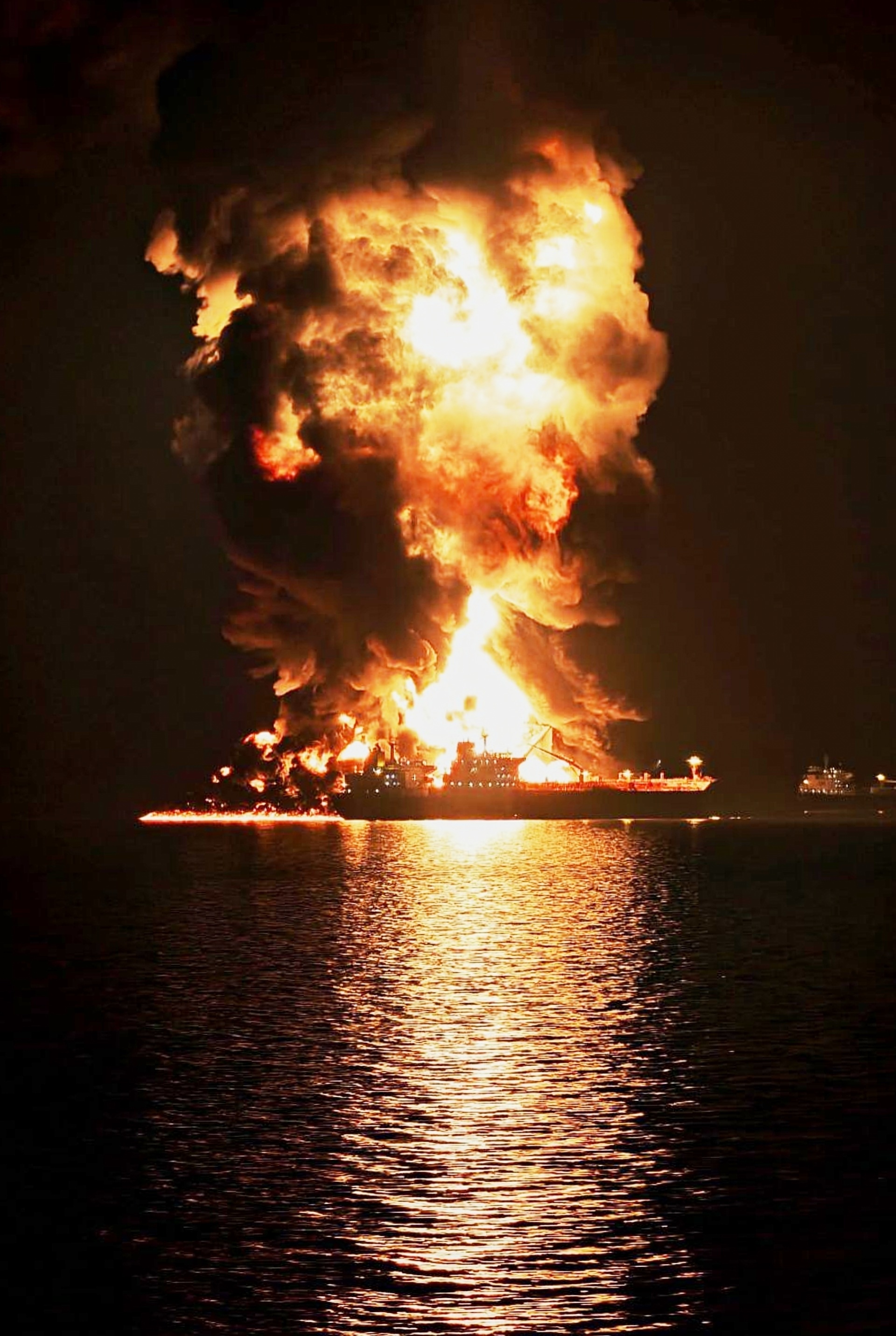
An oil tanker burns after being hit by an Iranian strike in the ship-to-ship transfer zone at Khor al-Zubair port near Basra, Iraq, late Wednesday, March 11, 2026. (AP Photo)
06:30 AM: Missiles and drones continue to hit Israel
There was a “major” rocket and drone barrage launched from Lebanon against Israel overnight, reports The Times of Israel, noting controversy today over an alleged failure by the Defence Forces (IDF) to keep the public sufficiently informed. The IDF said they attempted to mitigate the attack by striking the missile launchers in Lebanon, and by shooting down rockets and drones as they few to Israel. There were 200 rocket launches in all, and the IDF said most were intercepted or landed harmlessly.
Meanwhile, the IDF said they’d launched “extensive” airstrikes against Iran this morning targeting “terrorist infrastructure, weapons storage facilities, central headquarters” and a nuclear weapons compound. They said: “The ‘Taleghan’ compound, [is] a site used by the Iranian regime to advance nuclear weapons capabilities. The compound was used to develop advanced explosives and conduct sensitive experiments as part of the covert ‘AMAD’ project in the 2000s.”
06:15 AM: Iran strikes the Italians
An Italian military base in Iraq was hit by a missile in the early hours of the morning. No injuries, but it may illustrate how Iran is continuing to lash out everywhere with what remaining missile launch facilities it has, assuming the missile was Iranian at all.
The Italian government has condemned the attack, but said they wanted to conduct a “very thorough investigation” before saying definitively who they think was behind it. They also said the Italian base is packaged together with bases belonging to other nations, so they also questioned whether they were even the intended target.
Quite a web to untangle. Read more here.