Iran’s blockade of the Strait of Hormuz could have a devastating effect on the world’s food supply, driving up grocery prices and sending impoverished countries into food insecurity.
The main focus of the blockade has been its impact on oil prices, but its effects on downstream industries, such as fertilizer, are even more dangerous.
Beginning in the 1960s, in an effort to diversify their economies, the Gulf countries invested heavily in their fertilizer industries, leveraging their abundant natural resources. Foreign fertilizer companies began flocking to Dubai in the United Arab Emirates, drawn by low taxes, a favorable geographic location, and the city’s seamless air and sea transport hubs.
The Gulf’s investment in fertilizer paid off, as by 2026, much of the developing world was reliant on Gulf fertilizers. Three of the top ten global urea exporters, the world’s most commonly used nitrogen-based fertilizer, are located within the Persian Gulf. One-third of internationally traded fertilizers and roughly 45% of sulphur exports, a key ingredient in phosphate fertilizers, pass through the Strait of Hormuz.
Iran’s blockade has brought all of these exports to a near-halt. The timing could hardly be worse, coming during planting season for much of the world.
The effects go well beyond halting shipments of fertilizer produced in the Gulf, which is situated at the head of a vast global supply chain. India, itself a big fertilizer producer, has had to scale back production due to fuel shortages linked to the war. New Delhi ordered fertilizer plants to scale back production to 70% capacity to cope with the shortage.
“This is not only an energy shock. It is a systematic shock affecting agrifood systems globally,” Chief Economist of the Food and Agriculture Organization of the United Nations, Máximo Torero, warned on Thursday.
Aside from fertilizer, the skyrocketing cost of oil and gas will also have major effects on the agricultural industry.
“One has to remember that the agricultural sector depends a lot on oil for diesel fuel and gasoline, which powers all the equipment going into producing crops and getting crops out to the market,” Thomas Duesterberg, a senior fellow at the Hudson Institute, told the Washington Examiner. “So that’s a pretty big problem.”
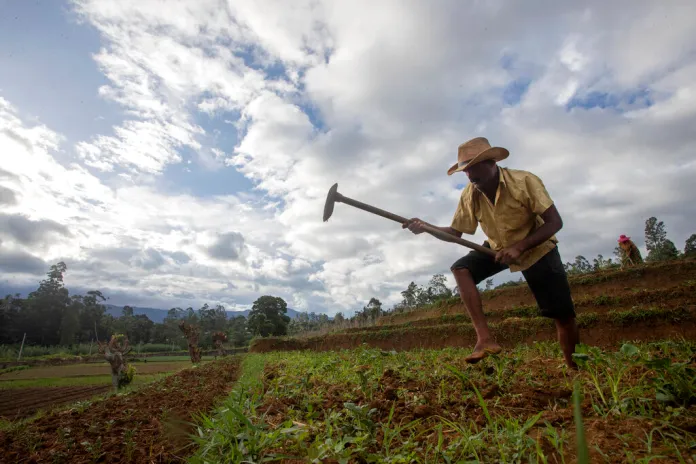
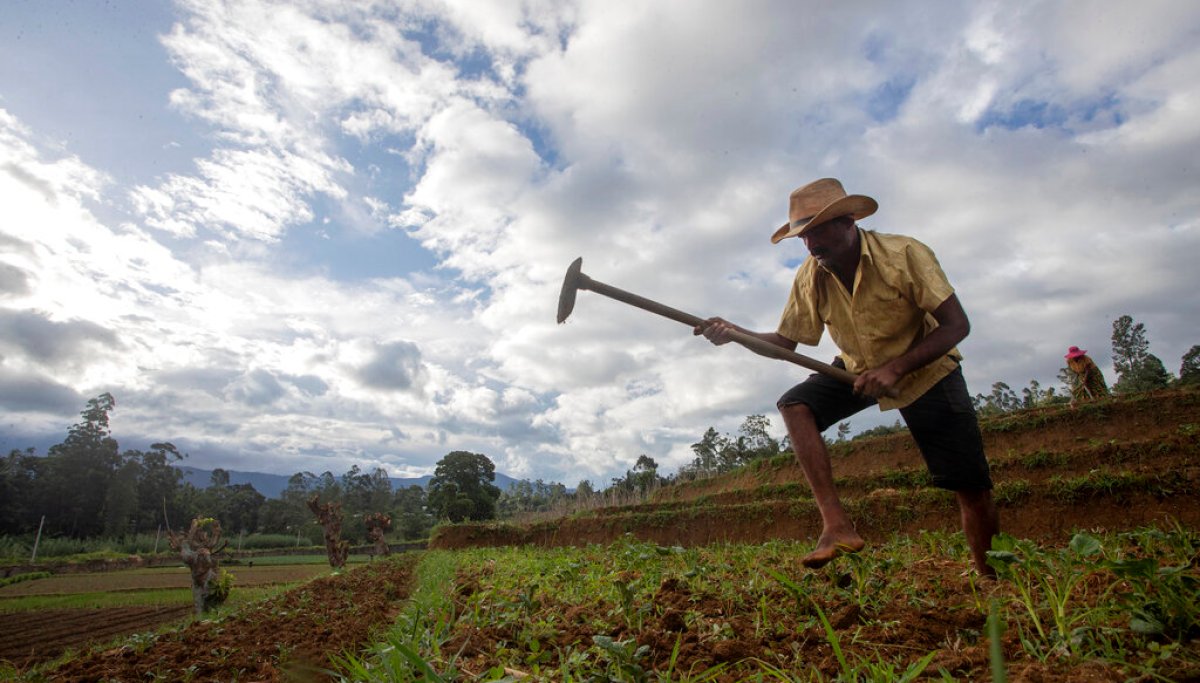
The worst-affected countries will be in South Asia, which lack the huge stockpiles of grain gathered in countries like the U.S. and China.
Torero said the worst-affected countries are Sri Lanka, Bangladesh, India, Egypt, Sudan, Somalia, Kenya, Tanzania, and Mozambique.
Major exporters such as Brazil may also be impacted and need to reduce production, which would have a spillover effect into global markets.
Duesterberg stopped short of some of the more catastrophic predictions, saying the true impact depended on how long the blockade of the strait would last.
“I think it’s too early to say, because we don’t know how much longer this is going to go on,” he answered when asked if the blockade could trigger famine conditions in some parts of the world. “There don’t seem to be below normal stockpiles around the world, as far as I can tell, for grains, which is the major problem.”
“Whether or not that translates into famine conditions, I think it’s going to take a little bit more time, and it’s going to depend on how soon the war is over, and the normal flows of both oil, gas, and movements of crops around the world,” Duesterberg said.
However long the disruption lasts, the damage could already be done.
“Even a temporary spike in fertilizer prices can leave lasting scars on global food production,” Alvaro Lario, president of the U.N.’s International Fund for Agricultural Development, told the Financial Times.
A sudden decline in fertilizer supply could push farmers in developing countries to switch to lower-yielding crops, a switch that isn’t easily undone. The deeply interconnected nature of the world economy means this could drive up prices elsewhere, pushing impoverished nations into food insecurity.
Duesterberg noted that the war has only been going on for four weeks, so it remains to be seen if the food crisis reaches the scale of that in 2022, when the closing of Ukraine’s ports led to fears of mass starvation in wheat-import-reliant developing countries. If the war were to continue for more weeks and months, however, the crisis could “potentially be a lot worse than that.”
“If we don’t have fertilizer coming out of the world’s leading fertilizer production area… then we’re in real trouble,” Duesterberg said, noting the secondary effects of lower crop yields and lower supplies.
While famine conditions are still a good way off, the hundreds of millions of residents of affected countries searching elsewhere for food will drive up food prices globally, including in the U.S. Duesterberg estimated that food price impacts would begin to be felt towards the end of the year.
WHAT DO IRAN PEACE NEGOTIATIONS MEAN FOR ISRAEL’S OPERATION IN LEBANON?
Though fertilizer costs have risen in the U.S., the impact will be much less severe. On Wednesday, Agriculture Secretary Brooke Rollins told Maria Bartiromo on Fox Business Network’s “Mornings with Maria” that the impact on U.S. farmers wouldn’t be too disruptive, noting that 80% of farmers “had already purchased their fertilizer by last year, in preparation for the spring planting season.”
The greater danger to U.S. farmers and Americans’ grocery bills will be oil and gas prices, as U.S. farming is especially mechanized.