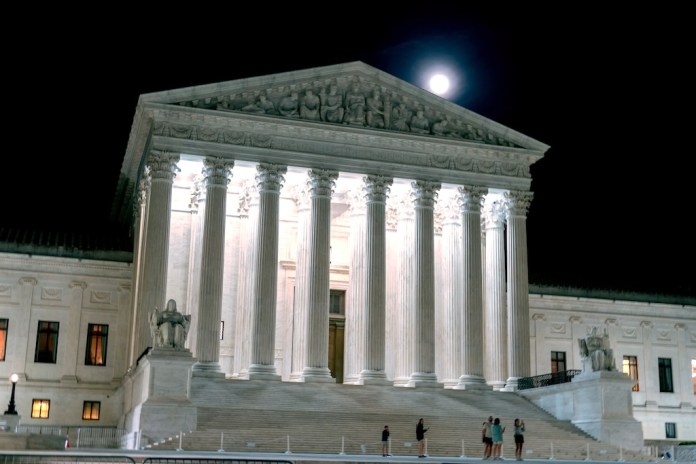
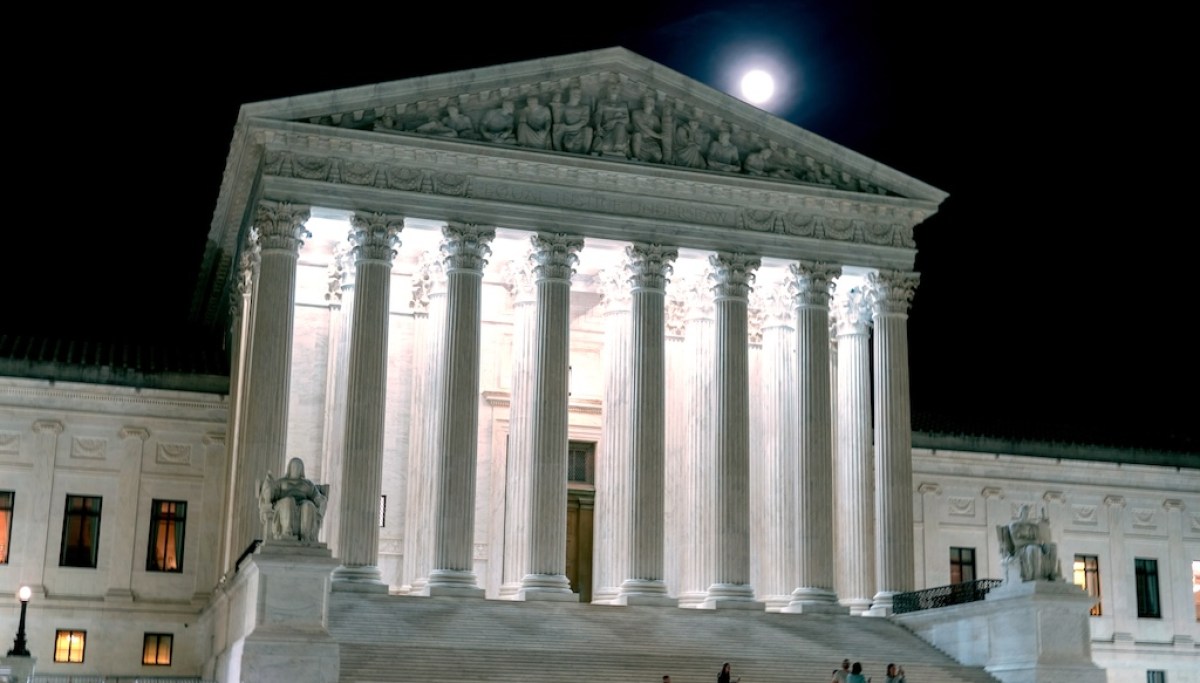
Colorado found itself on the wrong side of a Supreme Court ruling earlier this week in a First Amendment violations case, in which the state could return for another First Amendment case if the justices take up a case brought by a group of Catholic preschools.
In the petition for St. Mary Catholic Parish v. Roy, the Archdiocese of Denver and a group of Catholic preschools are asking the Supreme Court to take up their challenge to Colorado’s rejection of their claim that the preschools were being excluded from the state’s universal preschool program. The Supreme Court considered the petition during its closed-door conference on Thursday and could decide on whether to take up the case as soon as Monday.
The coalition, backed by the Becket Fund for Religious Liberty, argues that Catholic schools are being unlawfully excluded from the program because of their religious beliefs. Colorado citied the schools’ requirements for families to support Catholic beliefs to enroll in the school as the reason for their rejection, claiming all families must have an “equal opportunity” to enroll to be part of the UPK program, but the lawsuit points out that the state has permitted schools which only admit “children of color” and “gender-nonconforming children,” among enrollment requirements.
“There are 2,000 preschools in the program, a lot of private preschools, even some other religious preschools,” Nick Reaves, senior counsel at the Becket Fund for Religious Liberty, told the Washington Examiner. “But what they’ve said is, ‘We don’t like your beliefs, Archdiocese of Denver, so your schools are out.’”
Reaves added that the solution does not have to be a “win-lose scenario,” arguing that “letting these schools in would create more seats for everybody in the UPK program.” He also rejected the idea that the Catholic schools are engaging in discrimination that should bar them from the program, saying the state is unlawfully choosing winners and losers.
Reaves tied this petition to Colorado’s string of losses at the Supreme Court in the past decade on First Amendment issues. The justices have repeatedly found the state in violation of the First Amendment with its repeated efforts to pressure Christians into endorsing liberal worldviews.
“There’s no evidence of discrimination. They’re just keeping these Catholic schools out,” Reaves said. “And I think what the Supreme Court has said repeatedly in in [those] cases and in other cases, is that there’s there’s room for dissent on issues of nationwide importance, the government can’t enforce its own orthodoxy.”
The Centennial State’s latest loss came Tuesday, when the high court ruled 8-1, in the case Chiles v. Salazar, against Colorado’s law restricting the content of therapists’ speech under the guise of banning what the state misleadingly described as “conversion therapy.” The justices found that Colorado’s therapy law was clear viewpoint discrimination under the First Amendment. That loss followed rulings in 2023’s 303 Creative v. Elenis and 2018’s Masterpiece Cakeshop v. Colorado Civil Rights Commission over the state anti-discrimination law.
In the Masterpiece Cakeshop ruling in favor of baker Jack Phillips, who declined to design a cake for a same-sex wedding by citing his religious beliefs, the Supreme Court found “elements of a clear and impermissible hostility” by the Colorado Civil Rights Commission “toward the sincere religious beliefs that motivated his objection” to baking a cake for the same-sex wedding.
Becket hopes to add to the state’s losing streak by having the Supreme Court take up their case and rule in their favor. The religious liberty group has received backing from the Justice Department and several other coalitions of states and conservative groups urging the high court to hear the case.
“This Court should not allow widely diverging views about what makes a law neutral and generally applicable under Smith to stymie religious exercise in major portions of the country,” Solicitor General D. John Sauer wrote in a brief urging the justices to take up the case, noting the split among federal courts over when states may lawfully “burden religious exercise.”
“This case is a particularly suitable vehicle for resolving this important, recurring question,” he added. Sauer was referencing the 1990 ruling in Employment Division v. Smith, in which the Supreme Court set a narrow path for when states may put aside religious discrimination claims: if the law is neutral in its effect on religious and non-religious people.
WHY COLORADO’S LGBT LAWS KEEP GETTING STRUCK DOWN BY THE SUPREME COURT
Colorado has urged the high court not to take up the case. The state’s brief said lower courts determined the program “affirmatively welcomes faith-based providers while allowing no exceptions from its equal-opportunity requirements.”
If the Supreme Court decides to take up the St. Mary Catholic Parish v. Roy case, it would likely schedule arguments for sometime during its next term, which begins in October and is set to end in June 2027.