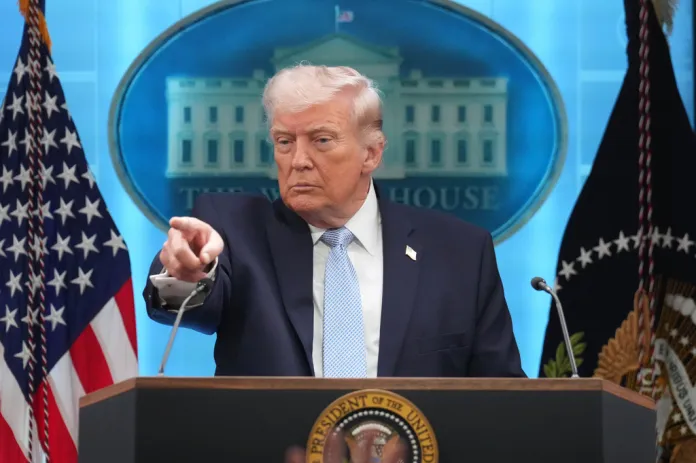
President Donald Trump imposed an 8 p.m. EDT Tuesday deadline for Iran to agree to a peace deal and open the Strait of Hormuz. And if there is no deal, the president threatened “complete demolition” of Iranian power plants and infrastructure.
As the war enters its 38th day, a familiar question hangs over Trump’s ultimatum: Will he delay again?
The stakes are high. U.S. and Israeli officials have framed Iran’s energy grid, including power plants tied to military and industrial production, as a critical pressure point in the war that began Feb. 28.
At the same time, Trump has repeatedly set and then postponed deadlines for potential escalation while also claiming victory in the war. The pattern that has drawn both criticism and feelings of relief, while detractors have dubbed the cycle “TACO,” shorthand for “Trump always chickens out.”
Each delay has come at a different stage in the conflict, from early military positioning to sustained strikes and emerging diplomatic efforts, but the pattern has been consistent: a public deadline followed by a pause, often justified by Trump claiming peace talks with Iran have moved forward.
What may be different now is the narrowing window for de-escalation. Iranian officials have continued to deny that peace talks are happening and refused a ceasefire.
At the same time, Trump’s repeated delays have created concern that any new deadline could again shift, complicating efforts to signal resolve.
Trump first signaled a potential deadline for expanded strikes on March 21 when he gave Iran two days to open the Strait of Hormuz, a critical oil transport lane that was closed by Iran at the start of the war. If Iran did not open the strait within 48 hours, the president threatened that U.S. forces “will hit and obliterate their various POWER PLANTS, STARTING WITH THE BIGGEST ONE FIRST!”
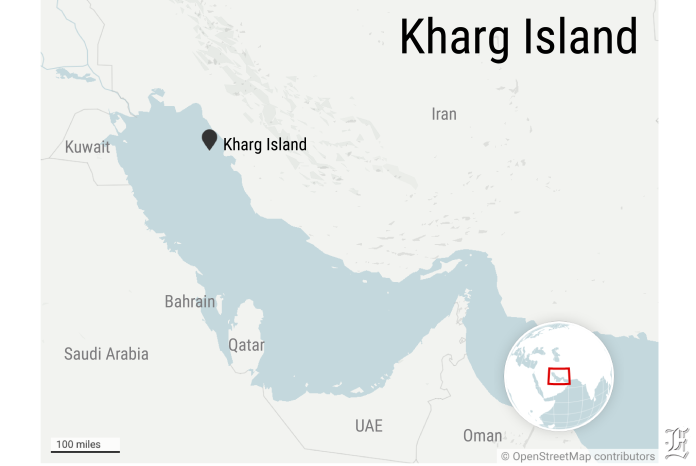
At the time, U.S. forces had already destroyed much of Iran’s navy and begun strikes on Kharg Island, where much of Iran’s oil infrastructure sits.
Two days later, on March 23, Trump extended the two-day deadline and ordered the Department of War to hold off on striking Iranian power plants and energy infrastructure.
By then, the U.S. Central Command had reported multiple engagements at sea, and Israeli forces had expanded strikes deeper into Iranian territory. Oil prices had begun to spike, and officials warned that targeting Iran’s power grid could trigger retaliatory attacks on energy infrastructure across the region.
Trump then pushed the deadline by five days and said the U.S. and Iran had “VERY GOOD AND PRODUCTIVE CONVERSATIONS REGARDING A COMPLETE AND TOTAL RESOLUTION OF OUR HOSTILITIES IN THE MIDDLE EAST.”
It was later revealed by Trump that his Middle East special envoy, Steve Witkoff, and Trump’s son-in-law, Jared Kushner, spoke with their Iranian counterparts the night before strikes were postponed.
At the time, Iranian officials said neither “direct or indirect” talks had occurred. However, the president added the caveat that the strikes were “subject to the success” of peace negotiations.
A third delay came on March 26 when Trump said he would delay the strikes on energy infrastructure for an additional 10 days “per Iranian Government request.” Trump said he chose to push the deadline to April 6 despite Iran only asking for a seven-day extension, and he added that talks for a peace deal were ongoing.
At the same time, Israel claimed to have killed Iran’s naval commander, Alireza Tangsiri, and several other military leaders. Additional U.S.-Israeli strikes continued targeting Iranian air defenses and other military sites.
Trump claimed Iran was “begging for a deal,” but Tehran continues to deny such claims.
With the time limit looming, Trump at one point signaled that a deal would not end the war, but rather that military operations would end when Iran is no longer capable of building a nuclear weapon. He still left the door open for a deal to be made, saying it was still “possible that we’ll have a deal because they want to make a deal.”
Two days before the April deadline, Trump delayed the timeline again after issuing a number of threats to Iran to open the Strait of Hormuz and agree to a peace deal.
On April 5, Trump posted on Truth Social that April 7 would now be “power plant day,” demanding Iran open the strait.
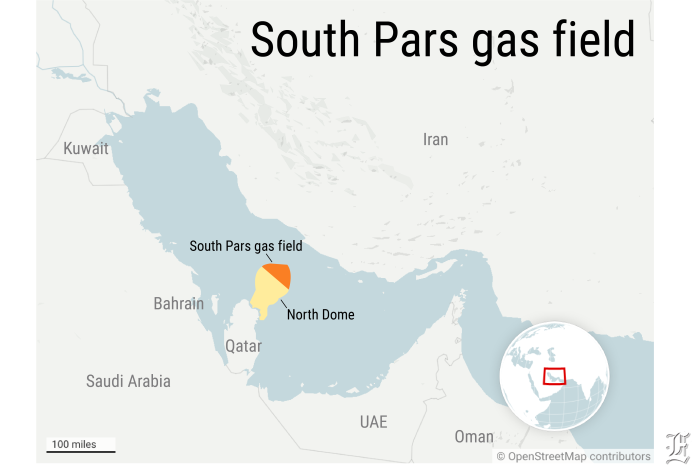
WHAT ARE THE MOST IMPORTANT ENERGY ASSETS IN THE IRAN WAR?
The president never explained exactly why he chose to delay the original April 6 deadline by 24 hours, but the move came after the Iranians shot down a U.S. F-15 fighter jet over their airspace, causing two crew members to be left stranded in enemy territory and later rescued.
On Tuesday morning, hours before the 8 p.m. deadline, the U.S. military carried out strikes on Iran’s Kharg Island. Following the strikes, the president vowed to follow through on his promise to blow up the country’s power plants if it didn’t reopen the Strait of Hormuz and come to terms, adding that an “entire civilization will die tonight.”