Tension over whether or not the two-week ceasefire agreed to by President Donald Trump and Iran’s leadership included an end to Israel’s attacks against Hezbollah in Lebanon has threatened to unravel the delicate pause in hostilities.
The United States, Iran, and Pakistan have offered conflicting accounts of what was agreed to as part of the ceasefire. Local Iranian media have claimed the country has once again closed the Strait of Hormuz, a crucial point in the negotiations, in response to Israel’s attacks.
The Trump administration has denied that it agreed to halt Israel’s campaign against Hezbollah, with Vice President JD Vance saying that while he thinks Iran believed the ceasefire included Lebanon, it “just didn’t.”
“We never made that promise,” Vance told reporters on Wednesday before departing Budapest, Hungary. “We never indicated that was going to be the case.”
That account directly clashes with Pakistani Prime Minister Shehbaz Sharif, who helped broker the deal and said publicly that all parties agreed to an “immediate ceasefire everywhere, including Lebanon.”
Vance chalked up the differing accounts as a “legitimate misunderstanding,” saying the U.S. agreed to a deal focused on Iran that included U.S. allies, such as Israel and the Gulf Arab states.
Yet Iran is framing the dispute as far more serious than mere confusion.
Iranian Foreign Minister Seyed Abbas Araghchi said the terms were “clear and explicit” and that the U.S. must choose between a “ceasefire or continued war via Israel.”
“The ball is in the U.S. court, and the world is watching whether it will act on its commitments,” Araghchi said in a statement posted to X.
Israel has launched a series of strikes against Hezbollah in Lebanon and does not appear ready to pull back. The Israel Defense Forces said in a statement that “as long as Hezbollah continues to threaten our civilians, we will continue to operate against them.”
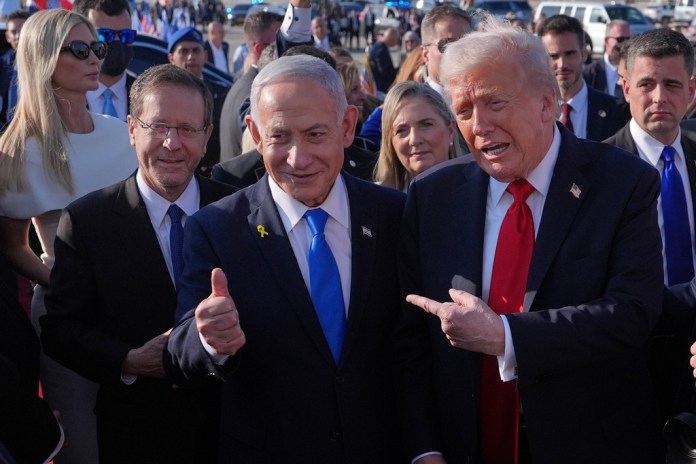
Trump has described Israel’s operations against Hezbollah as a “separate skirmish.” The distinction underscores the reality that the ceasefire’s success may hinge on actions by an ally the U.S. can influence, but not fully control.
Vance said on Wednesday that U.S. officials have been in contact with Israel and that Israeli leaders had offered to “check themselves a little bit in Lebanon.”
“That’s not because that is part of the ceasefire,” Vance said. “I think that’s the Israelis trying to set us up for success, and we’ll, of course, see how that unfolds in the next few days.”
Vance added that if Iran wants to end the ceasefire over Lebanon, “that’s ultimately their choice. We think that would be dumb, but that’s their choice.”
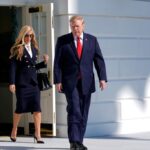
The White House confirmed that Vance will be leading negotiations for the U.S. in Islamabad, Pakistan, which are set to start on Saturday. Joining Vance will be U.S. Special Envoy to the Middle East Steve Witkoff and Trump’s son-in-law, Jared Kushner.
“We look forward to those in-person meetings,” Leavitt said.
Those talks will unfold against dueling accusations of bad faith.
Iranian Parliament Speaker Mohammad-Bagher Ghalibaf has accused the U.S. of violating three clauses of its 10-point proposal, including an end to attacks against Lebanon, the entry of a drone into Iranian airspace, and the denial of Iran’s right to uranium enrichment.
The speaker, who is expected to represent Iran during negotiations in Islamabad, said in a statement that because the terms of the ceasefire have been “openly and clearly violated,” a “bilateral ceasefire or negotiations is unreasonable.”
But the White House has denied that it agreed to Iran’s original 10-point plan. Instead, it says Trump agreed to a “more reasonable and entirely different and condensed plan.”
Meanwhile, reports that Iran has closed the Strait of Hormuz — a move that could rattle global energy markets — have added another flashpoint that could derail talks entirely. White House press secretary Karoline Leavitt said such a move would be “completely unacceptable.”
But she also pushed back on claims that the strait had actually been shut, suggesting a gap between public rhetoric and private reality.
“Privately, we have seen an uptick of traffic in the Strait today, and I will reiterate the president’s expectation and demand that the Strait of Hormuz is reopened immediately, quickly, and safely,” Leavitt said. “That is his expectation. It has been relayed to him privately that that is what’s taking place, and these reports publicly are false.”
BOTH SIDES CLAIM VICTORY, AS 39-DAY WAR TAKES A TWO-WEEK PAUSE TO SEE IF US AND IRAN CAN MAKE PEACE
Leavitt emphasized that the administration’s red lines remain unchanged, including a full end to uranium enrichment in Iran.
“The idea that President Trump would ever accept an Iranian wish list as a deal is completely absurd,” Leavitt said.