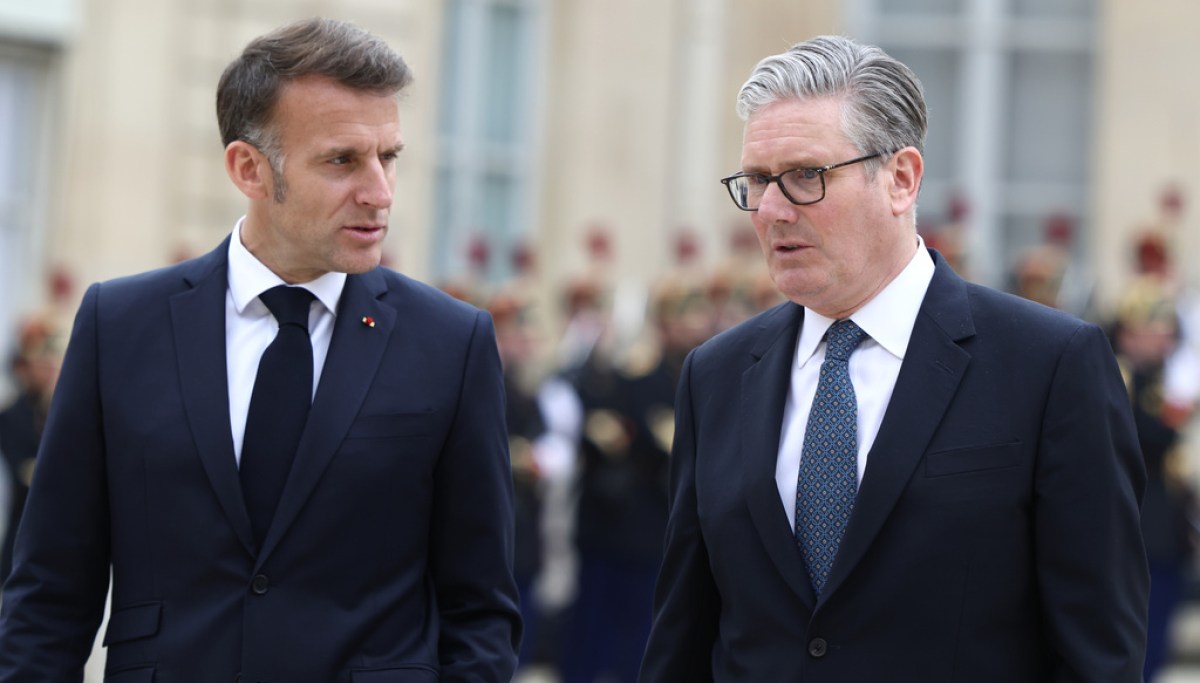
Over 50 international countries met on Friday for a summit on how to protect ships in the Strait of Hormuz during the Iran war, the same day the Islamic Regime announced the full opening of the waterway.
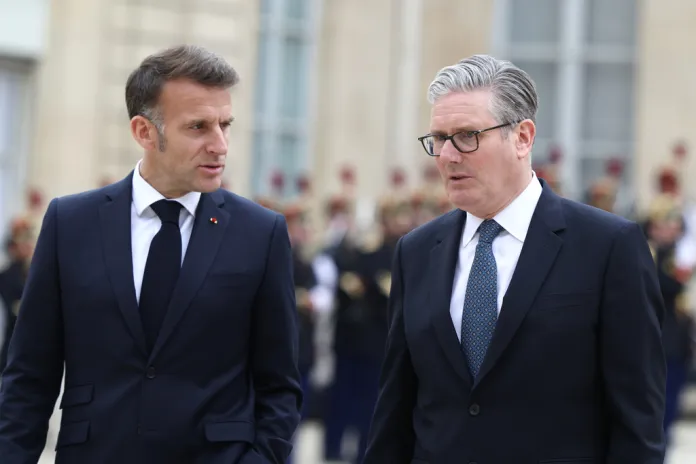
French President Emmanuel Macron and U.K. Prime Minister Keir Starmer announced in a joint statement that they would be leading a “strictly defensive” international naval mission to protect commercial shipping in the strait.
“France and the United Kingdom confirmed that they are establishing an independent and strictly defensive multinational mission to protect merchant vessels, reassure commercial shipping operators, and conduct mine clearance operations as soon as conditions permit following a sustainable ceasefire agreement,” Macron and Starmer announced.
Their announcement came just hours after Iranian foreign minister Abbas Araghchi publicly stated that the Islamic Revolutionary Guard Corps would allow commercial vessels to transit the strait for the remainder of the two-week ceasefire in Lebanon. Aragchi announced the waterway would be “completely open” for all commercial ships, and President Donald Trump boosted the news on Truth Social.
“IRAN HAS JUST ANNOUNCED THAT THE STRAIT OF IRAN IS FULLY OPEN AND READY FOR FULL PASSAGE. THANK YOU!” Trump said.
Macron and Starmer said they “welcome” the news of the reopening of the strait and “underline that this must endure.”
“The disruption to global energy security, supply chains, and economic and financial stability must end, for the benefit of communities right across the world, in particular for the poorest and most vulnerable. We committed to coordinating our economic responses and to avoid protectionist action,” Macron and Starmer said.
WHY OIL PRICES ARE FALLING FASTER THAN GAS PRICES AFTER THE IRAN CEASEFIRE
The French and U.K. mission to send a multinational coalition to the strait comes weeks after Trump announced a similar initiative and urged both the United Kingdom and France to join his coalition.
Following the news of the reopening of the Strait of Hormuz on Friday, WTI crude oil futures dropped about $10 per barrel, sitting at $85.57 at close. The downward trend because of the reopening marks an optimistic outlook for an oil market that has been thrown into volatility following the Guard’s closure of the crucial oil shipping waterway after the initial U.S.-Israeli airstrikes on Tehran in late February.