CNN, the network that helped bring you the fear-mongering which prolonged the worst parts of the last pandemic, would like you to know that they’d like a sequel and would you please stop “calm-mongering” about hantavirus?
In a ludicrous story about the Andes strain of the disease — the first (and hopefully only) outbreak of which appeared on a cruise ship called the MV Hondius, which docked in the Canary Islands and transferred patients back to their country of origin — CNN noted that people were being too goshdarn normal about things while noting that “still-fresh memories of the loss and disruptions of the Covid-19 pandemic” might be affecting our response.
Yes, whatever may have given you that idea, CNN?
If you’re at high risk of serious illness or death from Covid-19, it’s time to dust off those N95 masks. https://t.co/6qpqTSGoYM pic.twitter.com/LpKe7LFdPP
— CNN (@CNN) August 23, 2023
That call for masking was in 2023, for those of you who didn’t check the date.
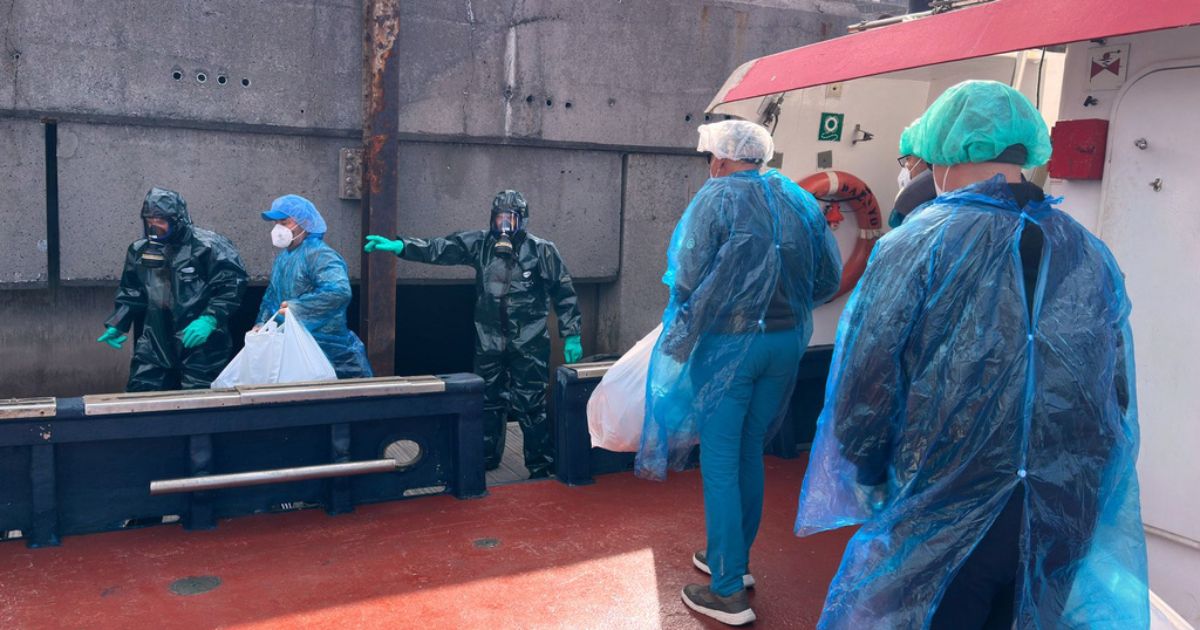
Anyhow, CNN bills itself as “The Most Trusted Name in News,” but its tagline really should be Rahm Emanuel’s timeless motto: “Never Let a Good Crisis Go to Waste.” So, even though there are three people dead out of 11 confirmed or suspected cases, according to World Health Organization data as of Wednesday, that didn’t mean it wasn’t time for a piece with a title like “Hantavirus is not Covid-19, but ‘calm-mongering’ risks triggering post-Covid anxiety.”
It’s the “calm-mongering” that poses the biggest risk to these people, with CNN averring that “some health experts say that at points, the messaging has been overly confident and too willing to dismiss the possibility of a threat.”
Ah, yes: The return of “some health experts”! I missed you, fellas. Can you get the Faucinator out of retirement to do his “I am the science!” bit?
One of these CNN-consulted experts said that health officials should be absolutely clear that this isn’t COVID-19 while treating it like it might be kinda a little sorta if you squint like COVID-19, maybe possibly:
Dr. Peter Sandman, who was a professor at Rutgers University for almost two decades and is one of the founding fathers of the field of crisis and risk communication, said that to be effective now, health officials first need to earn the right to explain why this hantavirus outbreak isn’t Covid.
“Every reassuring message should have a verbal asterisk: ‘We don’t know as much about hantaviruses as we wish we did,’” Sandman said in an email to CNN.
Health communicators would be wise to start every news conference by acknowledging that this feels like Covid redux, he said. “Mention a few ways it echoes Covid and agree that people are wise to be a bit skeptical about official ‘nothing to worry about’ messaging,” Sandman wrote.
Then acknowledge the uncertainty and describe the decision-making process. For example, “’We’re thinking about worst case scenarios, checking and double-checking to make sure we still think this is a big deal only if you were on that ship or came into close contact with someone who was,’” Sandman wrote.
Again, perhaps CNN’s viewership might be “skeptical” about “nothing to worry about” messaging coming from Donald Trump’s administration, but the same messaging is coming from the WHO, the people who genuflected to China while encouraging — heck, practically forcing — the entire world to lock down during the COVID pandemic.
Indeed, WHO Director-General Dr. Tedros Adhanom Ghebreyesus — remember him? — said that transmission had been limited to those in “close and prolonged contact.” As in, on a cruise ship in close quarters.
Also, not just any cruise ship. “The Hondius was far from the Love Boat,” The Wall Street Journal noted in an article about the cruise that catered to “nature enthusiasts” and “was set to take passengers to remote islands from the South Atlantic to Cape Verde.”
“Some passengers shared small, quadruple-occupancy cabins with strangers, complete with bunk beds reminiscent of a cut-rate youth hostel,” the Journal reported. A 33-day cruise in a floating hostel with a virus that requires close contact for transmission. You can perhaps see how things went very wrong for these people while still noting that this isn’t COVID-2: N-95 Boogaloo.
However, CNN noted that maybe — maybe! — people were just a little tired of this stuff, especially from them.
But the echoes of Covid will be hard for health officials to escape.
“I think we’re definitely in a post-covid fatigue moment,” said Dr. Traci Hong, a professor of media science at Boston University’s College of Communication. On her social media feeds, she sees headlines referring to the “rat virus” and decrying “calm-mongering.”
“And there is this real sort of tug of war,” Hong said. “You don’t want to frighten people.”
Yes, how could this possibly have happened?
In September of 2020, one CNN journalist, Kyle Feldscher, predicted we’d need 5,836,679 deaths to get to herd immunity from COVID. That was just from the initial strain, of course. The last time the Worldometer Coronavirus Tracker was updated in April of 2024, long after the virus had mutated, the number of U.S. deaths attributed to COVID was 1,219,487. (This is probably still too high.)
Remember, too, that CNN also blamed Republicans for this. Jim Acosta, then the network’s White House correspondent, said that the delta variant should be known as the “DeSantis variant” because he’d stopped masking and lockdown measures. For that measure, here were Brian Stelter’s headlines at CNN on COVID over just a week at the start of the pandemic:
- March 25, 2020: “How the Fox News presidency has politicized a national health crisis”
- March 30, 2020: “As coronavirus death toll rises, Trump focuses on a different set of numbers: TV ratings”
- March 30, 2020: “Trump is self-isolating at his safe space: Fox News”
- April 1, 2020: “Journalists challenge Trump’s ‘revisionist history’ regarding coronavirus response”
Imagine us wanting to calm-monger against CNN’s carefully calibrated “panic, you fools! Panic!” response to both this and COVID, in different (and likely equally wrong) ways.
This parade of “experts” goes on, but I needn’t. The TL;DR from CNN here is: “This totally isn’t COVID. Except in the way that we’re going to pretend it is. Or maybe worse! Who knows? Tune in to find out.” No, thanks.
Advertise with The Western Journal and reach millions of highly engaged readers, while supporting our work. Advertise Today.
Submit a Correction →