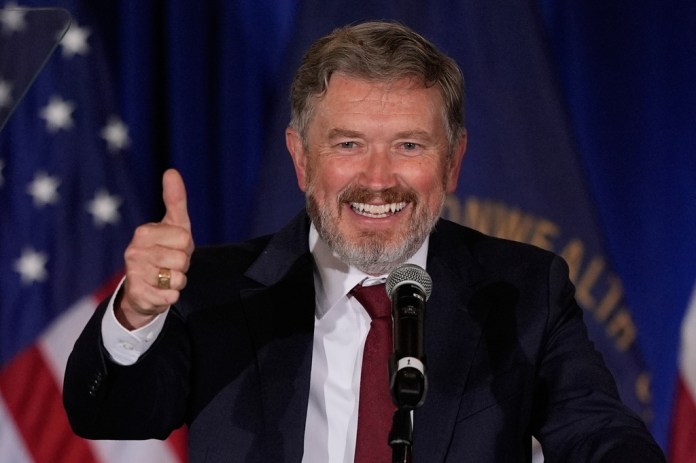
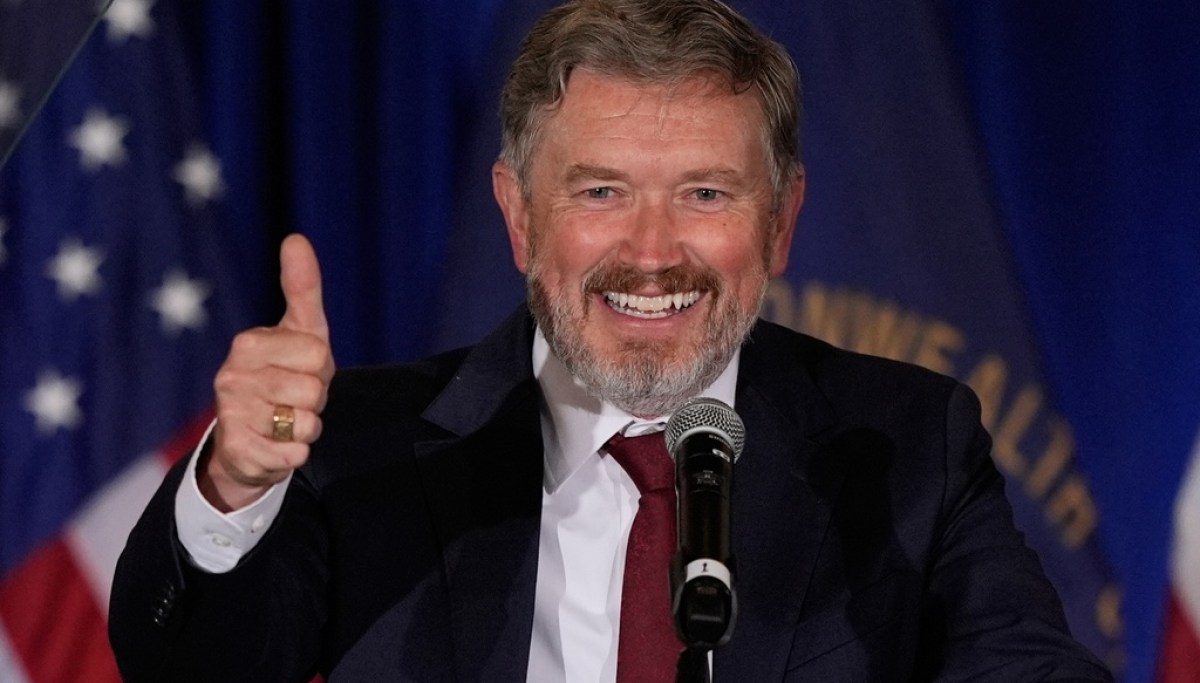
Could Massie run for president? As soon as he conceded his loss to President Donald Trump’s favored candidate, Ed Gallrein, it was clear that his more zealous supporters in the election-night crowd wanted him to do exactly that.
The Iran war has potentially reopened the Ron Paul lane in the 2028 Republican primaries. The 12-term former Texas congressman had some strong showings in the early states in 2008 and 2012, with top-three finishes in both Iowa and New Hampshire during his second GOP bid, even if he fizzled down the stretch. Paul drew big, young crowds on the campaign trail, considerable media coverage, and respectable raw national vote totals.
That lane was expected to be filled in 2028, if at all, by Paul’s son, Sen. Rand Paul (R-KY). The younger Paul has been testing the waters for a second presidential campaign. He supported Massie, his fellow Kentuckian, in the May 19 primary and has been a Tea Party success story.
But when the senator first ran for president in 2016, he was unable to recapture the enthusiasm that surrounded his father’s Republican candidacies. The “libertarian moment” that gave the younger Paul reason to hope he could actually win the GOP nomination (his father was the 1988 Libertarian Party presidential nominee) peaked around 2014. Trump absorbed a lot of the populist energy, while Sen. Ted Cruz (R-TX) captured many small-government Tea Party conservatives. The end result was disappointing for Paul, who dropped out after Iowa.
Paul, who has since been reelected to the Senate twice, didn’t seem as eager as his father to run a movement-building campaign that was unlikely to culminate in a stint behind the Resolute Desk. Massie does have more of the Ron Paul energy around him at the moment, and might be more willing to be a gadfly in the elder Paul’s tradition.
Massie also has a national following. Even with Trump deeply invested in the race against him and a considerable amount of outside money spent to dislodge him, he won a much higher percentage of the vote than recently defeated Sens. John Cornyn (R-TX) and Bill Cassidy (R-LA). But he still lost.
Some of the reasons for Massie’s defeat included the inherent tensions between older primary voters in his more conventionally conservative Kentucky congressional district and his younger, more radically libertarian national following. Ron Paul had to deal with this himself while running for reelection to Congress from Texas, but the media environment was radically different then and the party had already started turning against George W. Bush by the 2008 presidential primaries. Bush, unlike Trump, also generally ignored his intraparty critics.
Some of the things that were a liability for Massie in a House primary could potentially be an asset in a protest presidential candidacy. Massie posted strong numbers with younger Republicans, who might be more helpful as grassroots muscle behind a national campaign than in outvoting conservatives over age 60 in a midterm primary election.
Massie’s positioning on Israel and Trump would still probably put a ceiling on how well he could do in the Republican presidential primaries. But he could press Vice President JD Vance, who reportedly had misgivings about the Iran war, on foreign policy and challenge pretty much anyone else who could conceivably run for the 2028 nomination on government spending and the national debt.
The Ron Paul presidential campaigns led to the election of a handful of lawmakers like Massie and Rand Paul in the first place. It’s possible that Massie could help replenish their ranks by seeking a different office, energizing young libertarian activists in the GOP.
It is unlikely that there is room for both Massie and Rand Paul to run. The two men appeal to similar voters and donors. But they are also friends and close political allies, so they would probably work it out.
TRUMP ENDORSEMENT TRACKER: HERE’S WHO THE PRESIDENT HAS PICKED IN GOP MIDTERM ELECTION PRIMARIES
Massie could run for another office or, less likely, leave electoral politics altogether. But even in defeat, the 14-year congressman has demonstrated he knows how to get attention. Perhaps after the midterm elections, a subset of the party will be ready to move on from Trump.
Lose a congressional seat, gain a national platform. It’s a trade-off Massie could plausibly make.