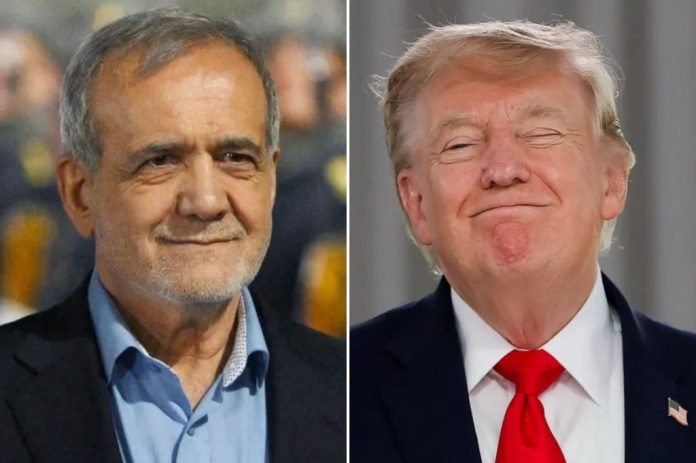
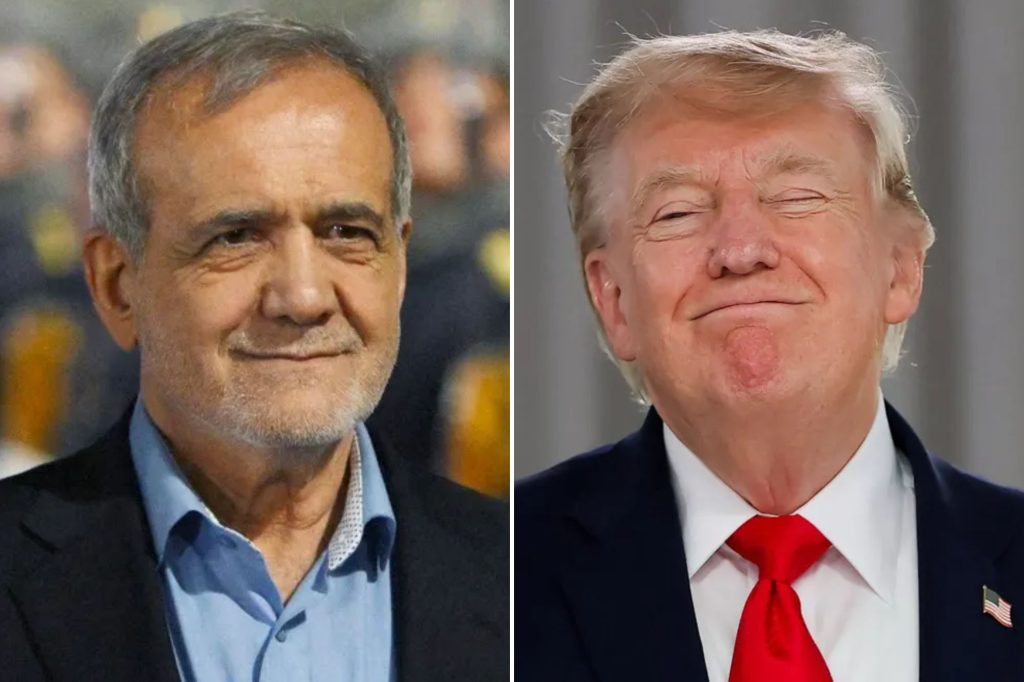
The United States and Iran remotely signed their memorandum of understanding to end the war and open the Strait of Hormuz for the second time on Wednesday, the White House told the Washington Examiner.
The signing means Iran will “instantly reopen” the Strait of Hormuz and the U.S. will “immediately lift” its naval blockade on all Iranian vessels entering or exiting ports in the water passageway, according to Pakistani Prime Minister Shehbaz Sharif. Pakistan has been a key mediator in peace talks between Washington and Tehran.
“It’s signed,” Trump told reporters as he climbed into a limousine taking him away from a dinner with French President Emmanuel Macron at the Palace of Versailles in France, where he was attending the G7 summit. Macron posted video of the signing with a caption hailing the deal as “an important step in the right direction for our compatriots that will soon enable a decrease in energy prices.”
The key distinction between the two signings appears to be that the agreement electronically signed over the weekend did not include Iranian President Masoud Pezeshkian’s signature, unlike the memorandum signed Wednesday. The signings come before the two countries were expected to ink the agreement in person during a meeting in Switzerland on Friday. It was not immediately clear why the deal was signed a second time or if the Geneva meeting would still take place.
TRUMP’S VERY PUBLIC INNER DIALOGUE ON IRAN
Vice President JD Vance said Monday that the U.S. and Iran had initially digitally signed the agreement on Sunday. Trump on Monday also confirmed that the deal had been electronically signed, during comments to reporters from the G7 summit in France. It appears that the agreement was initially signed Sunday by Trump, Vance, and Iranian parliamentary speaker Mohammad-Bagher Ghalibaf.
On Wednesday, the agreement was electronically signed by officials for a second time, this time by both Trump and Pezeshkian. Esmail Baghaei, Iran’s Foreign Ministry spokesman, and Sharif, Pakistan’s prime minister, said the Wednesday agreement was signed by both Trump and Pezeshkian.
The Strait of Hormuz is expected to open “immediately” after the document was signed, relieving intense pressure on the global energy markets, which spiraled after the Middle Eastern passageway was essentially blocked for nearly four months and triggered intense oil shortages and gas price spikes across the world.
After much pressure, the U.S. detailed the 14-point Iran agreement to reporters on Wednesday afternoon following criticism for not releasing the text to the public. Anticipation had been building about the deal’s details due primarily to speculation about whether it effectively keeps Iran from enriching uranium and prevents it from building nuclear weapons.
There was mixed reaction from Congress after the text was detailed, with Republicans such as Sen. Bill Cassidy (R-LA) expressing outrage over the deal lifting sanctions on Iran and arguing it fails to curb Tehran’s nuclear ambitions — “Reagan is rolling over in his grave,” the Louisiana Republican wrote — while others defended it as a step in the right direction.
“It is my opinion that signing the MOU will be beneficial to the United States, in as much as the Strait of Hormuz will begin to open, and the hostilities with Iran will stop,” Sen. Lindsey Graham (R-SC) said. “Whether or not the United States can reach an acceptable, verifiable deal with Iran regarding its nuclear program and other issues is yet to be determined, but I see little downside to trying.”
The agreement seeks to end the conflict, which started on Feb. 28 when the U.S. launched strikes against Iran. Washington made the decision after being told by Iranian leadership that it had enough enriched uranium to make 11 nuclear bombs within 10 days, according to Trump’s team.
Vance said Monday that “the Iranian nuclear program has been completely destroyed” since the U.S. launched the conflict.
“What we’re saying is: Make the long-term commitment not to rebuild it, and you will get the benefits that come with that,” he said.
Questions linger about the deal, as Israel’s operations against Iranian-funded Hezbollah terrorists in Lebanon have sparked concerns that Tehran could walk away from the agreement. Earlier this week, Tehran said Israel must withdraw from Lebanon before it would agree to the deal with the U.S.
OBAMA SAYS IT’S ‘DOUBTFUL’ TRUMP’S IRAN DEAL WILL DIFFER FROM 2015 FRAMEWORK
But Trump said Tuesday he believed the deal to reopen the Strait of Hormuz could survive Israeli operations in Lebanon.
“It can,” Trump said, speaking from the G7 summit. “Iran’s a big one, but we have that little pinprick out there that constantly rears its head. And that’s Hezbollah.”