U.S. forces launched a series of what the military described as "powerful strikes" against Iran early Wednesday after Tehran attacked three commercial vessels transiting the Strait of Hormuz, with U.S. Central Command declaring the Islamic Republic's actions amounted to "a clear violation of the ceasefire."
The post U.S. Launches ‘Powerful Strikes’ on Iran After Attacks on Ships in Hormuz appeared first on Breitbart.
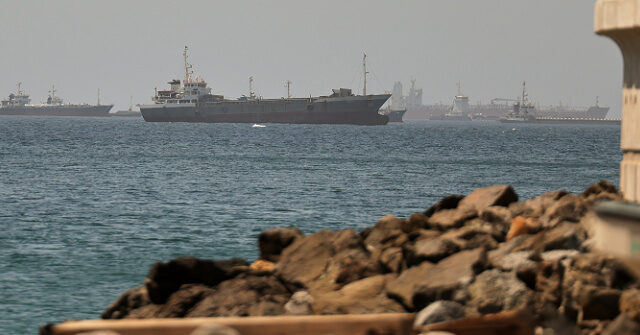
U.S. forces launched a series of what the military described as “powerful strikes” against Iran early Wednesday after Tehran attacked three commercial vessels transiting the Strait of Hormuz, with U.S. Central Command declaring the Islamic Republic’s actions amounted to “a clear violation of the ceasefire.”
CENTCOM said the strikes were intended to impose “heavy costs” on Iran for targeting civilian-crewed commercial shipping in an international waterway, describing the attacks as “unwarranted” and “dangerous.” The operation came as Washington and Tehran were implementing a memorandum of understanding aimed at ending months of regional conflict and restoring safe navigation through the strategic waterway.
The escalation followed a series of Iranian attacks on commercial vessels transiting the Strait of Hormuz over Monday and Tuesday, including a Qatari liquefied natural gas tanker and a Saudi tanker, prompting condemnations from Gulf states, the reimposition of U.S. sanctions on Iranian oil exports, and raising new questions about the future of the agreement.
A U.S. official told Axios the strikes targeted Iranian air-defense systems, coastal surveillance systems, surface-to-air missile batteries, anti-ship cruise missile sites, drone launch sites, and port facilities. Iranian state media reported explosions in Bandar Abbas, Sirik, and on Qeshm Island. The official said the operation was roughly four to five times larger in scope than U.S. strikes carried out in the area about ten days earlier.
United Kingdom Maritime Trade Operations confirmed that one tanker reported being struck by an unknown projectile on its port side, causing a fire, while advising ships transiting the strategic waterway to exercise caution. The attacks damaged three commercial vessels but caused no reported casualties.
Saudi Arabia condemned “in the strongest terms” Iran’s targeting of the Saudi tanker Wedyan and the Qatari tanker Al-Rekayyat, calling the attacks “an assault on the security and safety of international navigation and on the security of global energy supplies.”
Qatar likewise condemned the attack on Al-Rekayyat, summoned Iran’s ambassador, and held Tehran legally responsible for the strike and any resulting damage.
Earlier Tuesday, the Treasury Department revoked General License X, which had temporarily authorized Iranian oil, petrochemical, and petroleum exports under the memorandum of understanding. Administration officials have repeatedly stressed that the agreement is entirely performance-based and that any sanctions relief could be revoked should Iran fail to comply with its commitments.
Speaking to reporters Monday, President Donald Trump said Washington was “close to maybe making a deal” with Tehran but warned the United States would “finish the job” if negotiations failed.
“We’re either going to make a deal or we’re going to finish the job,” Trump said. “And it won’t be tough to finish the job.”
“I’d rather make a deal because I don’t want to affect 91 million people,” he added. “We can knock down their bridges in one hour. We can knock out their energy supply.”
Following the Treasury action and later the U.S. strikes, Iran’s Foreign Ministry accused Washington of violating the memorandum of understanding, warning that Tehran would take “decisive measures” to protect its national interests and national security.
On Tuesday, Iranian Foreign Minister Abbas Araghchi declared that negotiations on a final agreement would not begin while U.S. “threats” continued.
“Paragraph 13 of the MoU is clear: negotiations on final deal will not commence if threats continue,” Araghchi wrote. “Honor your signature.”
Also on Tuesday, Mohsen Rezaee, a senior military adviser to Supreme Leader Mojtaba Khamenei, accused Washington of undermining the agreement and predicted the United States itself would sabotage negotiations.
“Those within Iran who oppose negotiations must be patient—the U.S. will sabotage the talks themselves,” Rezaee said.
The latest escalation follows indirect U.S.-Iran technical talks held late last month on implementing the June 17 memorandum of understanding, including discussions on maritime traffic through the Strait of Hormuz and the phased easing of sanctions.
War Secretary Pete Hegseth is expected to arrive in Israel on Wednesday for meetings with Prime Minister Benjamin Netanyahu and Defense Minister Israel Katz, with Iran expected to be a central topic of discussion following the latest U.S. strikes.
Joshua Klein is a reporter for Breitbart News. Email him at [email protected]. Follow him on Twitter @JoshuaKlein.