A growing body of evidence reveals that Xavier Becerra, the current frontrunner for California governor, has deep ties to a network of militant activists and foreign agents who have a history of meddling in U.S. elections, mobilizing pro-immigration activism, and undermining American sovereignty.
The post Exclusive—Price Sukhia: Xavier Becerra’s Mexico Problem appeared first on Breitbart.
A growing body of evidence reveals that Xavier Becerra, the current frontrunner for California governor, has deep ties to a network of militant activists and foreign agents who have a history of meddling in U.S. elections, mobilizing pro-immigration activism, and undermining American sovereignty.
Throughout his career, Becerra has framed himself as an advocate for migrants. What is less apparent is his longtime alliance with radical activist NGOs whose political activity is deeply integrated and carefully coordinated with America’s southern neighbor: Mexico.
Mexico has been building political power within the U.S. through its vast network of more than 50 consulates, which collectively form the infrastructure of a sophisticated campaign to mobilize political action, migrant advocacy, and get-out-the-vote efforts inside American borders for the benefit of Mexico, according to research by the Government Accountability Institute (GAI).
Such activity is expressly forbidden by international laws, which prohibit foreign consulates from interfering in the domestic affairs of their host countries.
A new investigation by GAI has revealed that the network of radical migrant nonprofits tied to Xavier Becerra is deeply embedded within this same foreign network.
CHIRLA: “My Family”
The investigation comes on the heels of a recent endorsement of Becerra by the Coalition for Humane Immigrant Rights of Los Angeles (CHIRLA), a group that was investigated by the House Judiciary last summer amid suspicions that it was using taxpayer funds to support protest activity in Los Angeles. More recently, the group was accused by rival California gubernatorial candidate Steve Hilton of helping Becerra power his political ground game using illegal immigrants as canvassers for voter outreach.
For more than 20 years, CHIRLA has maintained close operational ties with Mexico’s consulates, which appear to be operating more as political outposts than legitimate diplomatic offices.
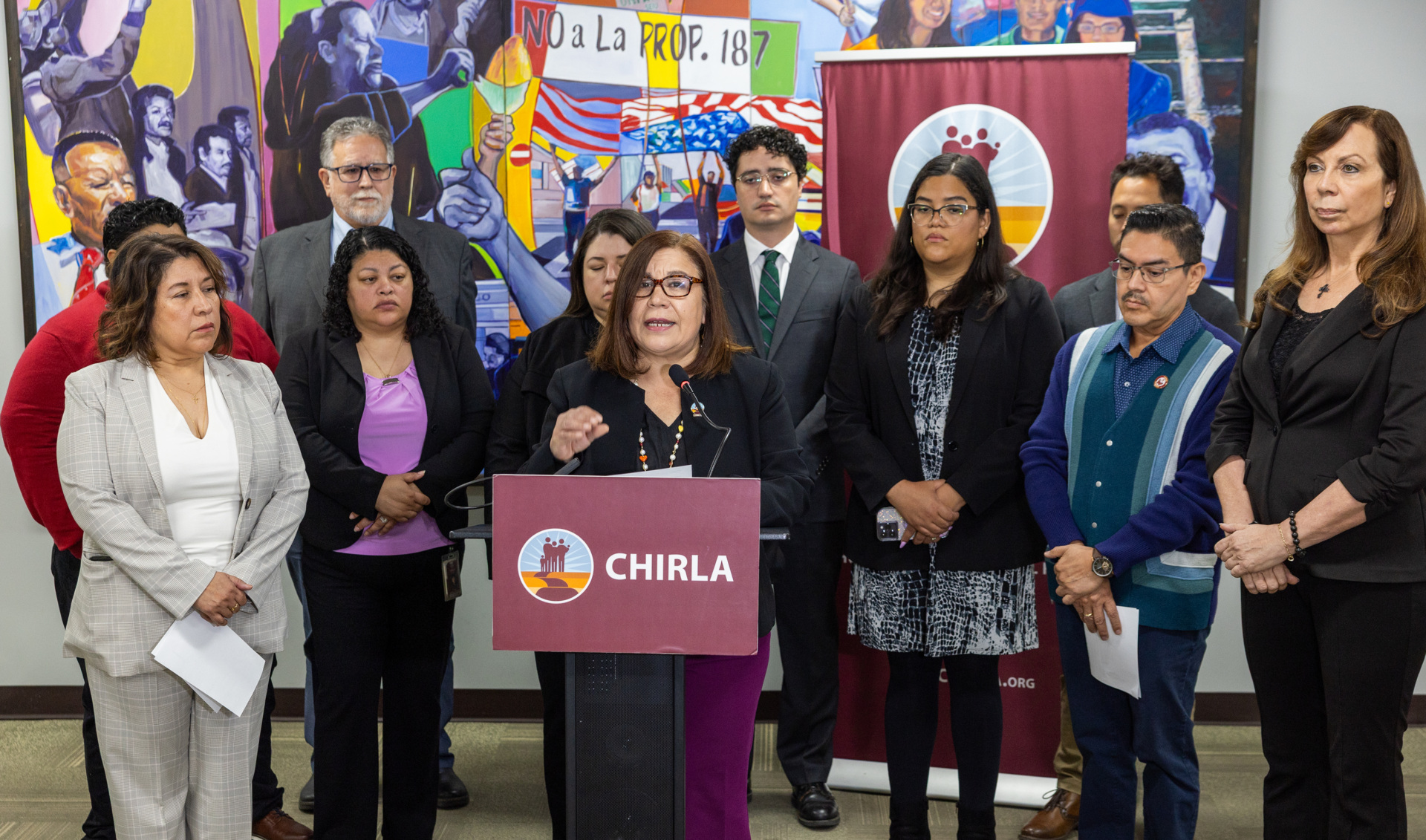
Angelica Salas, Coalition for Humane Immigrant Rights Los Angeles (CHIRLA) executive director, speaks while joining Immigration attorneys and immigrant-rights organizations host a news conference to denounce the Trump administration’s immigration polices at the CHIRLA office in Los Angeles on April 3, 2025. (Allen J. Schaben/Los Angeles Times via Getty Images)
Mexico’s own former Foreign Minister stated it bluntly: “We are already giving instructions to our consulates that they begin propagating militant activities — if you will — in their communities.”
In 1994, the Mexican consulate in Los Angeles worked with CHIRLA to help build a legal case against California’s Proposition 187, which barred illegal immigrants from receiving public benefits.
Since that time, Mexican officials have opened voter registration centers on consulate grounds, coordinated with migrant advocacy and anti-ICE organizers across the country, and even provided bond training to attorneys as part of what one consulate described as a “collaborative effort to respond to ICE detention of immigrants.”
Such activity, which is forbidden under the framework of the Vienna Convention, has caught the eye of the Trump administration. The State Department recently launched a national security review of all 53 Mexican consulates amid concerns of political meddling by consular offices.
CHIRLA’s coordination with such Mexican outposts includes hosting joint events in which CHIRLA and consular officials teach illegal immigrants forensic strategies for avoiding deportation.
The group also operates multiple offices in Mexico, where it organizes seminars preparing migrants before they even enter the United States, part of what California’s DOGE project calls a “civic pipeline” from immigration services to Democratic voter mobilization.
Notably, CHIRLA collaborates with Mexico’s LA consulate on both get-out-the-vote campaigns and naturalization services. In 2024, CHIRLA opened a Mobile Voting Center in the heart of Los Angeles, just a few blocks away from the Mexican consulate there. At that same location, the group provides free weekly “Know Your Rights” workshops for anyone fearing deportation, regardless of immigration status.
More recently, CHIRLA has been accused of engaging in an orchestrated and well-coordinated anti-ICE campaign, dispatching activists to interfere with federal immigration enforcement operations in real time, according to congressional testimony. The group has even called for the dismantling of the Department of Homeland Security entirely and the repeal of laws that “criminalize migration.”
At the CHIRLA endorsement event, Becerra referred to the group as “my family.” It was a fitting description. CHIRLA has advocated for Becerra since 2016, when he became California’s Attorney General, and he has spoken at CHIRLA’s annual gala events.
The Consulate Network
CHIRLA is just the tip of the iceberg.
UnidosUS, formerly the National Council of La Raza, has been a Becerra ally for decades. His daughter Clarissa interned there in 2012, and Unidos championed Becerra’s nomination as Health and Human Services (HHS) Secretary in 2020. He has also served as a keynote speaker for Unidos’ annual conferences, with his travel and expenses fully paid for by the group.
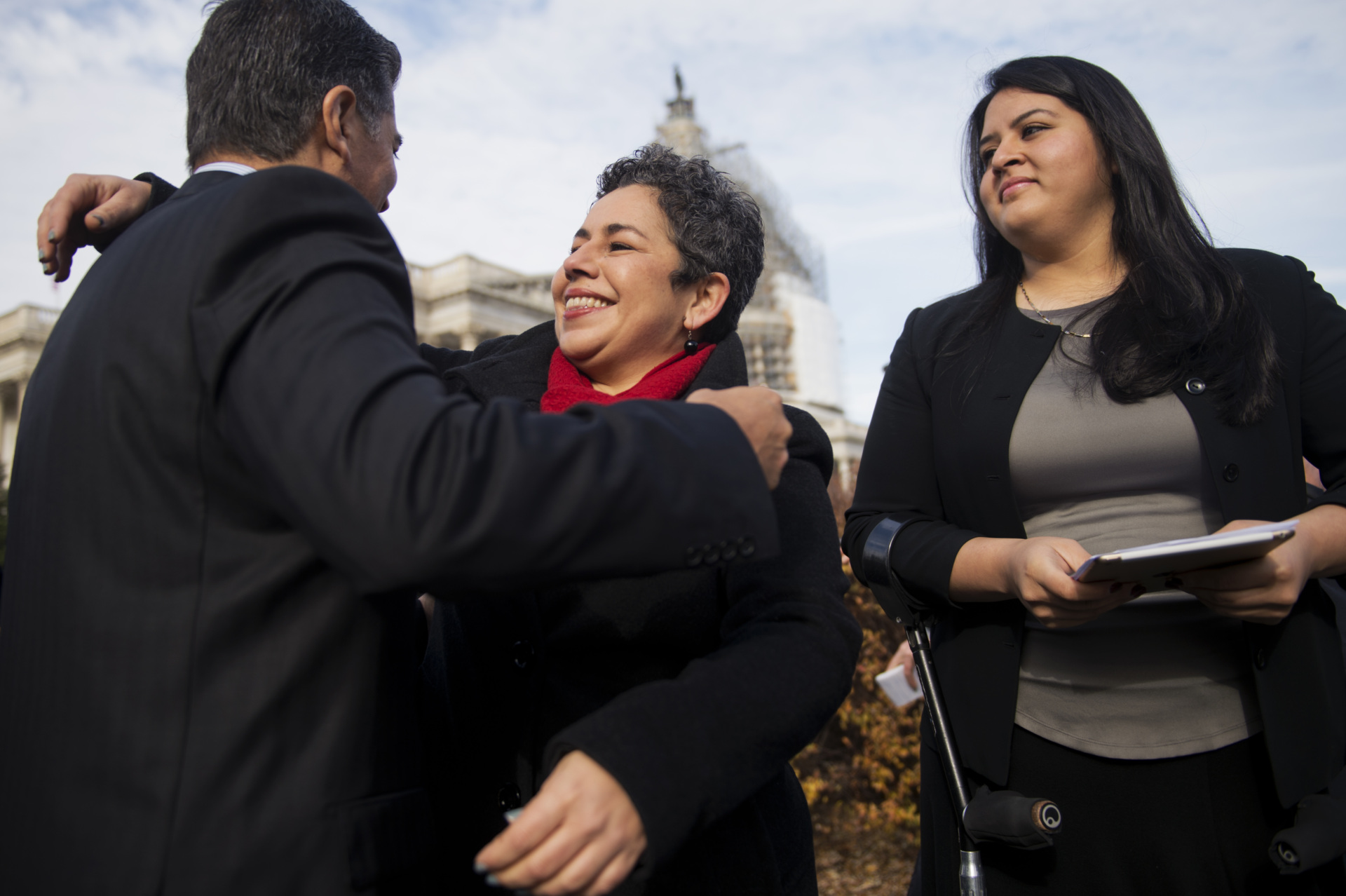
Clarissa Martinez-De-Castro of the National Council of La Raza, hugs Chairman of the House Democratic Caucus Rep. Xavier Becerra (D-CA) as Lorella Praeli of United We Dream looks on, during a news conference at the House Triangle to call on House Republicans to pass a comprehensive immigration reform bill on December 4, 2014. (Tom Williams/CQ Roll Call)
Unidos was founded by militant Chicano liberation activists in the 1960s. Among the most prominent figures in the group’s early network was Jose Angel Gutierrez, who had declared at the time: “We have got to eliminate the gringo, and what I mean by that is if the worst comes to the worst, we have got to kill him.”
Unidos’ longtime director, Raul Yzaguirre, for whom the organization’s Washington headquarters is named, personally advised Mexican President Vicente Fox to replace the word “amnesty” with softer language like “regularization” to make mass legalization of illegal immigrants more palatable to the American public.
Such correspondence is not merely subversive. It may also be illegal.
According to the Logan Act, no U.S. citizen may communicate with any foreign government or official with the intent to influence the conduct of such parties “in relation to any disputes or controversies with the United States.”
Despite this, Mexico has worked closely with Unidos since at least 1989, when Mexican President Carlos Salinas met with Unidos leadership in Washington to establish what Mexico’s own Foreign Ministry called an “instrument of Mexican foreign policy.” Yzaguirre himself confirmed that Unidos took annual delegations of Chicano and Latino representatives to meet with their counterparts in Mexico City to further Mexico’s objectives.
By the mid-2000s, Unidos was working directly with the Mexican government to protect Mexican migrants living in the U.S.
Around that same time, Mexico’s consulates were publishing and distributing comic book-style guides teaching migrants how to cross the U.S. border illegally and evade law enforcement once inside.
Unidos’ work with Mexican consulate offices is ongoing. Last year a Unidos director attended a Mexican consulate meeting in Phoenix centered on countering the incoming Trump administration’s immigration enforcement policies. In 2004, that same consulate urged Hispanic voters to oppose Arizona’s Proposition 200, a proof-of-citizenship requirement. It was a clear-cut example of a Mexican consulate meddling in U.S. elections.
One of the more personal nodes within Becerra’s consulate connections is the California Rural Legal Assistance Foundation (CRLAF), a group that has coordinated joint citizenship events with Mexico’s consulates and promoted Mexican President Claudia Sheinbaum’s controversial emergency phone app for Mexican migrants fearing deportation from the US.
According to a report from Mexico’s own Sacramento consulate, consular officials work directly with both CRLAF and CHIRLA to provide free consultations for illegal immigrants, including workshops for beneficiaries of the Deferred Action for Childhood Arrivals (DACA) program.
CRLAF employed two of Becerra’s daughters and co-signed legal briefs supporting Becerra’s immigration-related lawsuits when he was Attorney General. When Becerra spoke at a CRLAF gala in 2022, it was Mexico’s Consul General in Sacramento, Liliana Ferrer, who introduced him to the stage.
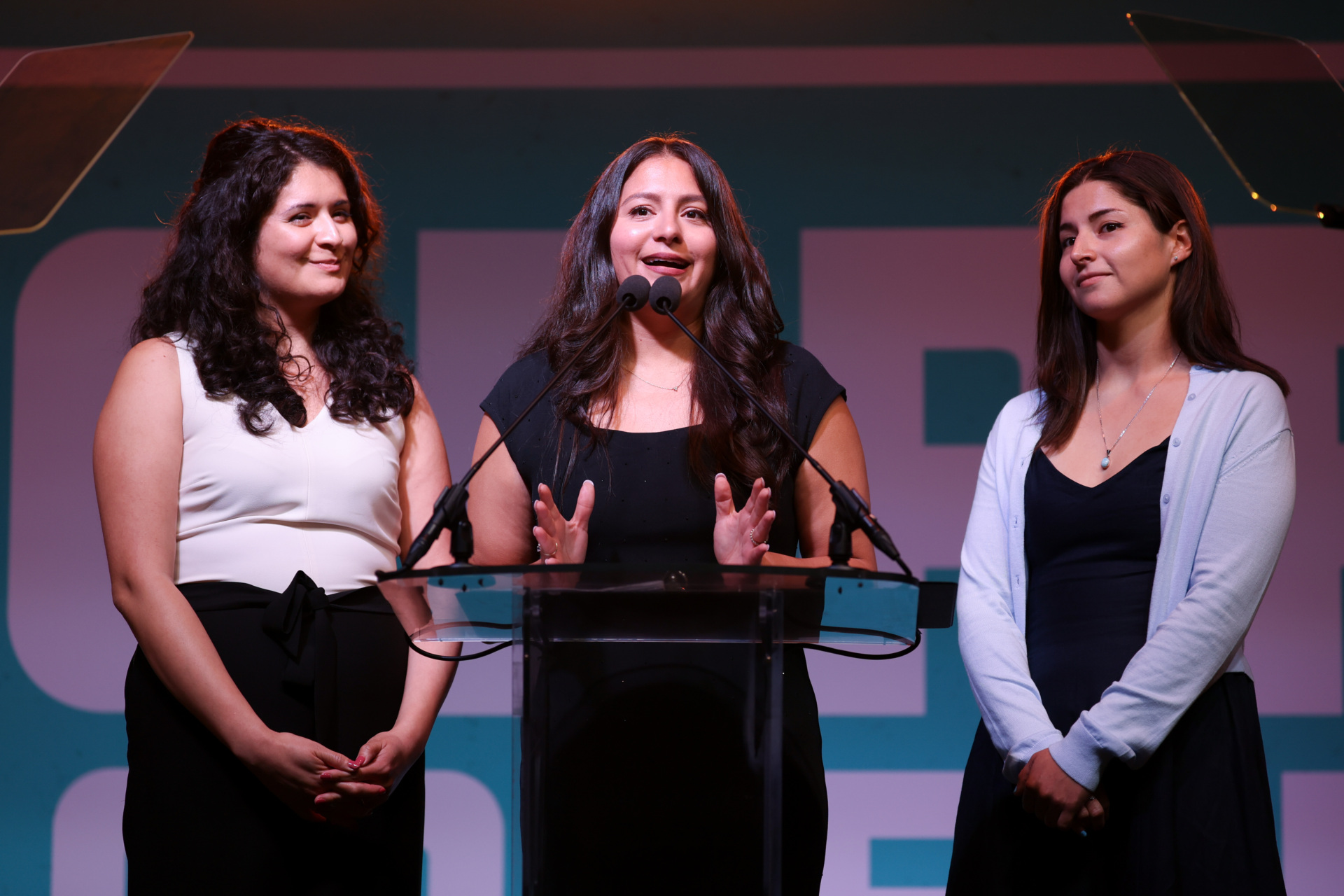
From left: Olivia Reyes-Becerra, Clarisa Reyes-Becerra, and Natalia Reyes-Becerra, daughters of Xavier Becerra, speak during an election night event in downtown Los Angeles on June 2, 2026, in Los Angeles, CA. (Eric Thayer/Los Angeles Times via Getty Images)
The Mexican American Legal Defense and Educational Fund (MALDEF) is another prominent actor in this network.
Becerra worked at MALDEF when he was a law student at Stanford and has maintained ties to the organization ever since.
MALDEF has advocated on migrant policies alongside Mexico’s consulates and was founded by an activist who publicly bragged about “taking over” all political institutions in California. Those who disagreed, he added, “should go back to Europe.”
That sentiment is not limited to radical organizers. According to Breitbart Senior Contributor and GAI President Peter Schweizer, the Mexican government has leveraged its consulate network to turn migrants into a domestic political force, in service of what Mexican leaders have described as the reclamation of the American Southwest. Schweizer noted that in 2024, Mexican leaders explicitly referred to MALDEF and Unidos as vehicles for “collective action” toward that effort.
While Mexican President Claudia Sheinbaum has denied the consulate allegations, Schweizer has pointed out that Mexico’s own consul general in Chicago admitted to joining forces with anti-Trump organizations to fight the Trump administration.
Becerra’s extensive ties and coordination with this network reveal not only a shared domestic agenda in the U.S. but a fundamental international ideology as well.
In 2004, he traveled to Mexico City to participate in a conference series with Mexico’s top diplomats to discuss the “silent integration” of North America. A congressional witness later described the conference as a coordinated effort to undermine U.S. sovereignty in Latin America.
On September 11, 2017, Becerra attended a private luncheon with some of the same Mexican diplomats from the 2004 meeting, who were on a mission to engage their U.S. allies and mobilize an emergency response to the recently terminated DACA program.
That very same day, Becerra filed a lawsuit that ultimately prevented President Trump from terminating DACA.
Price Sukhia is an investigative journalist and Research Director at Peter Schweizer’s Government Accountability Institute.