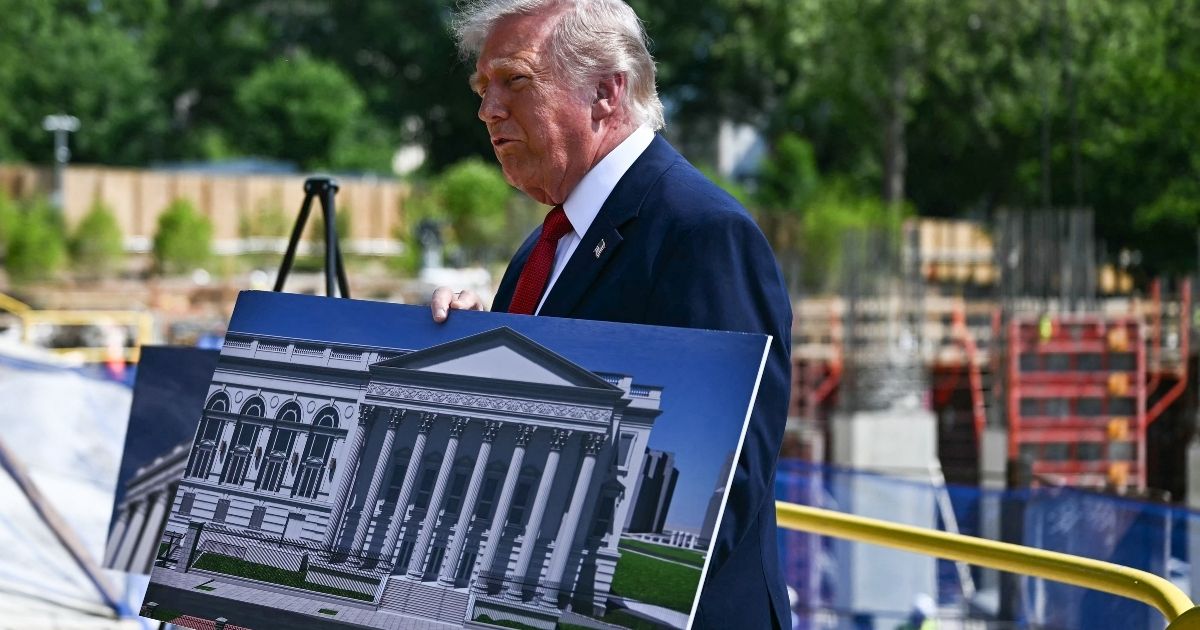
The Supreme Court on Monday allowed construction of a new White House ballroom to continue.
In a 5-4 ruling, the Court found that the National Trust for Historic Preservation in the United States did not have standing to file the suit in the first place, on which lower courts had based their decisions.
“This Court has not found standing in circumstances like these before. To the contrary, we have repeatedly held that mere offense, disagreement, or distaste does not qualify as a concrete and particularized injury under Article III [of the Constitution]. As we have put it, ‘this Court has long made clear that distress at or disagreement with the activities of others is not a basis under Article III for a plaintiff to bring a federal lawsuit.’”
Adopting the Trust’s view of what constitutes a legal injury “would seemingly usher in a world where virtually every citizen had standing to challenge virtually every government action that they do not like,” the majority wrote.
The justices added, “Today, we do not pass upon the legality of the government’s East Wing project. We conclude only that, based on the submissions before us, the government is likely to prevail in showing that the Trust lacks Article III standing to challenge the project in federal court and that the remaining stay factors favor relief.”
Earlier this month, Chief Justice John Roberts placed a stay on a lower court ruling blocking the project from moving forward, indicating the full Supreme Court would be taking up the matter.
However, in Monday’s ruling, Roberts sided with dissenting liberal justices Sonia Sotomayor, Elena Kagan, and Ketanji Brown Jackson, concluding Trump did not have the authority to undertake the project.
🚨 BREAKING — TRUMP WINS AT SCOTUS: The Supreme Court 5-4 has just GREENLIT White House ballroom military complex construction INDEFINITELY, with Chief Justice ROBERTS joining the liberals
LET’S GO! 🔥
SCOTUS says the group who sued likely DOES NOT HAVE STANDING, exactly what… pic.twitter.com/15LPfG5nXy
— Eric Daugherty (@EricLDaugh) August 31, 2026
Roberts wrote that the construction of the ballroom was “unlawful.”
He also argued that the injuries claimed by Alison Hoagland, one of the Trust’s members, are sufficient to allow the lawsuit to go forward.
“The White House is not just any building, and — when it comes to historic preservation — Hoagland is not just any person,” he wrote.
“In failing to appreciate as much, the Court misconceives the plaintiff’s injury, allowing the Executive’s likely infringement of the Legislature’s power of the purse and authority to regulate federal property in the District of Columbia to continue. Today’s decision is no victory for the separation of powers.”
Solicitor General D. John Sauer highlighted in a court filing to the Supreme Court that the ballroom project is 65 percent complete.
Last fall, Trump directed the construction of a 90,000-square-foot ballroom on the east side of the White House with $400 million in private donations. Underneath it, a new bunker is also being constructed by the Department of War with enhanced security measures.
Both the U.S. Commission of Fine Arts and the 12-member National Capital Planning Commission have approved the ballroom plans.
Advertise with The Western Journal and reach millions of highly engaged readers, while supporting our work. Advertise Today.