As President Donald Trump seeks an end to hostilities with Iran, reopening the Strait of Hormuz, easing certain sanctions, and facilitating talks on Tehran’s nuclear program, one critical issue risks being sidelined: the billions of dollars owed to thousands of American victims of Iranian-backed terrorism.
Iran has been behind decades of terrorist attacks, and U.S. courts have issued default judgments against Iran totaling well over $100 billion for its material support of terrorist acts that killed and maimed Americans.
These include the 1983 Beirut Marine barracks bombing, the 1996 Khobar Towers attack, and the 1979–1981 Iran hostage crisis.
With roughly $24 billion in frozen Iranian assets at stake in the current negotiations, prioritizing these victims is not just morally imperative — it is strategically sound and consistent with American principles of justice.
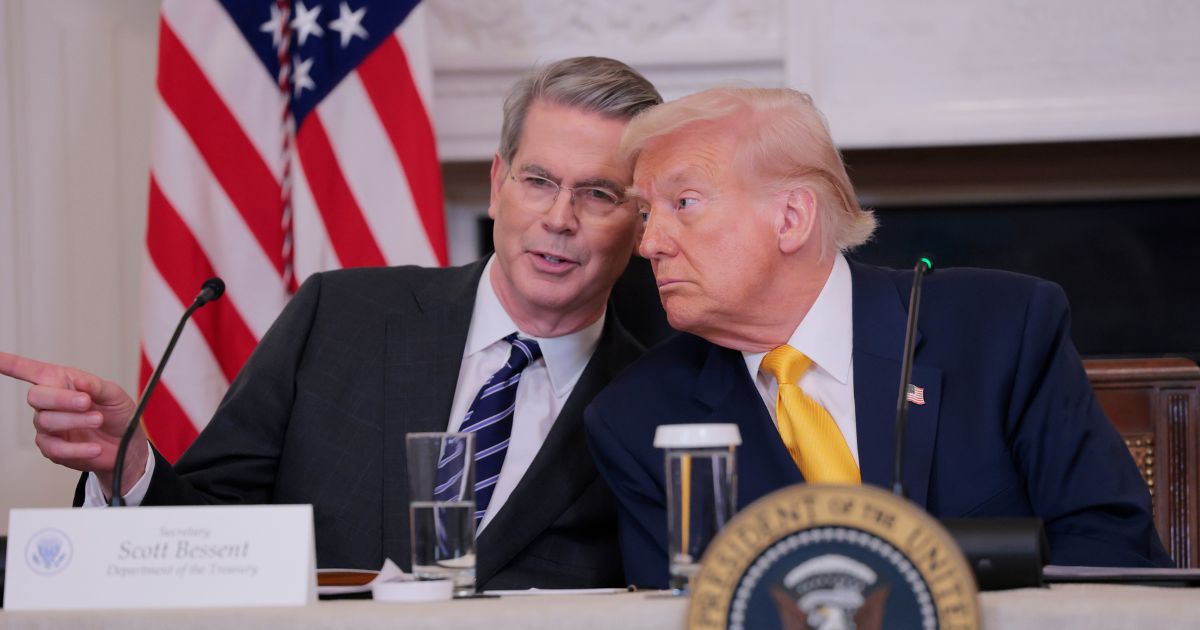
It is also consistent with what President Trump and Treasury Secretary Scott Bessent have already said aloud.
American victims and their families have spent decades pursuing accountability through the U.S. legal system. Federal courts have vetted claims, entered judgments against Iran — which has largely ignored the proceedings — and affirmed Iran’s role as a leading state sponsor of terrorism.
The U.S. Victims of State Sponsored Terrorism Fund, which is financed chiefly by qualifying forfeitures, fines, and penalties from sanctions cases — and by targeted appropriations — seeks to provide some relief to those victims.
Khobar Towers and a Bureaucratic Lockout
Khobar Towers shows how incomplete that compensation remains.
On June 25, 1996, Hezbollah operatives acting with Iranian direction and material support detonated a tanker truck packed with the equivalent of roughly 20,000 pounds of TNT outside Building 131 of the Khobar Towers complex in Dhahran, Saudi Arabia, where U.S. Air Force personnel supporting Operation Southern Watch were housed.
The blast sheared off the face of the eight-story building, killed 19 airmen, and wounded hundreds more. Beginning with Judge Royce Lamberth’s 2006 ruling in Heiser, U.S. courts have found that senior Iranian leadership — including the IRGC and the Ministry of Intelligence and Security — planned, funded, and sponsored the attack.
After those rulings, Department of Justice Fund guidance told previously eligible claimants they could not submit a second application for catch-up payments. In its November 2024 report (GAO-25-107564), the Government Accountability Office found that this guidance led as many as 274 previously eligible Beirut and Khobar claimants not to apply. GAO estimated those 274 claimants would have been due about $116 million absent new legislation.
Rep. Pete Sessions, a Republican from Texas, introduced H.R. 4863, the Fairness for Khobar Act of 2025, to correct that lockout and allow those Beirut and Khobar victims to access funds already set aside for them. The bill has drawn bipartisan cosponsors and remains before the House Judiciary Committee.
Releasing Iranian assets without directing a portion — or securing Iran’s commitment to satisfy judgments — would effectively reward a regime that has evaded responsibility while American families continue to bear the human and financial costs.
Past experiences, including the 2016 sanctions relief and related fund transfers under the Obama administration, underscore the risks: critics argued that unfettered access freed resources for further sponsorship of proxies such as Hezbollah and Hamas.
Justice for victims aligns with longstanding U.S. policy. Congress has repeatedly acted to support these families through the original Victims Act, the Fairness for 9/11 Families Act that directed GAO’s Beirut and Khobar audit, and now Sessions’s Fairness for Khobar Act.
Excluding them from a major diplomatic reset would undermine the rule of law and send a dangerous message: American blood has a price, but accountability does not.
Strategic Leverage and Deterrence
President Trump’s “peace through strength” approach has historically emphasized maximum pressure on adversaries. In this deal, the frozen assets represent powerful leverage. Using or conditioning their release to compensate victims would:
- Deter future terrorism: Forcing Iran to confront the financial consequences of its actions raises the cost of sponsoring attacks.
- Strengthen U.S. credibility: Diplomacy does not come at the expense of American citizens. Victims’ advocates representing 9/11 families, Beirut survivors, and Khobar airmen have rightly expressed outrage at being sidelined.
- Support broader counterterrorism goals: Integrating victim compensation is consistent with the administration’s 2026 Counterterrorism Strategy, which treats Iran as the leading state sponsor of terror, without derailing nuclear or ceasefire objectives.
The administration has already framed the issue in those terms. On Aug. 10, President Trump wrote that Iran’s own demand for war compensation was “an interesting idea,” then flipped it:
“Now I am likewise demanding compensation from Iran, for all of the people that they have killed and gravely wounded with their roadside bombs and many conflicts, for which they are famous, as led initially by General Soleimani, including the families of those killed on the USS Cole, and thousands of others killed in combat… I have instructed my representatives to put this firmly into any, and all, future negotiations.”
Treasury Secretary Scott Bessent has said the same thing about where seized Iranian money should go. Discussing a campaign to freeze IRGC offshore accounts and luxury holdings, Bessent told Fox Business:
“We are going to go after the regime’s illegitimate assets that they have stolen from the Iranian people, and those can go back to the Iranian people, or they can go to the victims of terror, like the families of the soldiers who are on the USS Cole.”
In a July Cabinet setting, he was more direct still: sanctioned and seized Iranian funds “will be given to victims of Iranian-backed terror attacks.”
Those are not outside talking points. They are the President’s and the Treasury Secretary’s own words. A deal that unfreezes assets without a victims’ channel would contradict them.
Critics may argue that injecting victim claims complicates negotiations. History shows that durable agreements account for core injustices. Ignoring judgments against Iran would repeat past mistakes, potentially fueling more instability rather than lasting peace.
Practical Pathways Forward
The deal should explicitly address these claims. Options include:
- Prioritizing a portion of the $24 billion or equivalent for USVSST distributions or direct victim payments — the mechanism Bessent has already described for seized IRGC assets.
- Enacting H.R. 4863, the Fairness for Khobar Act, or issuing a presidential executive order so the 274 Beirut and Khobar families GAO identified are no longer locked out because of bureaucratic error.
- Requiring Iran to begin satisfying court judgments as a condition for sanctions relief, matching the president’s instruction that compensation be placed “firmly into any, and all, future negotiations.”
- Broader congressional action to block asset-release licenses until compensatory awards are addressed.
A Deal Worth Supporting
President Trump has a unique opportunity to deliver a deal that advances U.S. security interests while delivering tangible justice.
He has already demanded payment for Americans killed and wounded by Iranian-backed attacks. Secretary Bessent has already named terror victims as proper recipients of seized Iranian funds. GAO has already counted what Beirut and Khobar families are still owed. Congress already has a bill, H.R. 4863, to finish the catch-up those families were steered away from claiming.
True strength includes standing with those victims against a regime that has targeted them for generations.
Excluding compensation for state-sponsored terrorism victims would not only shortchange those who sacrificed the most — it would weaken the moral foundation of any agreement with Iran, and it would walk back the administration’s own public commitments.
The administration should seize this moment to ensure that any reset with Tehran includes real accountability. American victims deserve nothing less.
The views expressed in this opinion article are those of their author and are not necessarily either shared or endorsed by the owners of this website. If you are interested in contributing an Op-Ed to The Western Journal, you can learn about our submission guidelines and process here.
Advertise with The Western Journal and reach millions of highly engaged readers, while supporting our work. Advertise Today.