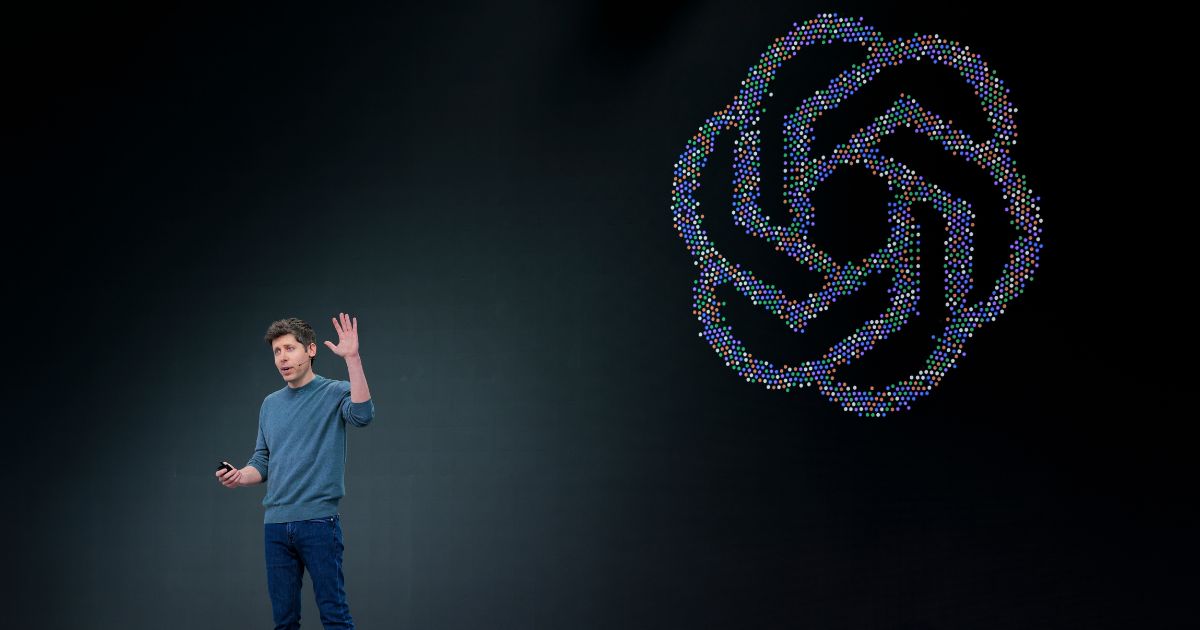
A Saudi national is facing charges after he allegedly bugged the executive conference room of an OpenAI building in San Francisco.
Abdulrahman Alfozan, 35, was arrested on Friday, according to a Department of Justice news release. He was charged with using or endeavoring to use an electronic, mechanical, or other device to intercept oral communications and remains in federal custody.
OpenAI said in a statement posted to X that it blew the whistle on the scheme.
“We discovered a sophisticated recording device that was hidden inside one of our offices. We used our models to understand the device and where it had come from, identifying that a specific employee had planted it a few days earlier. We referred the matter to the FBI, and we’re grateful to the agents and prosecutors who moved quickly to make an arrest,” it posted.
“At this time, we have no indications of this individual inappropriately accessing or exfiltrating model weights, source code, or customer data. The employee was terminated,” OpenAI added.
“We take protecting our technology, data, and people seriously, and as a matter of national importance. Our security program is designed to protect against a wide range of threat actors, from insider risks to cybercriminals to nation states, and this case is an example of how AI can help address these sophisticated security threats,” the company said.
The Department of Justice release continued, “OpenAI determined that the device, which had been concealed in toilet paper, was installed on or about September 28, 2026, and that its contents were encrypted.”
NEW: Per federal source to @FoxNews, the Saudi national arrested by the FBI for allegedly placing an eavesdropping device at OpenAI has a green card (lawful permanent resident) and was in the process of trying to naturalize into a U.S. citizen at the time of his arrest.
I’m told Abdulrahman Alfozan filed his naturalization application last summer and it was still pending at the time of his arrest, with USCIS still needing to interview him, and his green card was approved in 2020.
It’s unclear when/how Alfozan first came to the U.S., but I’m told there are records of him flying into San Francisco in 2018 and NYC in both 2019 & 2020.
His DHS photo, courtesy of source 👇🏻
— Bill Melugin (@BillMelugin_) October 14, 2026
The release said meetings in the bugged room “frequently involved discussions of highly confidential technical, commercial, and strategic information, including proprietary research, product plans, and business-development opportunities, as well as nonpublic information about OpenAI’s technical progress and strategic decisions, capabilities, priorities, government engagements, and commercial relationships.”
The release said that CCTV footage from OpenAI showed Alfozan near the executive conference room on several occasions, even though he had no business there.
The complaint alleged that Alfozan and his spouse researched the OpenAI building and means of planting clandestine recording devices.
The complaint said that on Oct. 5, Alfozan was filmed looking behind the television where the device had been.
#ICYMI from @FBISanFrancisco: Saudi National Arrested For Installing Surreptitious Audio Recording Device At OpenAI In San Francisco
The #FBI, in coordination with the U.S. Attorney’s Office for the Northern District of California, arrested a former employee of a San Francisco super‑intelligence company for allegedly installing a covert audio recording device inside a secure executive conference room. The device was positioned to capture sensitive, nonpublic company communications.
Read more: https://t.co/YK3d4WVPah
— FBI (@FBI) October 14, 2026
On that same date, a bag of Alfozan’s found in the building contained another recording device similar to the first one that had been planted, the release said.
FBI Director Kash Patel said that “according to the complaint unsealed today, Abdulrahman Alfozan allegedly concealed a covert recording device inside his employer’s executive conference room to secretly capture sensitive communications about the company’s super intelligence technology.”
Should companies increase security measures against insider threats after incidents like this?
Definitely
100% (7 votes)
Maybe
0% (0 votes)
Not needed
0% (0 votes)
“Protecting American SI innovation is essential to safeguarding our nation’s economic strength and national security, and the FBI views that mission as one of our highest counterintelligence priorities. Thank you to Director of National Intelligence Jay Clayton and our law enforcement partners for their support — and we will continue working closely with our partners across the U.S. government and private sector to keep American businesses and citizens safe and to ensure our country maintains its competitive edge,” he said.
Special Agent in Charge Scott Schelble of the FBI San Francisco Field Office warned that “any attempt to illicitly obtain protected information from U.S. super intelligence and technology companies threatens both American innovation and the national security interests those advancements support.”
Advertise with The Western Journal and reach millions of highly engaged readers, while supporting our work. Advertise Today.