–>
March 4, 2023
‘); googletag.cmd.push(function () { googletag.display(‘div-gpt-ad-1609268089992-0’); }); }
Illicit proceeds are the catalyst driving the tragedies surrounding the open U.S. border. Yet few realize the quiet ascendency of Chinese money launderers. They are displacing Colombians and Mexicans.
Their preferred methodology is the Black-Market Peso Exchange (BMPE). It is arguably the largest and most effective money laundering methodology in the Western Hemisphere. The evolution of the BMPE is an excellent case study of how international criminal networks adapt and how China is taking over.
Ironically, the BMPE was not created to launder drug money. In 1967, Colombia enacted regulations that strictly prohibited citizens’ access to foreign exchange. Colombian merchants who wanted to import U.S. trade goods — for example, John Deer tractors, Bell helicopters, or Marlboro cigarettes — through legitimate banking channels had to pay stiff surcharges above the official exchange rate. To avoid these steep add-on costs, importers often turned to Colombian underground peso brokers, from whom they could buy U.S. dollars on the black market for less than the official exchange rate to finance their legitimate trade.
‘); googletag.cmd.push(function () { googletag.display(‘div-gpt-ad-1609270365559-0’); }); }
By the 1980s, the underground peso situation was taking on a new dimension. As U.S. cities found themselves awash in Colombian cocaine, narco-traffickers and cartels were faced with a logistical problem. They had to devise ways to launder and repatriate approximately 20 million pounds of U.S. currency they annually accumulate in North America.
The criminal organizations found a partial solution in the first law of economics. Supply met demand in the form of the BMPE.
For example, consider a Colombian drug cartel that has sold $3 million worth of cocaine in the United States. A representative of the cartel sells these accumulated dollars to a Colombian peso broker at a discount. The cartel is now out of the picture, having successfully sold its drug dollars in the United States and, in return, obtains pesos back in Colombia.
To complete the BMPE cycle, the peso broker must take two more steps. First, he directs his representatives in the United States to “place” the purchased drug dollars into U.S. financial institutions, using a variety of techniques designed to avoid arousing suspicion or triggering financial intelligence reporting.
Second, he takes orders from Colombian businesses for U.S. trade goods, arranging for their purchase using the laundered drug money he owns in the United States. Some businesses should know better. Via “willful blindness,” they don’t ask the questions they should. The broker has laundered the $3 million in drug money he purchased from the drug cartel.
This money laundering methodology was so successful that the Colombian BMPE became the premier money laundering methodology in the Western Hemisphere in the 1980s, 1990s, and the first decade of the 2000s.
‘); googletag.cmd.push(function () { googletag.display(‘div-gpt-ad-1609268078422-0’); }); } if (publir_show_ads) { document.write(“
In 2014 there was a turning point. A large law enforcement investigation called Operation Fashion Police showed how Los Angeles-based garment dealers took U.S. drug money and exported their product not to Colombia but to Mexico.
In addition, some of the clothing exporters mixed customs fraud into the BMPE conspiracy. “Made in China” labels were removed from thousands of imported garments. The fraud saved the co-conspirators from paying taxes on the “Made in China” imports because on paper they appeared to be “Made in the USA,” and exempt from customs duties under the North American Free Trade Act (NAFTA).
Once again, with the Mexican BMPE, the proceeds from narcotics trafficking stay on the U.S. side of the border. The same is now true with the cartels’ U.S. involvement in human trafficking, trade in opioids, kidnapping, stolen cars, and other illegal activities. In return, trade goods are shipped to Mexico.
About five years ago, the BMPE shifted focus once again. Now, investigators are finding that Chinese manufactured goods are becoming favored instruments in the BMPE and that similar BMPE financial systems are found around the world.
In 2000 bilateral trade between China and Mexico was about 1 billion dollars. By 2021, trade between China and Mexico topped 100 billion dollars. Mexican authorities have said that the surge has allowed drug cartels and their money launderers to piggyback on this burgeoning trade relationship.
Fronts for Mexican drug trafficking organizations use illicit proceeds to buy container loads of cheaply made Chinese goods. Using the trade-based money laundering (TBML) technique of over-invoicing, low-quality Chinese manufactured items are made to appear on paper as being worth significantly more. Payment for the goods is sent out of the country. That’s the wash.
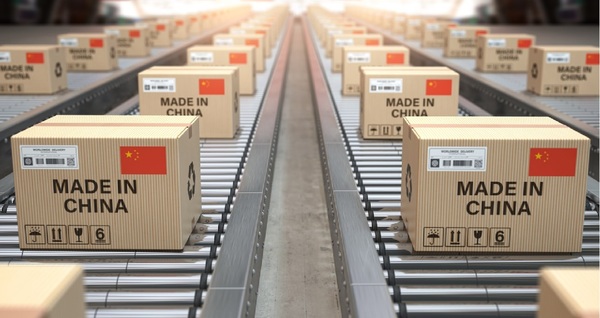 We see the result of this in our cities and towns but we don’t recognize or understand what is going on. Massive quantities of cheaply manufactured Chinese goods including counterfeits are found in black markets as well as souks, bazaars, marketplaces, dollar stores, Mom and Pop shops, swap meets, street kiosks, “China shops,” and warehouse stores around the world.
In some cases, brokers under-invoice Chinese product. A variety of goods including electronics, garments, small household appliances, are purchased, imported, and sold in many “China shops” and on the black market in countries around the world. Via this form of value transfer, funds are used to buy contraband including drugs, ivory, endangered and illegal wildlife and their parts, and heavily regulated flora and food items that are later shipped to China.
The BMPE has evolved further as Mexican and other foreign national buyers and brokers travel directly to China to place orders for the goods or they avail themselves of e-commerce brokers to purchase consumer products that are made in China.
Chinese organized crime has entered the mix. Chinese actors working with the Mexican cartels pioneered the growing use of “mirror accounts” or “mirror swaps” to launder the proceeds of crime.
With “swaps,” Chinese brokers often working with Chinese organized crime groups and the cartels identify Chinese/American cash intensive businesses that are willing to cooperate.
How do the swaps work? The Chinese/American businessman receives the drug cash from the Chinese broker working with the cartels. The business later “places” the proceeds of crime into its revenue flow and represents the drug cash as legitimate proceeds from the business. Or, the Chinese use the cash to assist other Chinese that want to circumvent Chinese capital flight restrictions and, for example, purchase U.S. property, housing, or other high-ticket goods.
Meanwhile, these complicit businesses are asked to transfer a designated amount of money through Chinese phone apps to accounts based in China. Using a currency converter app on a smartphone, the participants agree on the exchange rate between the U.S. dollar and the Chinese yuan. Once the money is offshore in China, the value can be further rerouted to Mexico or elsewhere per the instructions of the cartels.
It’s called a “swap” because the participating businessperson takes possession of the drug cash, while simultaneously transferring the equivalent in Chinese yuan from his/her account in China to the account provided by the broker. Of course, the Chinese/American businessperson also receives a commission.
During the original Colombian BMPE, the average commission for the black-market peso broker was about 15%. The Chinese are doing it for 1 to 2% on average. And the speed is almost instantaneous. For the traffickers, the big plus is that the Chinese organized crime groups involved absorb all the risk. The cartels know they will get paid.
Communications are generally accomplished via Chinese apps such as WeChat. Law enforcement is reportedly challenged to monitor the communications and monetary transactions. Yet the same transactions are easily monitored by the platforms involved as well as Chinese intelligence entities. Mirror swaps also avoid U.S. financial intelligence reporting requirements — our primary anti-money laundering countermeasure.
Never before in the history of organized crime has such a large revenue stream been taken over without resorting to violence.
The BMPE is just one example of how communist China and its actors have become the world’s most dominant ongoing transnational criminal and money laundering enterprise.
John A. Cassara is a retired Treasury Special Agent. His most recent book is China — Specified Unlawful Activities: CCP Inc., Transnational Crime and Money Laundering. For additional information or for contact see www.JohnCassara.com
Image: ThiNguyen2021
<!– if(page_width_onload <= 479) { document.write("
“); googletag.cmd.push(function() { googletag.display(‘div-gpt-ad-1345489840937-4’); }); } –> If you experience technical problems, please write to [email protected]
FOLLOW US ON
<!–
–>
<!– _qoptions={ qacct:”p-9bKF-NgTuSFM6″ };  –> <!—-> <!– var addthis_share = { email_template: “new_template” } –>