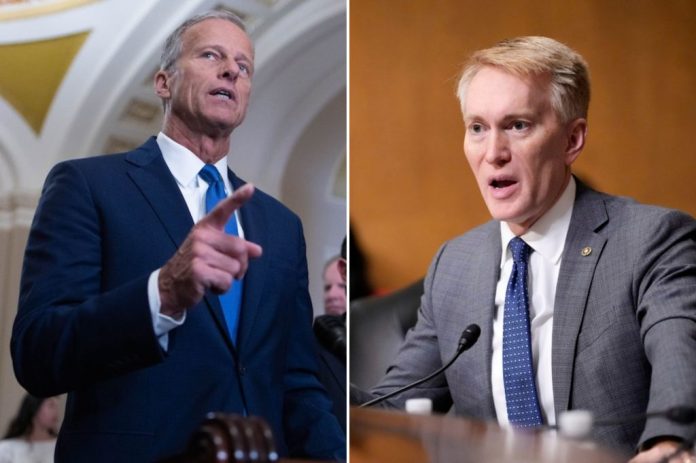
The president’s pitch Tuesday for the GOP to frame healthcare as a winning issue for the midterm elections rested largely on the need to be “flexible on Hyde,” the law that prohibits federal funds for abortions but that stands in the way of a deal on the pandemic-era enhanced tax credits that lapsed Jan. 1.
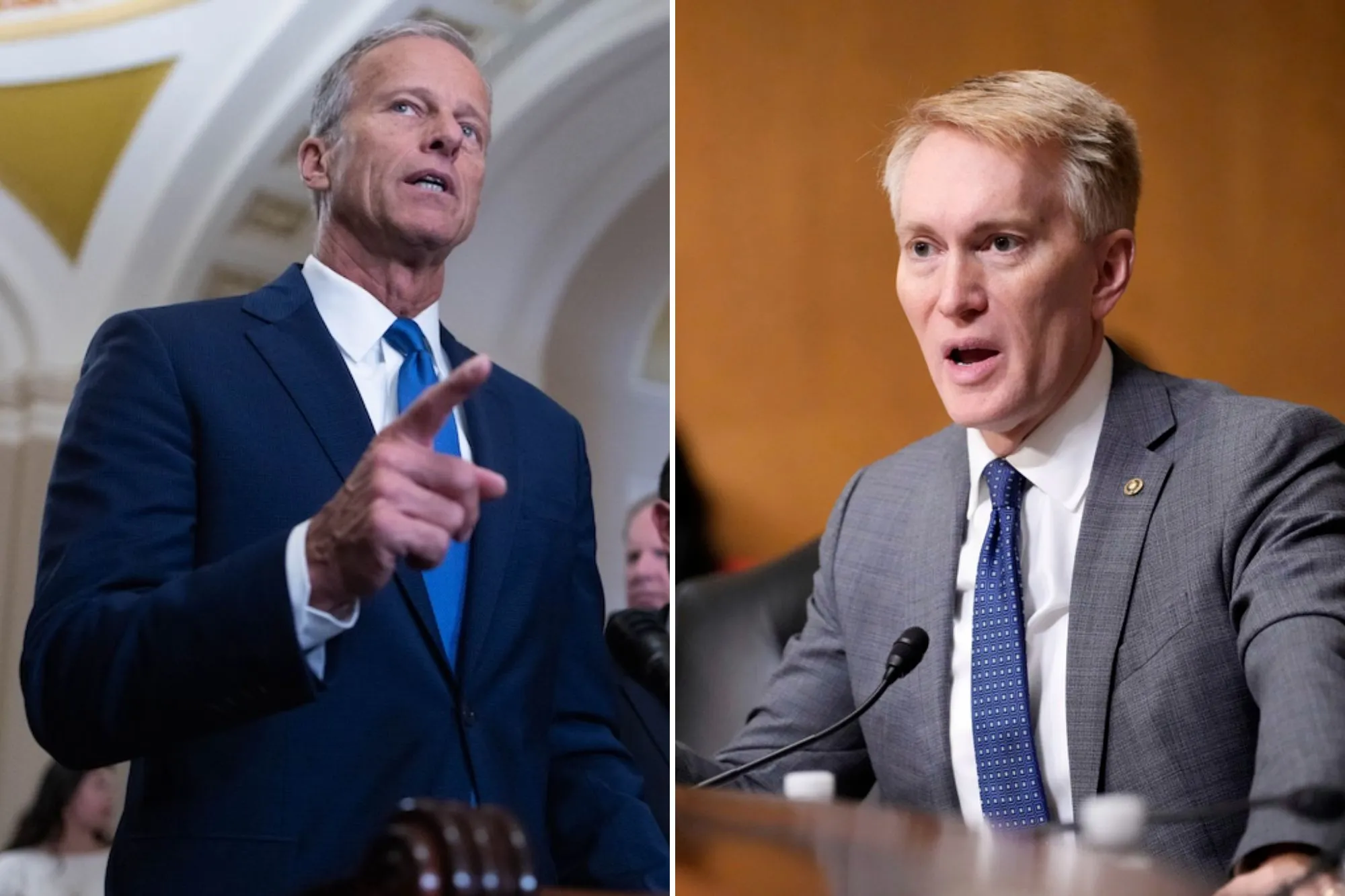
Sen. James Lankford (R-OK), a healthcare negotiator with staunch anti-abortion views, offered a visceral response just minutes after Trump’s remarks made in Washington to House Republicans at the newly named Trump-Kennedy Center.
“I’m not flexible on the value of human life,” Lankford told the Washington Examiner. “I don’t believe some children are disposable and some children are valuable.”
Senate Majority Leader John Thune (R-SD), who earlier in the day said healthcare meetings have been productive but that language on the Hyde Amendment remained the “most challenging,” declined to offer his interpretation of Trump’s vague directive.
“We’ll have to figure out — dissect — exactly what that all translates into,” Thune said.
A bipartisan breakthrough on Hyde has for months eluded lawmakers, as both parties remain firm on red lines over abortion access under Obamacare. Democrats say the Obama administration-era law already has existing guardrails to prevent funding abortions and that Republicans are seeking a back-door abortion ban, while the GOP says additional insurance surcharges and state funding present loopholes to financing abortions.
“You have to be a little flexible on Hyde. You know that,” Trump told House Republicans at their retreat. “You got to be a little flexible. You got to work something. You got to use ingenuity.”
Sen. Bernie Moreno (R-OH), a lead negotiator whose two-year subsidy proposal with Sen. Susan Collins (R-ME) includes tightened eligibility requirements and a phase-out, noted Hyde is already federal law but signaled no willingness to change course from the GOP’s demands for more restrictions.
“There is no interest among any Republicans to veer from the idea that taxpayer dollars should not be used to fight abortions,” Moreno said. “There’s no Republican that I know of in this building that’s saying, ‘Hey, there should be federal tax dollars to pay for abortions.’”
Anti-abortion groups fumed at Trump, warning of election consequences if Republicans failed to strengthen Obamacare abortion restrictions with concessions to Democrats.
“To suggest Republicans should be ‘flexible’ is an abandonment of this decades-long commitment,” Susan B. Anthony Pro-Life America President Marjorie Dannenfelser said in a statement. “If Republicans abandon Hyde, they are sure to lose this November.”
But while Republicans and anti-abortion groups piled on, Democrats saw the president’s remarks as a potential avenue to break the logjam.
“That may help us to get there,” Sen. Angus King (I-ME), a lead negotiator who caucuses with Democrats, told the Washington Examiner.
King gave the prospects of reaching an agreement a “50-50” chance in what amounted to an optimistic outlook by Capitol Hill standards. Those involved in discussions have floated extending the open enrollment period for marketplace plans beyond the Jan. 15 deadline in anticipation of an agreement.
But other potential hurdles for a deal to combat rising out-of-pocket insurance costs have also solidified.
Trump stood firm in telling Republicans to embrace funding individuals’ health savings accounts rather than subsidizing insurance companies directly, a stand-alone proposal that Senate Democrats rejected last month.
“Let the money go in a healthcare account, or however you do it,” Trump said. “Let the money go directly to the people.”
Thune also set a high bar Tuesday for any subsidy deal, saying a path forward would hinge on the ability “to get a big vote, and certainly a big vote among Republicans.” He declined to say whether a majority of Senate Republicans would need to be supportive for a floor vote, but reiterated that Hyde, income eligibility caps, and expanding the use of health savings accounts were all critical components to any agreement.
Moreno said it was paramount to secure a majority of Senate Republicans to avoid a “defection bill” that would split the party.
Meanwhile, the GOP-led House is expected to narrowly pass this week a bill for a three-year subsidy extension after enough centrist Republicans joined Democrats in forcing a vote against the wishes of Speaker Mike Johnson (R-LA). But the provision would be dead on arrival in the Senate, which already voted down the measure last month and lacks enough Republican backing to overcome a 60-vote filibuster.
“From all their actions, they’re totally partisan,” Senate Minority Leader Chuck Schumer (D-NY) said of Republicans, as he advocated the House’s three-year extension. “The Republican caucuses seem wedded to extending Hyde.”
Christian Datoc contributed to this report.