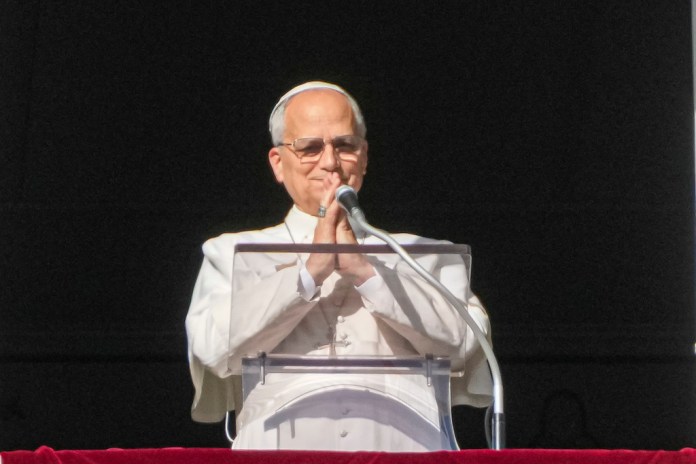
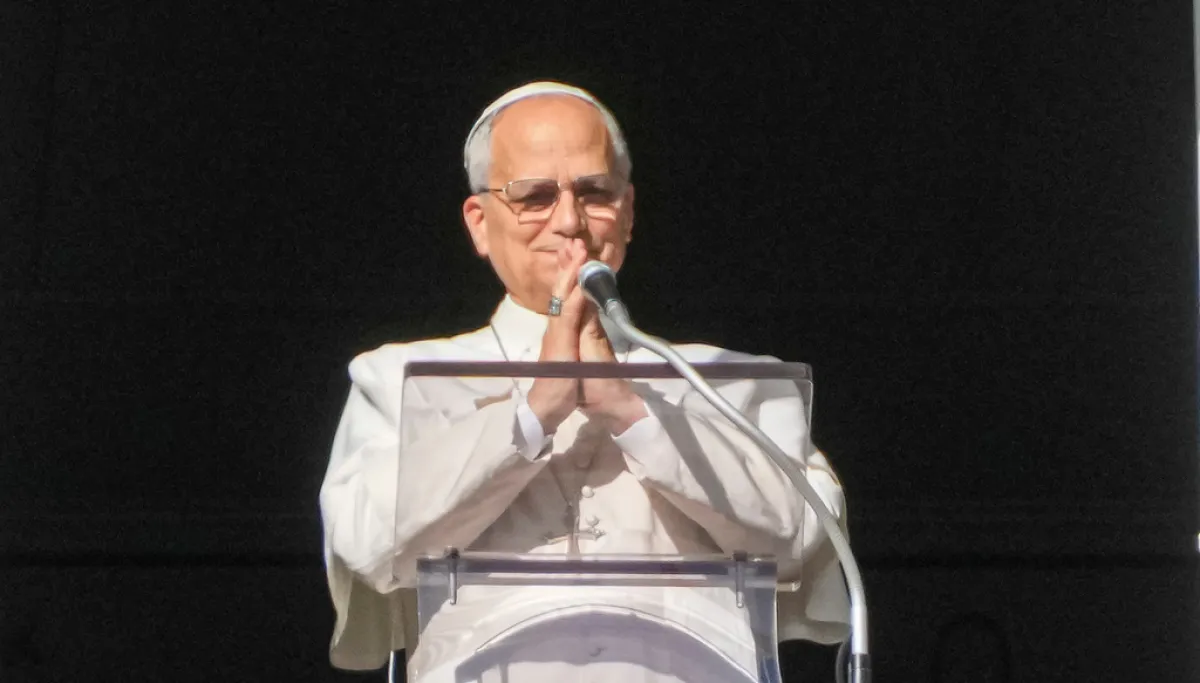
Pope Leo XIV delivered his most forceful rebuke yet of abortion and surrogacy Friday, categorically rejecting both practices as offenses to human dignity in a wide-ranging address to the diplomatic corps.
The first U.S.-born pope used the annual exchange of New Year greetings with ambassadors as a platform to anchor Catholic teaching on the sanctity of human life within a broader condemnation of global moral and political trends.
“In light of this profound vision of life as a gift to be cherished, and of the family as its responsible guardian, we categorically reject any practice that denies or exploits the origin of life and its development,” Leo said.
He named practices such as abortion, which he said cuts short a growing life, and surrogacy, which he said reduces children to commodities and exploits women’s bodies.
Public resources, he added, “should be invested to support mothers and families rather than suppress life.”
The pope voiced “deep concern” over initiatives to finance cross-border travel for abortion access, stressing that such policies undermine support for women and families.
Surrogacy, he said, “violates the dignity of both the child, who is reduced to a ‘product,’ and of the mother,” and distorts the family’s fundamental role in society.
The address, traditionally viewed as the Vatican’s moral assessment of world affairs, also touched on conflicts in Ukraine, the Holy Land, Haiti, and elsewhere, with the pontiff calling repeatedly for ceasefires and dialogue.
He highlighted the plight of civilians in war zones and reiterated the Holy See’s backing for peaceful political solutions.
Throughout his speech, the Bishop of Rome threaded his views on life issues into a wider defense of human rights, warning that freedom of conscience and dialogue are under threat when language is manipulated or moral norms are blurred.
“Freedom of speech and expression is guaranteed precisely by the certainty of language and the fact that every term is anchored in truth,” he said.
The speech comes less than a year after the Illinois native, formerly Cardinal Robert Prevost of Chicago, was elected pope. He is the first American to lead the Roman Catholic Church.
His election broke a long-standing assumption in Vatican circles that a U.S. citizen would be unlikely to become pope because of America’s geopolitical influence.
ZELENSKY CALLS FOR ‘CLEAR RESPONSE’ FROM US AFTER RUSSIA’S USE OF NUCLEAR-CAPABLE MISSILE IN STRIKES
As the Washington Examiner has previously reported, the pope spent most of his clerical career outside the United States. Church officials cited those experiences as factors that help ease concerns about selecting an American pontiff.
Since his election, Leo has largely avoided direct engagement in U.S. partisan politics, though he has criticized the administration’s policy on deportations.