The United Nations General Assembly adopted a resolution on Wednesday condemning the transatlantic slave trade that occurred between the 16th and 19th centuries and also urged reparations for it “as a concrete step toward remedying historical wrongs.” The resolution was led by Ghana and received 123 votes in support and 3 against. An additional 52 countries abstained from voting. Argentina, Israel, and the United States were the three countries that voted against the resolution.
The U.N. resolution condemned “the trafficking of enslaved Africans and racialized chattel enslavement of Africans, slavery and the transatlantic slave trade as the most inhumane and enduring injustice against humanity.” Among its most prominent grievances listed was recognizing that the “trafficking of enslaved Africans and racialized chattel enslavement of Africans as the gravest crime against humanity by reason of the definitive break in world history, scale, duration, systemic nature, brutality and enduring consequences that continue to structure the lives of all people through racialized regimes of labor, property and capital.”
The resolution and its subsequent adoption occurred on the “International Day of Remembrance of the Victims of Slavery and the Transatlantic Slave Trade,” noted Ghanaian President John Dramani Mahama, who led the resolution’s adoption efforts.
“Today, we come together in solemn solidarity to affirm truth and pursue a route to healing and reparative justice,” said Mahama. “The adoption of this resolution serves as a safeguard against forgetting.” Let it be recorded that when history beckoned, we did what was right for the memory of the millions who suffered the indignity of slavery.”
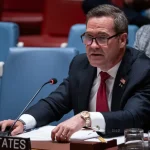
The U.S. was one of only three countries that voted against the resolution. And explained the reasoning behind voting against it in remarks from Ambassador Dan Negrea.
“The United States remains steadfast in its opposition to and condemnation of the historic wrongs that resulted from the trans-Atlantic slave trade, the trans-Saharan slave trade, and all other forms of slavery,” said Negrea. “We remain committed to the acknowledgement that these are historical wrongs. Despite this, the United States observes that the text of this resolution remains highly problematic in countless respects. Consequently, the United States cannot support the adoption of this resolution.”
“The United States also strongly objects to the resolution’s attempt to rank crimes against humanity in any type of hierarchy,” said Negrea. “The assertion that some crimes against humanity are less severe than others objectively diminishes the suffering of countless victims and survivors of other atrocities throughout history. This is not a competition. This attempted ranking is also simply incorrect as a matter of law.”
Negrea also highlighted the selection of the specific years in the resolution, noting that the “trafficking of African slaves” began much earlier than what was included in the U.N. resolution. He claimed the specific time frame chosen for the resolution was politically motivated.
“The United States would also like to express disappointment in the arbitrarily historical perspective of the text,” Negrea added. “Trafficking of African slaves began long before the 15th century and sadly continued even after the 19th. These dates were clearly selected for political reasons rather than historical accuracy. All trafficking of enslaved Africans and racialized chattel enslavement of Africans deserves to be condemned, not merely the politically expedient.”