Many of Washington’s long-standing allies are hedging engagement in U.S.-Israeli operations against Iran, but their involvement is likely not decisive to the conflict’s outcome.
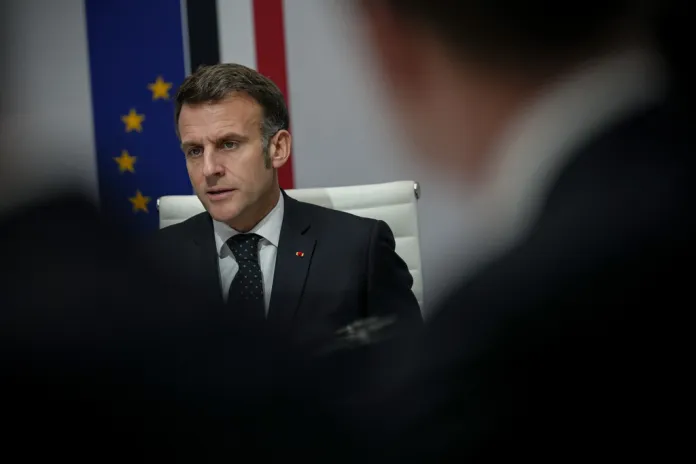
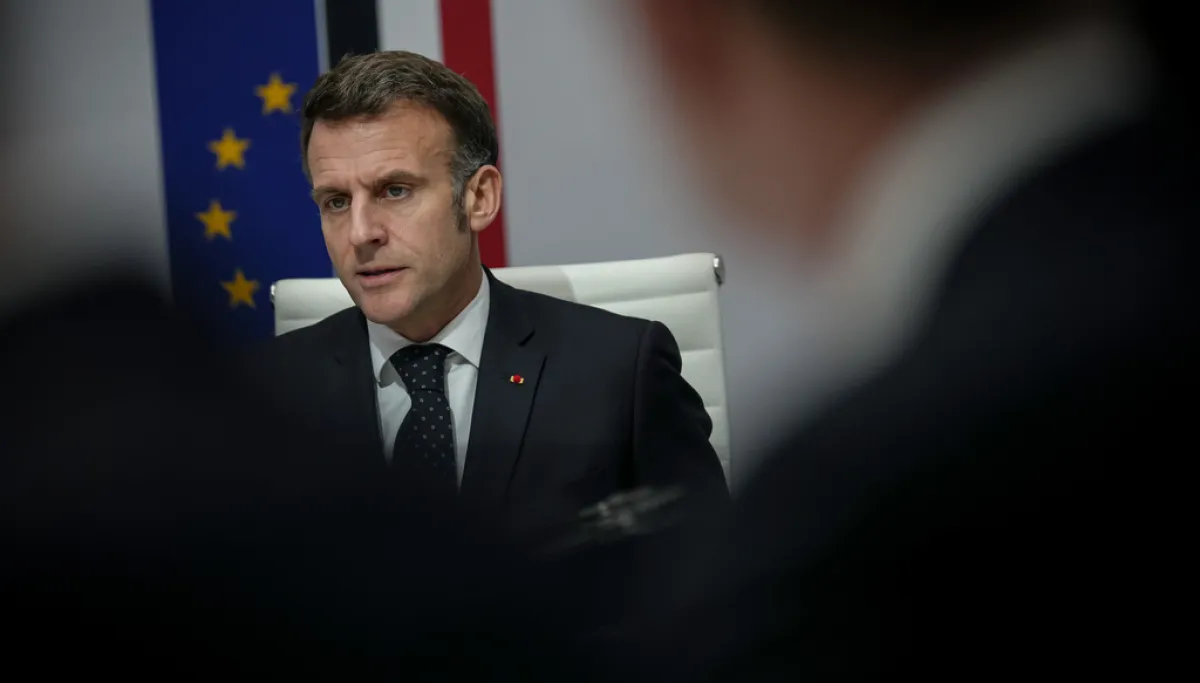
In Spain, officials opened a rift with the United States after refusing to allow the Pentagon access to its military bases for “Operation Epic Fury.” In the United Kingdom, Prime Minister Keir Starmer said he is not prepared for London to join the conflict without “a lawful basis and a viable, thought-through plan” from the Trump administration. In France, President Emmanuel Macron described the operation as “outside international law,” echoing skepticism from other NATO members, including Germany, which has likewise sidelined involvement in the war.
Does Europe have a voice?
Much of Europe doesn’t have the will to expand engagement significantly. But more notably, it doesn’t have the capacity to do so, former deputy national security adviser Victoria Coates said. Such partners can offer limited support in terms of soft power, lending a veneer of legitimacy and unity against Iran. But the strategic and material significance of major allies such as the U.K. has diminished in recent years as their military strength flounders, with weak defense budgets now facing the added strain of the Russia-Ukraine war, Coates said. Fears that individuals sympathetic to the Iranian regime could be among the floods of migrants London has ushered across its border could also be spurring Starmer’s reluctance to get involved, she added, musing that the prime minister could be looking to avoid triggering domestic terrorism.
Multiple foreign policy experts concluded that Western partners are largely irrelevant to the Iran conflict, made void by the strength of the U.S.-Israeli alliance. “The Israelis have one asset that’s called the Air Force, and their Air Force is where they’ve invested their money, and the Air Force is very good,” retired Col. Douglas Macgregor, a former senior adviser to the secretary of defense, said. “[The Europeans] they’ve got very serious problems at home,” he added.
“In the case of Keir Starmer and the U.K., the embarrassing reality is there’s very little they could do kinetically to support us,” Coates said. “Their capabilities have atrophied to such an extent that I guess if they feel like they can’t, can’t do much, they may as well not trigger a domestic security incident.”
The director of American security at the America First Policy Institute, Jacob Olidort, echoed the thought. Historically, he said, the U.K. is “among the first to join” but is now reflecting “its diminished navy and other military capabilities.”
While they insist they’re not aiding offensive operations, the U.K. and France have led Europe in deploying military assets to the Middle East to protect their interests and personnel in the region, including plans to send warships to the Mediterranean.
President Donald Trump has complained about the U.K., in particular, not being more supportive. Former Pentagon official Justin Fulcher said the U.S. is “clearly encouraging” more support from Europe, “even if initially that support is largely rhetorical.” But Coates said the U.S.-Israel alliance throughout the Iranian operation has been “so seamless” that” I don’t really see a need for us to have them,” referring to Europe.
Robert Satloff, the Segal executive director of the Washington Institute, agreed that while European participation “would have a significant impact,” their involvement “is not the difference between failure and success.” The more pivotal question, he suggested, centers on the role Washington’s Middle Eastern partners, known as the Gulf States, are playing.
Qatar, the United Arab Emirates, and Saudi Arabia did not go on the offensive against Iran after the regime launched retaliatory strikes on their countries, notably reducing the threat of escalating the conflict. Satloff described the development as notable and credited it to the success of U.S.-Israel forces in swiftly degrading Iranian missile capacity. “Because the number of Iranian missiles has shrunk, they’re less likely to retaliate, and so that moment appears to be passing,” he said.
What could change the tone of NATO allies?
If a NATO member suffers a major attack or sustains a casualty due to Iranian forces, Europe would accelerate involvement in the war against Iran, due to NATO’s Article 5. Major attacks on energy infrastructure or civilian areas would also be likely to spark a more forceful response from allies.
“They’re already under pressure from the energy side, given the need to move off of Russian energy sources. So if this becomes a second source of pressure for them economically, I think that could be a threshold for changing their response,” Olidort said.
Fulcher said of energy security that Europe would likely already be far more directly involved if Trump hadn’t authorized the U.S. International Development Finance Corporation to insure cargo shipments moving through the Strait of Hormuz. As it is, Deputy Prime Minister of Italy Antonio Tajani has suggested that the move is far from sufficient and warned the U.S. this week that a prolonged closure of the strait could severely damage the global economy, a point emphasized by Macgregor.
“I think the war that ends is going to be ended on the grounds that we’re destroying the global economy,” he said. “The market is finally beginning to come to terms with the reality of what’s happening. The bubble is about to burst.”
Macgregor downplayed the idea that Iran would target NATO civilian areas, saying it has thus far “avoided that as much as possible.” Coates said even if Iran does wage an attack on a NATO ally, it would be little more than a symbolic “Hail Mary” strike rather than an actual sustained attack on a NATO member.
“I mean, if they’ve got anything left, why fire it in Europe? It just doesn’t make sense,” she said.
Amid fears that the Iran conflict could turn into lengthy ground invasions reminiscent of the wars in Iraq and Afghanistan, Fulcher agreed the next few weeks will be “very telling” on whether it stays limited in scope or is drawn out. Trump has said Epic Fury will likely last up to five weeks, but Rep. Bill Foster (D-IL) and others have warned that accomplishing the U.S. objective of eliminating the regime’s nuclear threat would likely require a ground invasion, dragging the timeline out. Coates estimated it would take a six-week process to reach actual large‑scale deployments. A full ground invasion is “really unlikely,” she said, though qualifying that Trump “has not categorically ruled it out.”
The idea that the U.S. would attempt such a ground invasion is a “fantasy,” Macgregor added.
“Iran’s the size of Western Europe. How do they get in there?” he said. “How do you build up a force large enough? How do you protect it? How do you sustain it? Logistically, it’s a nightmare. It’s impossible.”