The United States and Israel are working in tandem to topple the Islamic Republic of Iran’s regime, but the two countries don’t seem to be so hand-in-glove when it comes to who will govern when the dust settles.
President Donald Trump has stated that he is primarily concerned with cutting a deal with an insider. He has referenced Delcy Rodriguez — the acting president of Venezuela after the White House-sanctioned abduction of former dictator Nicolas Maduro — as a prototype.
Israeli Prime Minister Benjamin Netanyahu, on the other hand, is posting photos of himself calling in assassinations and issuing a blank check for the Israeli military to kill any regime official they find.
“Looking at Israeli messaging versus the U.S., paired with the division of labor, it is clear that Israel is taking the lead in facilitating regime change,” Janatan Sayeh, a research analyst at the Foundation for Defense of Democracies, told the Washington Examiner.
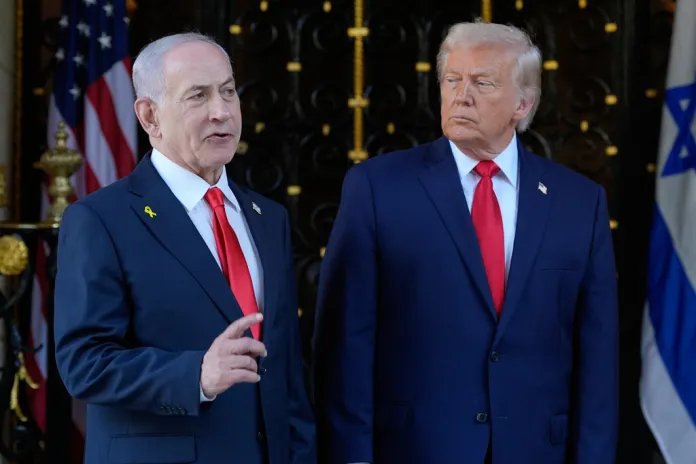
He continued, “Israelis are engaging Iranians more directly, sending messages of solidarity while also dismantling the repression infrastructure.”
Israel’s message behind the assassination campaign is clear — the Islamic regime is beyond salvaging, and Iranians need to take to the streets to help oust their oppressors themselves.
“I’m telling the Iranian people,” Netanyahu said last week at a press conference, “the moment you can come out for freedom is getting closer. We are standing beside you and helping you. But at the end of the day, it’s up to you.”
While the U.S. has pulled back a bit on its offensive strikes since killing Ayatollah Ali Khamenei and his closest allies at the beginning of Operation Epic Fury, the Israeli military has continued systematically picking off the highest-ranking officials in Iran.
The new supreme leader, Mojtaba Khamenei, remains at large. The Iranian government has acknowledged he was wounded early in the campaign, but no proof of life has been offered. Even the ayatollah’s first address to the people was read on state television by a newscaster.
The U.S. and Israel agree that they’re “not going through this to end up with another Khamenei,” but the agreement seems to end there.
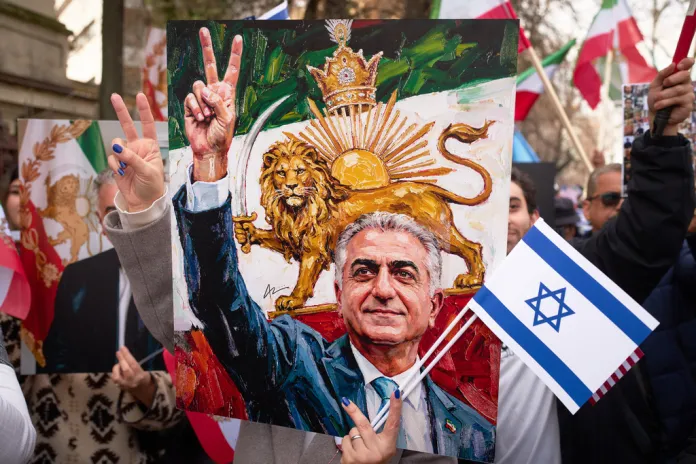
For Israel, Crown Prince Reza Pahlavi “would be the most viable candidate,” Sayeh told the Washington Examiner — citing the exiled royal’s ability to “form a government rooted in Iranian national interests vs Islamism, while also giving Jerusalem a formal regional partner at a time when anti-Israeli sentiment is rising.”
Pahlavi, the eldest son of the late shah of Iran, is currently zooming around Paris as he seeks to marshal enough allies and resources to establish a transitional government if the regime falls.
He has offered himself as a transitional leader to oversee a secular, democratic Iran and claims to have a popular mandate from his people. These claims are amplified by the Iranian diaspora living outside the Islamic Republic, most of whom come from families that fled the country due to their association with the shah.
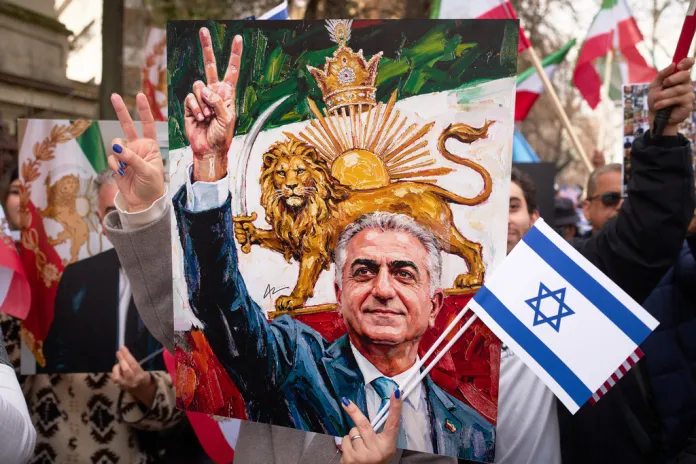
The reality in Iran is more complicated. Pahlavi is practically the only individual being explicitly shouted out by protesters, but demands for the crown prince’s return are far from overwhelming.
Trump has alluded to this possible dearth of popular support when asked about the possibility of backing Pahlavi to lead the country if the regime collapses.
“Some people like him, and we haven’t been thinking too much about that. It would seem to me that somebody from within, maybe, would be more appropriate,” the president said earlier this month.
Sayeh said that while Pahlavi “would align more naturally with Israel, given their shared history of confronting pan-Arabism and, more recently, Islamism,” the Jewish state is likely also looking for a fallback option.
“This could involve empowering ethnically based separatist movements such as Kurdish or Baluch groups, similar to its support for Druze in Syria,” he told the Washington Examiner. “Historically, backing one adversary against another has produced short-term gains but long-term instability, yet Israel may still view this as a viable pressure tactic.”
Sayeh continued, “A hybrid approach is also possible, supporting a range of anti-regime actors from nationalists to separatists to maximize internal strain. Still, overt support for separatism risks alienating Iran’s pro-Israel population, which views territorial integrity as its red line.”
Regardless of what route ends up being taken, the Israeli government remains dead-set on forcing the Iranian people onto the streets. The regime has taken every precaution to dissuade would-be rioters, establishing military checkpoints and ordering violent crackdowns on the slightest actions against the state authorities.
Jerusalem, timid about the prospect of a land invasion, can only respond with more airstrikes until the regime hits its breaking point and the people rise up.
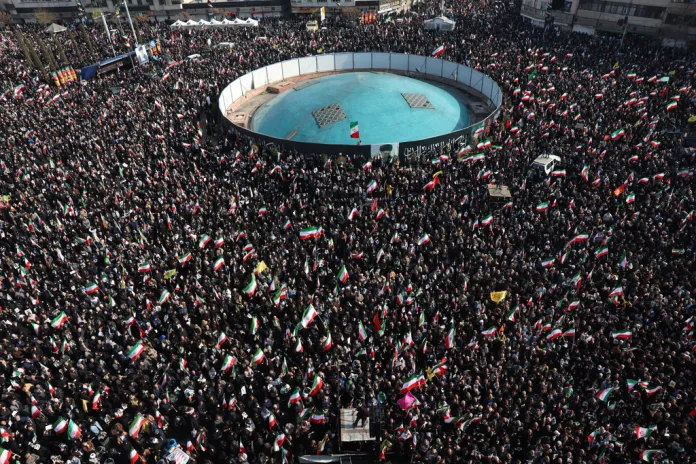
“[Israel’s] assault has doubtless hurt their ability to defend the regime, but it is unclear if it has eliminated the personnel—or broken the morale—of those who would be called upon to crush the uprising that the United States and Israel hope will follow the end of the air campaign,” the Council on Foreign Affairs asserted in a Wednesday report.
But the merciless campaign is creating headaches for Trump as the perennial deal-maker’s administration struggles to understand who is left to negotiate with.
CHINA HOPES TRUMP’S GAMBLE ON IRAN AND CUBA LOSES THE US MORE THAN IT GAINS
“They want to make a deal. They’re talking to our people. I don’t know if they’re ready yet. They’re taking a pounding,” Trump told reporters this week. “We don’t even know who their leaders are because the first group was all dead and the second group got knocked out.”
He added, “We have people wanting to negotiate. We have no idea who they are.”