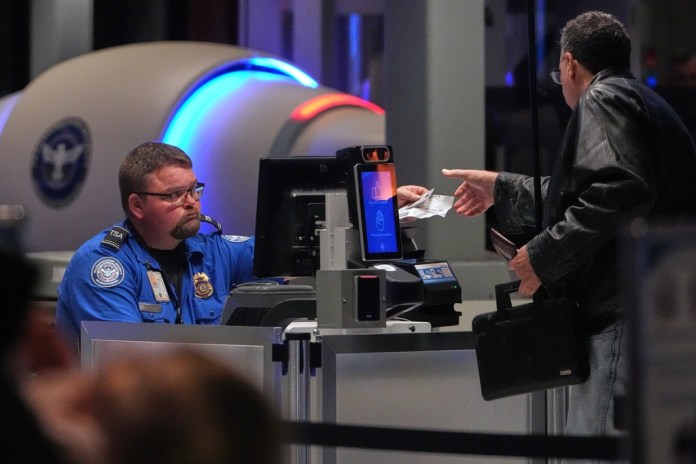
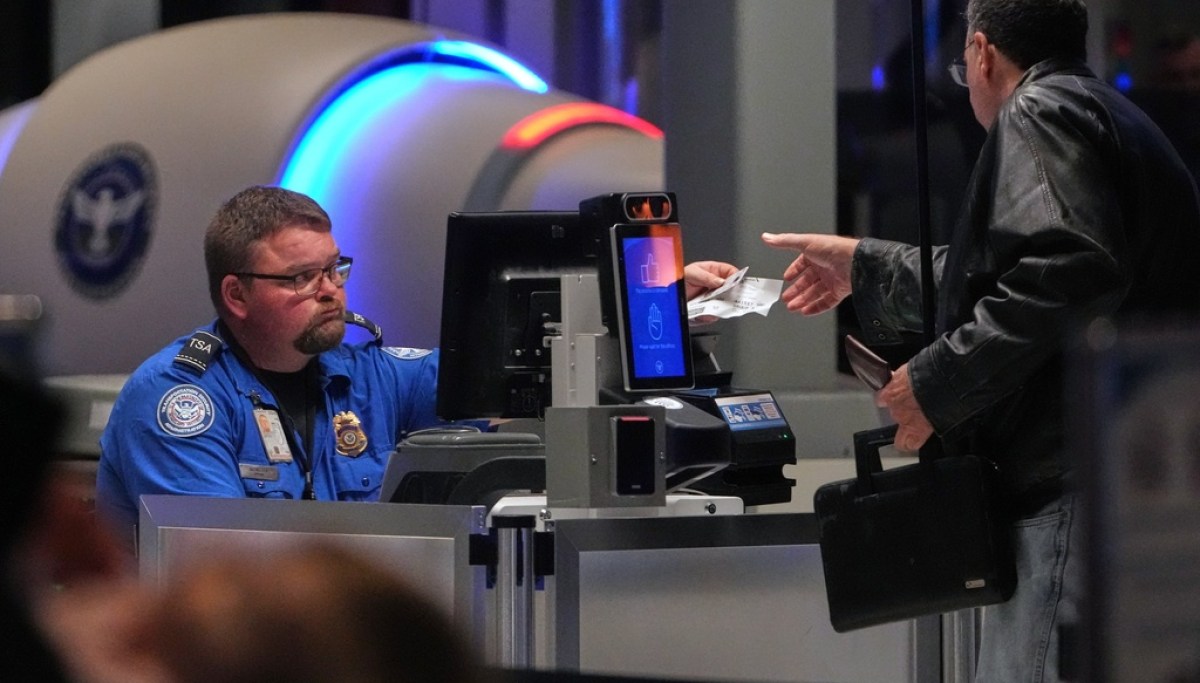
The travel industry is warning that airports could face growing strain and longer security lines as a partial shutdown of the Department of Homeland Security stretches into the start of the busy spring break season.
Airlines and travel trade groups say the funding lapse is raising concerns about staffing levels at security checkpoints and the risk of operational disruptions if the shutdown drags on, as roughly 50,000 Transportation Security Administration officers work without pay. Nearly all TSA officers are classified as essential employees, marking the second time in four months they have faced a missed paycheck during a shutdown despite working throughout.
Travel experts say the operational risk may not surface immediately, but rather weeks into a prolonged funding lapse.
“We don’t have a crystal ball,” said Katy Nastro, a travel expert at Going, in an interview with the Washington Examiner. “But historically, once you hit that three- to four-week threshold without pay, that’s when absenteeism starts to occur, and the financial strain really weighs on essential workers.”
TSA officers are expected to receive one more paycheck before mid-March. After that, Nastro said, the pressure typically intensifies as workers who live paycheck to paycheck begin feeling the strain. “That’s really the timeline we’ve seen in the past,” she said.
DHS entered a partial shutdown Saturday after negotiations collapsed between congressional Democrats and the Trump administration over oversight of federal immigration officers. Talks showed no movement over the holiday weekend, and lawmakers left Washington for recess, though congressional leaders say they are prepared to return if an agreement is reached.
In a joint statement, U.S. Travel, Airlines for America, and the American Hotel & Lodging Association warned that unpaid TSA personnel increase the risk of staffing shortages and passenger delays.
“Travelers and the U.S. economy cannot afford to have essential TSA personnel working without pay, which increases the risk of unscheduled absences and call outs, and ultimately can lead to higher wait times and missed or delayed flights,” the groups wrote. They added that funding uncertainty damages the broader travel ecosystem and undermines recruitment, retention, and preparedness efforts across the industry.
The organizations pointed to last year’s 43-day shutdown, which they said resulted in an estimated $6 billion economic impact and disrupted travel for more than 6 million passengers.
Nastro noted the shutdown comes during an elevated but staggered travel period. Spring break traffic is spread across several weeks rather than concentrated like Thanksgiving, she said, which may blunt the immediate impact but still adds steady pressure to airport staffing.
A shutdown would not halt air travel overnight. TSA officers are not expected to miss full paychecks until mid-March, and previous funding lapses show that widespread disruptions tend to build gradually as unpaid workers begin calling out or seeking other jobs. But acting TSA Administrator Ha Nguyen McNeill said the agency’s experience during the last 43-day shutdown demonstrated how quickly strain on the workforce can spill over into airport operations.
Air traffic controllers are continuing to receive pay because they fall under the Federal Aviation Administration within the Department of Transportation, not DHS. But McNeill told lawmakers last week that the current shutdown is still expected to disrupt airport operations if it continues.
“Many [TSA officers] work paycheck to paycheck trying to support themselves and their families,” McNeill said during testimony before the House Appropriations Subcommittee on Homeland Security. “During a shutdown, the ability to pay for rent, bills, groceries, child care, and gas just to get to work becomes very challenging, leading to increased unscheduled absences as a shutdown progresses.”
“Higher callouts can result in longer wait times at checkpoints, leading to missed or delayed flights, which has a cascading negative impact on the American economy,” she said.
McNeill said roughly 95% of TSA staff are considered exempt under the agency’s contingency plan, meaning they must report to work despite the funding lapse. She warned that the agency’s workforce is still recovering from the last shutdown.
“Some are just recovering from the financial impact of the 43-day shutdown,” she said. “We cannot put them through another such experience. It would be unconscionable.”
According to McNeill, roughly 1,110 TSA officers left the agency in October and November, representing a year-over-year spike of more than 25%. She warned that funding uncertainty is already producing measurable damage to recruitment, retention, and employee morale.
Past shutdowns have strained airport staffing, as TSA officials say missed paychecks tend to drive higher absenteeism and slow screening lines. A DHS spokesperson said essential operations would continue but acknowledged the toll on the workforce.
“DHS essential missions and functions will continue as they do during every shutdown. However, during a shutdown, many employees will be forced to work without pay, putting strain on the front-line defenders of our nation,” the spokesperson said in a recent statement.
Early flight data shows mounting strain across the system. On Saturday, more than 5,100 flights within, into, or out of the United States were delayed, and nearly 460 were canceled, according to FlightAware. On Sunday, more than 6,500 U.S. flights were delayed, with nearly 330 canceled. By Monday, nearly 7,500 flights were delayed and 578 were canceled, with thousands more disruptions reported on Tuesday. The figures do not break down which delays were tied to TSA staffing issues versus other routine causes such as maintenance or weather.
DHS enters shutdown after Congress skips town without deal on ICE
Industry groups say the last shutdown disrupted travel for roughly 6 million passengers, a reminder of how quickly funding lapses can ripple through the aviation system.
Nastro urged travelers to keep perspective if delays worsen. “Air travel is frustrating,” she said. “But it’s even more frustrating when you’re expected to show up and work without pay. These essential workers are feeling it far more.”