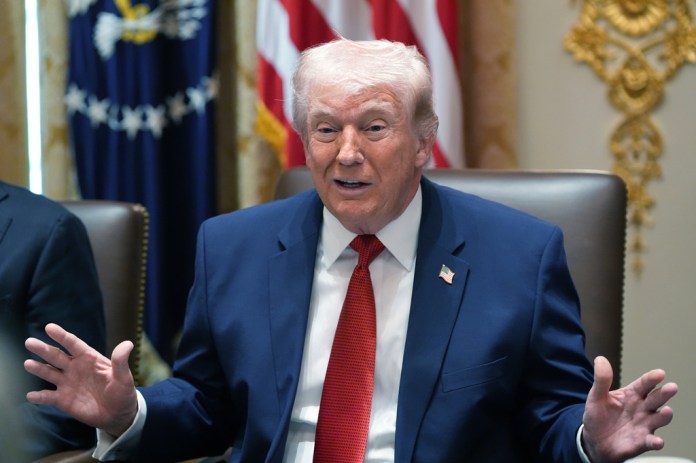
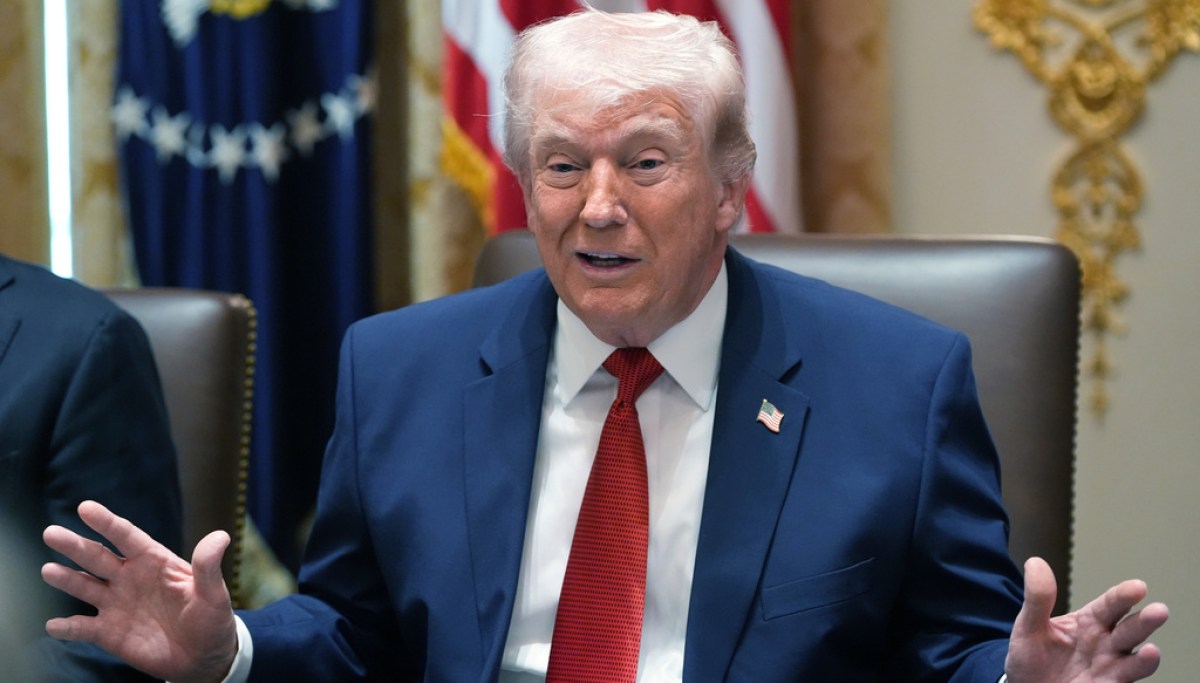
President Donald Trump revealed during a meeting of his Cabinet on Thursday that Iran allowed eight oil tankers through the Strait of Hormuz, an allowance from the Middle Eastern country that comes during fragile negotiations with U.S. officials.
Trump said Iranian negotiators told the United States that they would allow the oil tankers through to show they are “real and solid,” despite public posturing from Iranian officials that no negotiations are taking place.
“Well, I guess they were right, and they were, they were real, and I think they were Pakistani-flagged,” Trump said. “And I said, ‘Well, I guess we’re dealing with the right people.’”
During his remarks, Trump said it “won’t be long” before the Iran war concludes but admitted he was not sure the current negotiations between Washington and Tehran would lead to that peace.
The president talked at length about the U.S.-Israel operation against Iran during a televised Cabinet meeting at the White House. The president pushed back on media reports that he was eager to make a deal with Iran.
“They are begging to make a deal, not me,” Trump said, arguing that claims from Tehran that there were no ongoing negotiations were inaccurate.
“They said yesterday that we weren’t negotiating with them, and now they admit that we were negotiating with them. So they want to make a deal,” the president said. “The reason they want to make a deal is they have been just beat to s***.”
Still, Trump expressed some doubt that the current talks would yield a peace deal.
“I don’t know if we’ll be able to do that. I don’t know if we’re willing to do that. They should have done that four weeks ago.”
Thursday’s Cabinet meeting was the 11th of Trump’s second term in office. It was also the first since the war launched on Feb. 28.
Trump paused his plans to strike Iran’s energy infrastructure over the weekend, opting instead to open a five-day negotiating window in hopes of brokering a peace with Tehran. However, Iranian officials have reportedly rejected the 15-point plan submitted by the U.S. and are instead reportedly pressuring the U.S. to halt all hostilities and evacuate its bases in the Gulf before the two sides move toward face-to-face talks.
Trump specifically referenced the U.S. demand for Iran to give up its nuclear capabilities and facilities, saying the Middle Eastern country has a chance to “chart a new path forward.”
“We’ll see if they want to do it, Trump said. “If they don’t, we’re their worst nightmare. In the meantime, we’ll just keep blowing them away unimpeded, unstopped.”
When asked by reporters if he would be open to taking Iran’s oil, similar to how the U.S. took possession of Venezuela oil tankers, Trump said, “It’s an option.”
“I mean, I wouldn’t talk about it, but it’s an option,” he continued.
Treasury Secretary Scott Bessent assured Trump earlier in the meeting that the U.S. oil market is “well supplied” and that the administration has taken action to ensure oil supplies “stranded at sea” are available to the global market.
“Mr. President, we are starting to see more and more movement in and out of the Gulf today, and this is more than yesterday, and this is the beginning,” Bessent said. “I’m confident that shipping traffic will continue to increase on a daily basis even before we secure the straits.”
Secretary of State Marco Rubio, in turn, focused more on the threat that Iran posed to other nations.
“Frankly, I think countries around the world, even those that are out there complaining about this a little bit, should actually be grateful that the United States has a president that’s willing to confront a threat like this and not allow it to continue to persist because these people will kill as many Americans as they have a chance to do,” Rubio told reporters. “And if they have a nuclear weapon, as the vice president pointed out, they could kill millions of Americans in the future, and that is a risk that was not going to continue to exist as long as we had this president.”
Though the Trump administration has had overwhelming success in degrading Iran’s military, resulting in significantly fewer strikes Tehran is launching against American and allied targets, multiple analyses suggest that Iran’s decreased missile strike frequency is actually resulting in a higher rate of strikes breaking through allied air defenses and successfully striking targets.
Meanwhile, even as public sentiment on the war itself remains relatively constant, Trump’s own polling has cratered to career lows.
WHITE HOUSE PROJECTS OPTIMISM HOURS AFTER IRAN REJECTS US PEACE PLAN
A poll published Wednesday by Fox News found 42% supporting the war, with 58% opposed, divided largely along party lines, but just 41% of voters give Trump himself positive marks, a low point for his second term, according to the RealClearPolitics average on Thursday.
Thursday’s Cabinet meeting can be seen in full below.