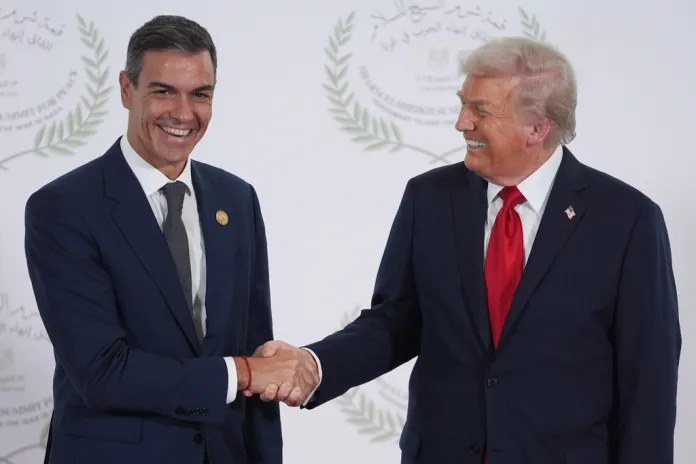
The United States’s relationship with Spain continues to deteriorate after the emergence of an American investigation into the state-sanctioned suicide of a sexual assault victim.
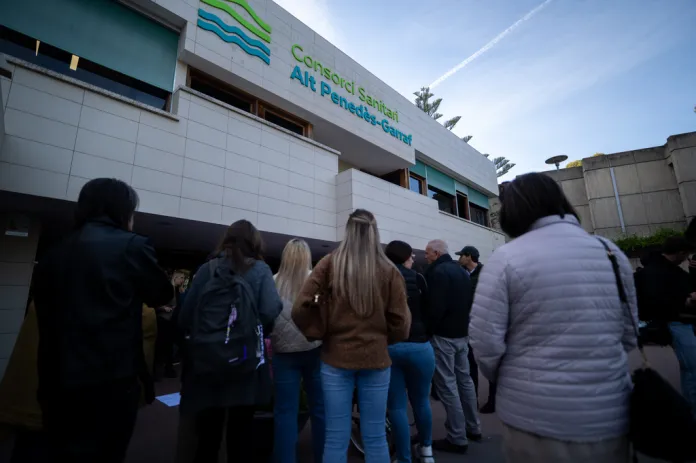
Noelia Castillo, a 25-year-old woman who survived multiple sexual assaults and a suicide attempt that left her paralyzed, was approved for voluntary euthanasia and killed last week near Barcelona. A U.S. government cable leaked on Tuesday expressed “serious concerns about the application of Spain’s euthanasia law, particularly in cases involving psychiatric conditions and non-terminal suffering.” Spain passed a right-to-die law in 2021.
The cable prompted a rebuke from Spanish Health Minister Monica Garcia, who criticized President Donald Trump for supporting “human rights violations in Gaza and Iran” while “thousands of people without health insurance die every year” in the U.S.
“Trump should stop fueling the international far-right agenda by sticking his nose into everything,” Garcia wrote.
The dressing-down is a microcosm of the broader rifts dividing the U.S. and Spain as Prime Minister Pedro Sanchez positions himself as Trump’s preeminent critic in Europe.
The Spanish government announced on Monday that it would be denying authorization for U.S. aircraft seeking to use its airspace for any purpose related to the conflict in Iran, calling Operation Epic Fury “profoundly illegal and profoundly unjust.” It was a notable escalation from its previous refusal to allow the U.S. military to use Spanish bases.
Emma Ashford, a senior fellow at the Stimson Center, told the Washington Examiner that “the Spanish have always had a somewhat ambiguous relationship with U.S. military intervention.”
“They were late entrants to NATO and suffered the Madrid train bombings in the mid-2000s as a response to their support for the U.S. war in Iraq,” Ashford explained. “More importantly, Spain is much further from the war in Ukraine than many of their European compatriots and much less reliant on American defense support.”
Spain even managed to negotiate a bespoke deal with NATO to allocate just 2.1% of GDP to defense spending, less than half of the 5% target all other members accepted. It was the only country to obtain such an exception.
Trump has for weeks sought a mechanism through which to punish Madrid for its lack of cooperation, threatening earlier this month to roll back all trade with Spain.
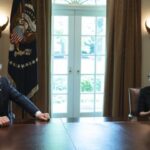
“We’re going to cut off all trade with Spain,” Trump threatened earlier this month while meeting with German Chancellor Friedrich Merz in the Oval Office. “We don’t want anything to do with Spain.”
But the Spanish government has shrugged these threats off, with Sanchez describing the U.S. and Spain as “closer than ever” despite “temporary disagreements” about the “fulfillment of international law.”
Madrid maintains that it is protected from being singled out for penalties due to the framework of the European Union-U.S. trade agreement.
Ashford said that the trade agreement does provide insulation from “broad-based trade penalties” such as general tariffs, but that the “administration has had some success in trying to bar specific items from some geographic locales.”
“For example, a tariff on the import of a certain brand of cars which are produced only in one country could be one way to do this,” she explained, but added that “because Spain is far less dependent on American military force [than some other European countries], the U.S. has less leverage over them.”
Spain’s precedent has been followed by multiple other European nations turning their nose up at U.S. requests for aid in the Middle East and elsewhere.
Polish Defense Minister Wladyslaw Kosiniak-Kamysz deemed it necessary on Tuesday to dispel rumors in the press that Poland would be diverting Patriot air defense systems to the Middle East at the behest of Washington.
Poland’s statement came just hours after Italian Minister of Defense Guido Crosetto explained that he had turned U.S. planes away from the nation’s Sigonella base in eastern Sicily last week due to a lack of proper authorization.
TRUMP SAYS LEAVING ‘PAPER TIGER’ NATO IS NOW ‘BEYOND RECONSIDERATION’
Crosetto tried to cushion the blow by calling reports that Italy has “decided to suspend the use of bases” for U.S. assets “simply false, because the bases are active, in use, and nothing has changed.”
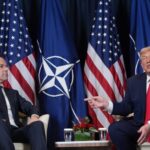
The frustrations have pushed Trump to question why the U.S. is even a member of NATO, saying on Wednesday that pulling out of the alliance is “beyond reconsideration.”