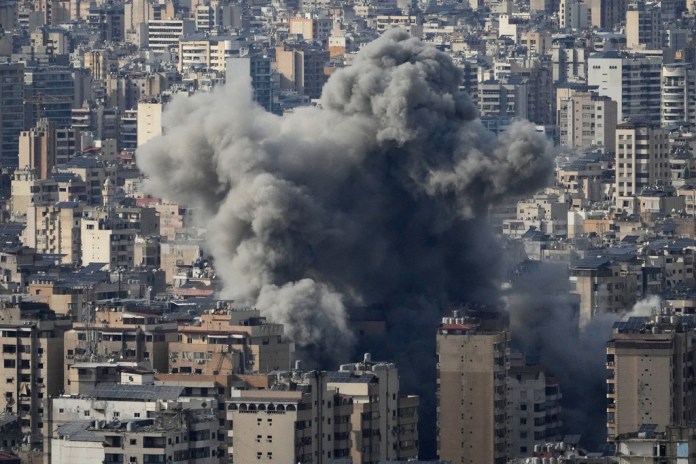
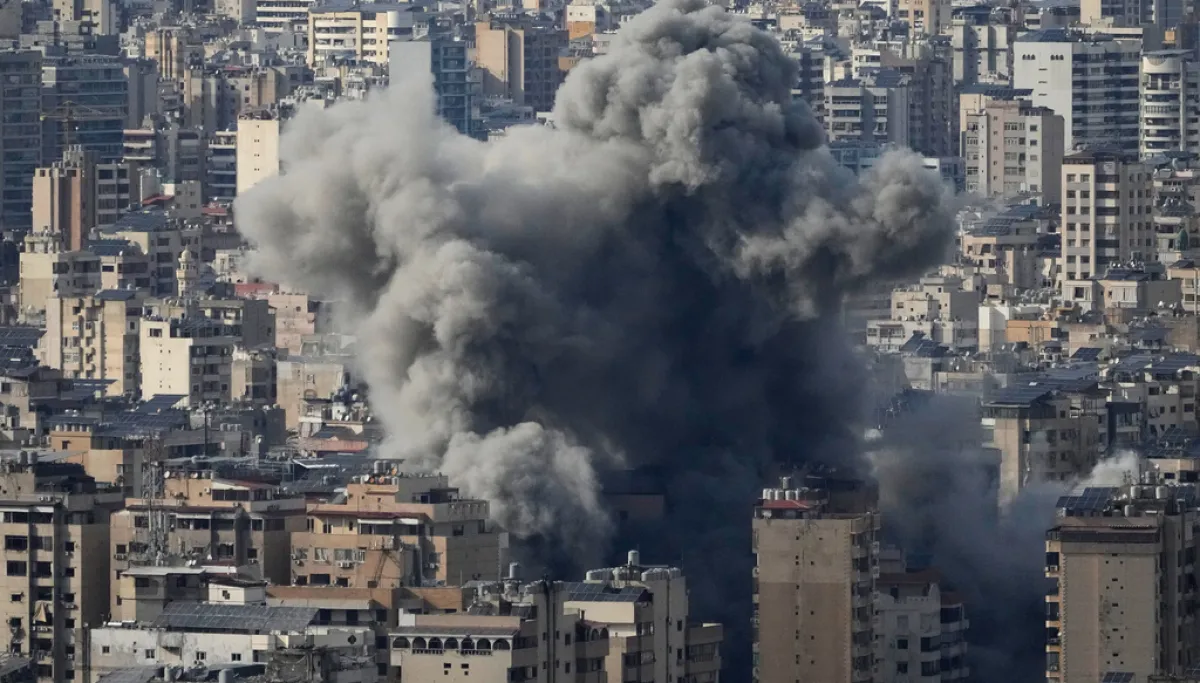
The joint U.S.-Israeli attack on Iran in the morning hours of Feb. 28 sparked the largest regional war in the Middle East in decades and marked several historical milestones.
Operation Epic Fury is the largest U.S. campaign since its invasion of Iraq in 2003, and is poised to reshape the order in the Middle East for the near future. The U.S. and Israel have inflicted heavily lopsided casualties on the Iranians, with U.S. losses being six soldiers dead as of Friday, while Iran has lost thousands so far.
MICHAEL BARONE: TRUMP AVOIDING REPEATING HISTORY IN IRAN
In achieving these results, the U.S. and Israel have achieved several historical milestones, while the Iranians have achieved several of their own:
First assassination of a head of state by a rival state since 1979 or 1870
The U.S. and Israel began the war with a devastating opening strikes, hitting hundreds of targets with a wide variety of munitions. One target took absolute precedence, however, and getting him in a favorable spot was the trigger of the entire war — former Ayatollah Ali Khamenei.
The attack was launched shortly after 8 a.m., when Khamenei was at a meeting with other top officials in his above-ground office. The strike was the culmination of months of intricate intelligence from the CIA and Mossad, meticulously tracking the supreme leader’s movements. When the order was given, over 30 precision munitions were launched from Israeli aircraft, obliterating his compound and killing Iran’s head of state and several other top officials.
The killing marked the first assassination of a head of state by a rival head of state in nearly a half-century, and the first of the 21st century. The last time such a feat was achieved was on Dec. 27, 1979, when the communist Afghan President Hafizullah Amin was mortally wounded by a grenade thrown by Soviet special forces during Operation Storm-333. Amin was a Soviet puppet who was eliminated in a daring operation after becoming increasingly erratic and disruptive to Moscow’s aims in the country.
TRUMP GRAPPLES WITH THE GREATEST COST OF HIS WAR IN IRAN: THE HUMAN COST
Given Amin was more a betrayed ally than actively hostile, another claimant to the last assassination of a head of state by a rival power could be Paraguayan President Francisco Solano López, who was killed in battle by Brazilian soldiers in 1870 during the War of the Triple Alliance.
Most neutral countries attacked by a belligerent in history
After the U.S. and Israel’s crippling opening attacks, the IRGC was quick to retaliate, though not in the manner many expected. Tehran fired hundreds of drones and missiles at every country in range viewed as supportive of the U.S. or Israel, despite their declared neutrality.
Within the first week, Iran had targeted ten neutral countries: Oman, Turkey, Azerbaijan, Bahrain, Qatar, the UAE, Saudi Arabia, Jordan, Cyprus, and Kuwait.
This total marks the highest number of neutral countries attacked in a war in all of modern history, possibly in all recorded history if the criteria is only applied to a single war.
In comparison, the famously neutrality-violating Nazi Germany only invaded seven neutral countries during World War II: Denmark, Norway, the Netherlands, Luxembourg, Belgium, Yugoslavia, and Greece — eight if one counts Poland. The Soviet Union invaded six neutral countries in the same war: Estonia, Latvia, Lithuania, Romania, Finland, and Iran.
DHS GOVERNMENT SHUTDOWN IS ‘AN INSANE SITUATION’: BYRON YORK
Critics would posit that nearly all the countries Iran targeted have U.S. military bases, so they represent valid targets, despite their declared neutrality. This criticism notwithstanding, the official declaration of neutrality and refusal to fight back allowed Iran to retain its title.
Iran’s strategy of attacking so many neutral countries has puzzled many observers, instantly alienating all of its neighbors.
According to the Wall Street Journal, the Gulf States were targeted because Tehran was betting on making their situation intolerable, pushing them to use their influence in the Trump administration to force an end to the campaign. The actual effect has been the opposite, with the infuriated Arab leaders floating the idea of joining the conflict outright.
Most intensive air campaign of the 21st century
To deliver a crippling strike in the first days, the combined air forces of the U.S. and Israel mounted the most intensive air campaign of the 21st century, carrying out sorties at a pace not seen in decades, even with advances in technology.
U.S. military officials said the total number of sorties on the first day of Operation Epic Fury was twice the number of those carried out in the 2003 “shock and awe” air campaign against Iraq, while Israel said its air campaign launched five times more sorties than during the 12 Day War.
From what U.S. officials and analysts have said, U.S. and Israeli air forces have been able to mount roughly 1,000 sorties per day, only slightly less than the 1,200-1,500 sorties per day of the Gulf War.
WHO ARE THE KURDS, THE GROUP RUMORED TO BE JOINING THE US WAR IN IRAN?
The number of sorties undertaken in the Coalition air campaign against ISIS, the War in Ukraine, and the air war in Libya is far fewer.
The 2026 strikes are also more effective given advances in precision technology, as seen in the plummeting totals of missiles and drones fired in retaliation after each consecutive day.
Most senior leaders assassinated in the opening moves of an armed conflict in modern history
The 12 Day War was unprecedented in the number of senior Iranian commanders assassinated by Israeli forces in the opening strike, numbering around 30, including IRGC Commander in Chief Major Gen. Hossein Salami, Iranian Armed Forces Chief of Staff Major Gen. Mohammad Bagheri, and IRGC Aerospace Forces head Brigadier Gen. Amir Ali Hajizadeh.
The next war with Iran was to far surpass this, killing 40-50 senior leaders, many of even greater seniority. Israel and the U.S. went beyond just military leaders, specifically targeting the entire political leadership of the Islamic Republic. The opening strikes killed Supreme Leader Ayatollah Ali Khamenei, Defense Minister Brigadier Gen. Aziz Nasirzadeh, IRGC head Major Gen. Mohammad Pakpour, and Iranian Armed Forces Chief of Staff Major Gen. Abdolrahim Mousavi.
Several of the most senior leaders were killed in the same strike that took out Khamenei, at an above-ground meeting.
No modern war even comes close in terms of senior leaders killed, with targeted assassinations of officials of rival states largely an outlier.
ISRAELI F-35 SCORES FIGHTER’S FIRST EVER MANNED AIR-TO-AIR KILL OVER TEHRAN
First air-to-air jet kill of an F-35
On Wednesday, the Israeli army announced that an Israeli Air Force F-35I “Adir” fighter jet had shot down a multirole Iranian Air Force Yak-130 fighter jet in a dogfight that lasted “a few seconds.” As pointed out by the Israeli army, the shootdown marked the first time the fifth-generation aircraft had shot down a piloted enemy aircraft since it entered service over a decade ago.
Tomer Bar, head of the Israeli Air Force, personally congratulated the pilot after he landed.
Though the F-35 was touted as a game-changing aircraft, fit for several purposes, the lack of direct combat with peer rivals meant it hadn’t been able to prove itself in dogfights. It has instead focused on ground strike roles, playing a central role in U.S. and Israeli air campaigns around the Middle East.
The shootdown was also the first time in over 40 years that Israel had downed an enemy aircraft, the last time being when an Israeli F-15 downed two Syrian MiG-23s over Lebanon in 1985.
Israel’s F-35s also scored the aircraft’s first-ever air-to-air kill of an unmanned aircraft, shooting down two Iranian drones in March 2021.
First direct combat cooperation between the U.S. and Israel
Despite the close relationship between the U.S. and Israel stretching back decades, the two have never fought side-by-side in a war. This is largely due to the military competence of the Jewish state, particularly compared to its rivals. Former Iraqi dictator Saddam Hussein almost dragged Israel into fighting alongside the U.S. in the 1991 Gulf War through ballistic missile attacks, but Washington was able to persuade it not to, so that the many Arab members of the coalition wouldn’t fracture over their anti-Israel stances.
MIKE PENCE: JUSTICE ARRIVES FOR TEHRAN’S TERRORISM
Though the U.S. intervened in the 12 Day War last year, Operation Midnight Hammer was a one-off strike and didn’t include combat cooperation between the two allies.
Iran was finally deemed enough of a sufficient threat to both parties under the Trump administration that the two launched a war as co-belligerents for the first time. The military cooperation between the two extends to deep intelligence sharing and the divvying up of targets to best economize the joint operation.
Though fighting side-by-side, Israel has codenamed its half of the war Operation Roaring Lion.
First time a U.S. submarine sank an enemy ship with a torpedo since WWII
On Wednesday, the Los Angeles-class submarine USS Charlotte launched two Mk-48 torpedoes at the IRIS Dena, a Moudge-class Iranian frigate carrying around 180 crew members, which was sailing back from a peacetime exercise off the coast of India. Footage published by the Department of War, from the perspective of the submarine’s periscope, showed a massive detonation at the stern of the vessel, lifting it out of the water. A picture was released of the vessel sinking. Sri Lanka recovered the bodies of 87 sailors in the aftermath.
IRAN’S INTERNATIONAL ALLIES FAIL TO SHOW UP WITH FORCE IN FACE OF US WAR
Though the U.S. Navy has spent decades as the largest in the world, a lack of wars with conventional adversaries has disallowed the combat use of its vast nuclear submarine fleet. The last vessel sunk by a U.S. submarine with a torpedo was a Japanese coastal defense frigate in the final hours of World War II.
Contrary to some reports, the sinking was not the first time a ship had been sunk by a submarine-launched torpedo since World War II. A Pakistani submarine sank the Indian frigate INS Khukri in 1971, and the Royal Navy submarine HMS Conqueror sank the Argentine cruiser ARA General Belgrano during the Falklands War in 1982.
First known use of AI for real-time target identification by the U.S. military
While the Venezuela raid to capture former Venezuelan dictator Nicolas Maduro used AI in some capacity, the war with Iran is the first full-fledged use of Artificial Intelligence by the U.S. military. Despite the high-level spat with Anthropic’s Claude AI, the U.S. heavily relied on the company for targeting in the operations against Iran.
Claude allowed the U.S. to strike over 1,000 targets in the first 24 hours of operations, the Washington Post reported, identifying and prioritizing key command and control and military installations.
W. JAMES ANTLE: OCCUPATIONAL HAZARDS: HOW TRUMP CAN AVOID ‘FOREVER WAR’ IN IRAN
Claude is used through Palantir’s Maven Smart System, providing real-time targeting data.
The IDF was known to have previously used a controversial AI targeting software in its war against Hamas, called “Lavender.”