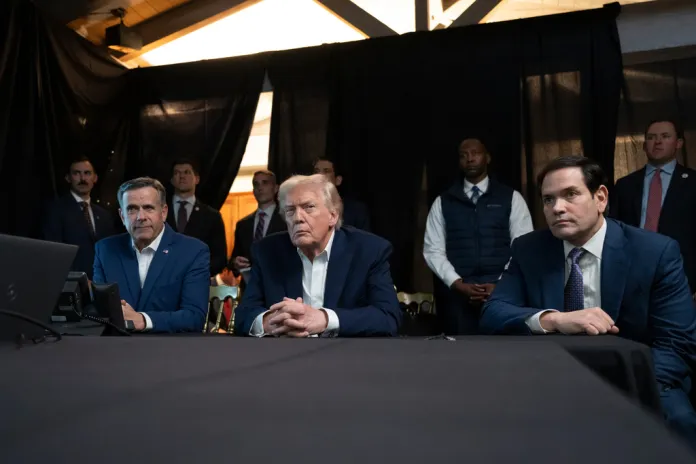
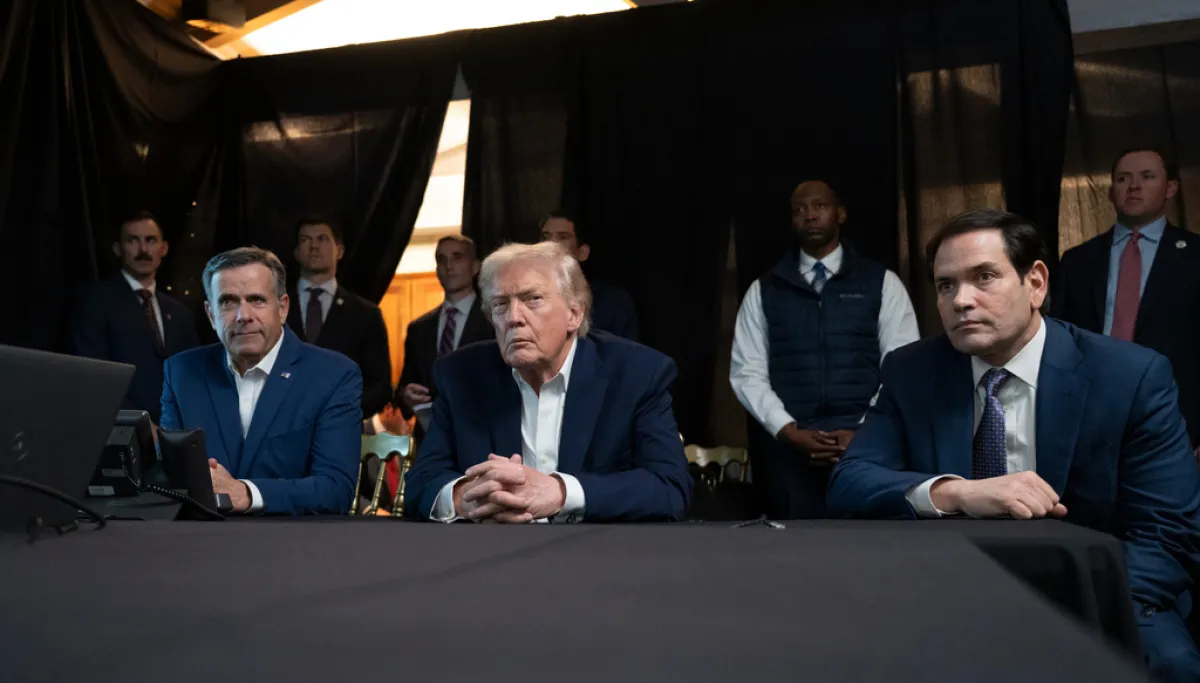
President Donald Trump rallied House Republicans this week as the GOP tries to defy history and keep control of Congress after this year’s midterm elections.
But Trump had questions for House Republicans during his address to their annual retreat on Tuesday, in 2026, at the rebranded Trump-Kennedy Center, as he and the conference grapple with how to gin up turnout in November when the president is not on the ballot.
“I wish you could explain to me what the hell is going on with the mind of the public,” Trump said. “We have the right policy. They don’t — they have horrible policy. They do stick together. They’re violent, they’re vicious, you know, they’re vicious people, and they stick together like glue.”
Republican strategist Cesar Conda did not have explanations ahead of the midterm elections, but he did have recommendations. For example, Conda, founding partner of GOP lobbying firm Navigators Global, advised Trump to “pivot back to pocketbook issues,” concerns that have come to the fore since last year’s off-year contests.
“President Trump should call on the House to pass a narrow reconciliation 2.0 bill focused on his idea of a $2,000 rebate check to be financed by the windfall of tariff revenue,” Conda told the Washington Examiner. “Delivering these ‘Trump Checks’ for middle-class Americans would be a political winner going into [the] midterm elections.”
Trump is expected to use the next 10 or so months to push congressional Republicans to pass another reconciliation bill, which could include more tax cuts and spending reductions, in addition to technical fixes to the One Big Beautiful Bill Act.
Trump is also anticipated to advocate another rescission counterpart, which could claw back more education funding.
Republican strategist John Feehery, who worked for former House Speaker Dennis Hastert, added that “building America’s energy infrastructure and highway infrastructure is key to winning in the future.”
Trump’s 80-plus-minute address was overshadowed by his decision last weekend to capture former Venezuelan dictator Nicolas Maduro in Caracas and comments afterward about how the United States is “running” Venezuela, that he is “not afraid of boots on the ground” there, and that Colombia, Cuba, Mexico, and even Greenland, could be next.
But as Congress responds to his actions in Venezuela, including Democrats this week hoping to compel a war powers vote in the Senate, and lawmakers attempt to avoid another government shutdown on Jan. 30, Trump’s congressional priorities range from passing cryptocurrency regulations, affordable housing initiatives, and energy and infrastructure project permitting reform.
Trump on Tuesday also encouraged House Republicans to promote their collective record regarding increasing border security, decreasing prescription drug prices, and criticizing former President Joe Biden’s reliance on an autopen going into the 2026 elections.
“You want to turn this thing? You work on favored nations, you work on borders, you work on all of the things that we talked about, but now you take the healthcare issue away from them,” Trump said before alluding to the legislative provision preventing federal funds from being used to provide abortion services. “You’ve got to be flexible on Hyde.”
More generally, before the midterm elections, Feehery, the Republican strategist, advised Trump to underscore “that America is winning and the only thing that could stop us from winning is the Democrats.”
“Another message: we can only keep winning if we stick together,” Feehery told the Washington Examiner.
To that end, former White House press secretary Ari Fleischer also advised Trump to continue nationalizing the midterm elections.
“The only way the GOP will keep the House is if Republicans turn out like it’s a presidential year, which means Donald Trump is on the ballot,” Fleischer said. “He’s always on the ballot for Democrats, which is why their turnout is high.”
For alumni of George W. Bush’s administration, the midterm elections also “must be seen as a ‘down-payment’ on keeping the White House in 2028.”
“If people don’t show up in 2026 to make their down payment, we can’t keep the White House in 2028,” Fleischer said of Republicans.
White House chief of staff Susie Wiles has publicly agreed with Fleischer’s midterm elections strategy, telling The Mom’s View podcast last November that she and Trump’s aides are planning to “put him on the ballot” this November.
“Typically, in the midterms, it’s not about who’s sitting at the White House. You localize the election, and you keep the federal officials out of it,” Wiles said before referring to Trump. “I haven’t quite broken it to him yet, but he’s going to campaign like it’s 2024 again.”
Trump, however, apparently had no complaints, returning to Pennsylvania and the campaign trail last month to counter Democratic criticism related to his economic policies and cost-of-living concerns.
“The new word is affordability,” Trump told the crowd at Mount Airy Casino Resort. “Democrats talking about affordability is like Bonnie and Clyde preaching about public safety, and they are really the, truly, the enemy of the working class when they do it.”
But Fleischer’s strategy is not without risk, considering Trump’s approval ratings, particularly with respect to inflation, and the direction of the country’s polling.
For instance, an average of 38% of respondents tell pollsters the country is heading in the right direction, whereas 56% disagree, arguing it is on the wrong track, according to RealClearPolitics.
Less than a year before the midterm elections, Republicans hold a polling edge compared to Democrats, who, on average, have a 4 percentage point lead over the GOP in generic congressional ballot polls, per RealClearPolitics.
History is also against Republicans, with the late Democrat Jimmy Carter the most recent president to keep control of Congress after his first and only midterm election in 1978.
As such, Democrats are projecting confidence, including the Democratic Congressional Campaign Committee, which told reporters on Monday that Democrats are “poised to take back control of the U.S. House.”
“Democrats need to flip just three seats to win control of Congress, and the DCCC is expanding the House battlefield in districts won by President Trump with battle-tested recruits, a common sense message, and grassroots momentum,” DCCC spokesman Justin Chermol said.
In reaction, Republicans are looking to leverage socialist New York Mayor Zohran Mamdani against Democrats during the first year of his administration.
“Every time Mamdani opens his mouth or swipes his pen, he tattoos the Democrat Party’s failures onto every House Democrat facing voters in 2026,” National Republican Campaign Committee spokesman Mike Marinella said.
TRUMP AND THE WHITE HOUSE GO ON DEFENSE OVER HEALTH CONCERNS
Against that backdrop, Republicans have a structural advantage in the Senate, where the GOP’s three-seat majority is under less threat, given the Democratic-held toss-up races this election cycle are in the presidential battleground states of Georgia and Michigan.
The Republican-held toss-up seats are those of Sen. Susan Collins (R-ME) and retiring Sen. Thom Tillis (R-NC).