
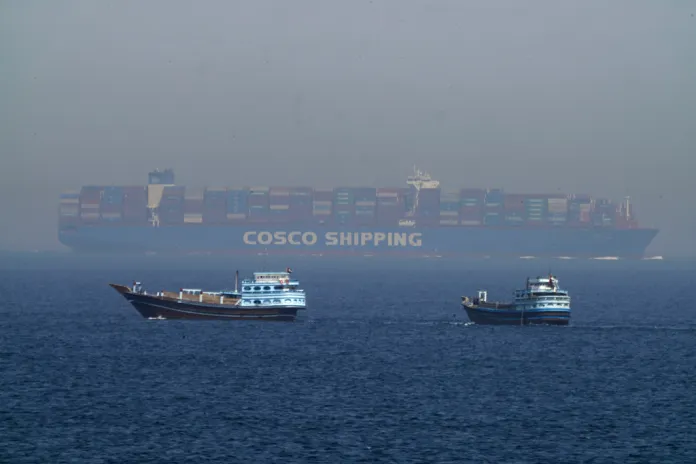
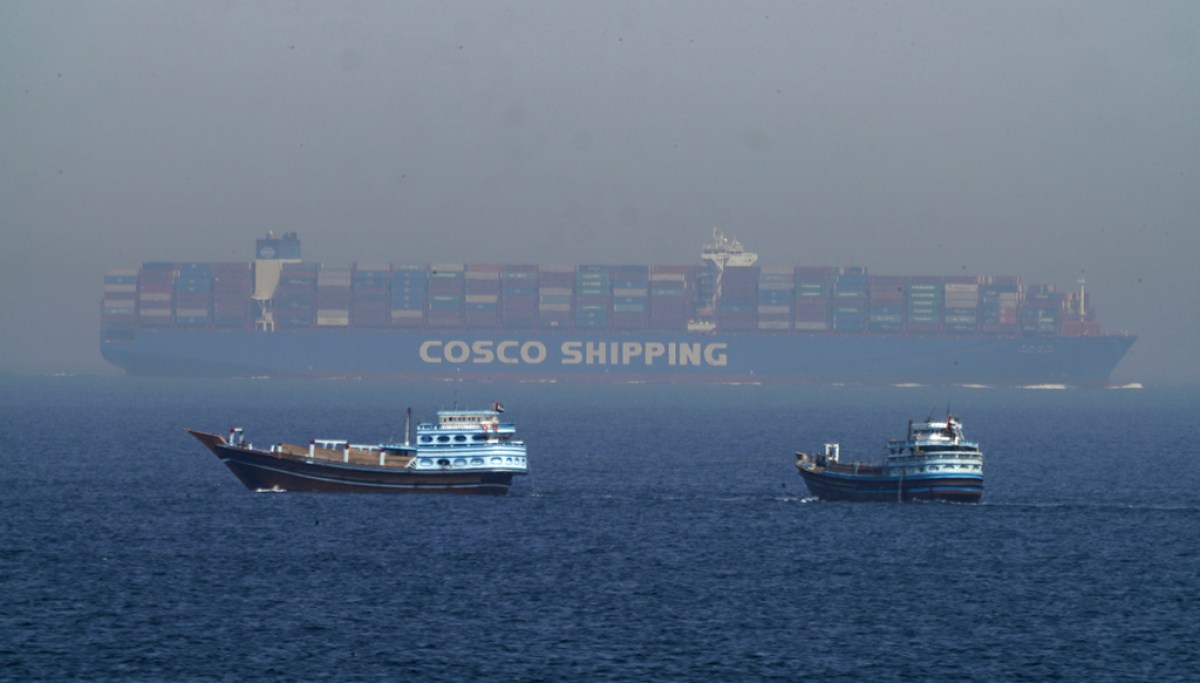
The Islamic Revolutionary Guard Corps said the Strait of Hormuz, a key global shipping lane, has been “effectively closed” to maritime vessels after the United States and Israel struck Iran overnight.
The move is notable because shippers now can’t easily transport oil exports through the strait. As a result, oil prices will most likely increase.
“The IRGC has warned various vessels that, due to the insecure conditions around the strait resulting from the U.S. and Israeli military aggression and Iran’s responses, passage through the strait is currently unsafe,” the Iranian military branch’s statement read.
SEAN DURNS: THE ISLAMIC REPUBLIC HAD ITS CHANCE
The Maritime Administration, an agency that falls under the Department of Transportation, also warned commercial ships to avoid the oil-rich Gulf region in the Middle East following the joint U.S.-Israeli strikes on Iran. There has been a significant concentration of U.S. military activity in this area for several weeks before the start of “Operation Epic Fury.”
Commercial vessels are advised to stay at least 30 nautical miles, or 34.5 miles, away from any U.S. military vessel so that they are not mistaken as threats, the maritime agency said.
Iran has repeatedly threatened to close the whole strait in the event of a U.S. attack, but it never acted on those statements until now. However, the Islamic Republic said parts of the strait were recently closed for “safety” reasons during military drills.
CONGRESS SPLIT ON TRUMP’S IRAN STRIKES
It remains unclear if the closure is being enforced as an oil industry analyst claims the strait has not been closed to vessels.
The Strait of Hormuz is widely considered “one of the world’s most important oil chokepoints,” according to the Energy Information Administration. The agency says about 20 million barrels of crude oil and other oil products pass through the strait daily, equivalent to 20% of global oil demand.
A complete closure of the strait would have immediate impacts on international oil markets, sending prices soaring. By Monday, the national average for gas prices could very well surpass $3 per gallon. The current average is $2.98 per gallon as of Saturday, according to AAA.
Oil prices were elevated for days and weeks leading up to Saturday’s strike, with traders fearing that an attack on Iran would cause a significant disruption in global supply chains.
International and domestic benchmarks, Brent Crude and West Texas Intermediate, were both up by nearly 3% towards the close of trading on Friday.
If there are no signs of de-escalation through Sunday, some analysts are forecasting that pool prices could jump as much as $20 per barrel or more.
“Given the scale of retaliation, most of the strategic initiative now lies with Iran,” Rystad Energy’s Jorge Leon told Yahoo Finance. “How Tehran chooses to respond over the next 24-72 hours — especially toward energy infrastructure or regional shipping — will be the primary driver of near-term oil market dynamics.”
Any major disruptions in global supply could be supported by major oil producers, such as OPEC+. The international oil-producing bloc is scheduled to meet Sunday and has been expected to resume its production hikes that were paused over the winter.
WORLD LEADERS STRESS DIPLOMATIC RESOLUTION AFTER US-ISRAEL STRIKES ON IRAN
While OPEC+ is anticipated to approve a modest hike of 137,000 barrels per day, the bloc may lean towards a sharper increase in production to offset supply losses seen from Iran.
Saudi Arabia and the United Arab Emirates raised their output of oil exports in advance of the attack. Both countries are founding members of OPEC+.






They can and will be removed