An internal Immigration and Customs Enforcement memo proposes a sweeping “detention reengineering” initiative aimed at fixing the system’s most chronic failures.
The post ICE ‘Detention Reengineering’ Plan Will Expand Capacity, Speed Deportation of Criminal Aliens appeared first on Breitbart.
An internal Immigration and Customs Enforcement memo proposes a sweeping “detention reengineering” initiative aimed at fixing the system’s most chronic failures — overcrowded facilities, slow transfers, and deportation backlogs that allow criminal aliens to cycle repeatedly through American communities. The proposal, backed by frontline ICE personnel and major law enforcement groups, would expand detention capacity, streamline processing, and accelerate removals of offenders who currently linger in local jails for weeks or walk free due to lack of space.
The February 13 memo, marked “For Official Use Only” and published on the New Hampshire governor’s website, states that the initiative is needed to address the agency’s orders from President Donald Trump to increase mass deportations. The program calls for eight “mega-centers” with a capacity of up to 10,000 detainees each. The $38.3 billion project is planned for completion by the end of November.
Governor Kelly Ayotte has not publicly stated a position on a proposed regional processing center in proposed facility in Merrimack, and her office has not issued any formal comment on whether she supports its construction.
ICE Director Todd Lyons told the Senate Homeland Security and Governmental Affairs Committee last week that there are approximately 1.6million illegal aliens in the United States with final orders of removal issued by DOJ immigration judges. The director reported that half of these, approximately 800,000, have criminal convictions, Fox News reported. Lyons added that the 1.6 million illegal aliens with final orders of removal include nearly 17,000 in the state of Minnesota.
Watch the latest video at foxnews.com
The goal of the initiative is to expand detention capacity to 92,000 beds. Officials say that as the 12,000 new ICE enforcement officers come online, the number of people detained will increase. This will require a massive reengineering of the agency’s detention capabilities.
The memo states:
The objective of this contract is to secure comprehensive services for the design, renovation, and operation of ICE-owned permanent structures, transforming them into processing and detention facilities exclusively for ICE. These facilities will ensure the safe and humane civil detention of aliens in ICE custody, while helping ICE effectuate mass deportations. The facilities will also incorporate a standardized layout and new features for both illegal alien detainees and the ICE/contractor staff that work at these sites. Facilities will be built to handle the immediate surge capacity and sustained longterm operations, providing a unified, scalable solution that delivers continuity, safety, compliance, and control – built to scale, and committed to supporting our mission.
The program includes plans for:
- Regional Processing Centers housing an average daily population of 1,000 to 1,500 detainees for average stays of 3–7 days. These will serve as staging locations for transfers or removals.
- Large-Scale Detention Facilities are capable of securely and humanely housing 7,000 to 10,000 detainees for periods averaging less than 60 days. These sites will serve as the primary locations for international removals.
The new facilities will comply with all “existing detention standards” and will increase efficiency and reduce detention costs, officials state.
ICE custody. Key responsibilities include:
- Providing basic needs such as food, clothing, hygiene products, bedding, and recreation.
- In coordination with ICE Health Services Corps., ensuring medical, dental, mental health care, and emergency services.
- Facilitating legal access through visitation spaces, law libraries, and necessary resources.
- Providing religious spaces in compliance with the Religious Freedom Restoration Act of 1993.
- Supporting communication needs, including scheduled phone calls and mail services.
- Facilities will include a variety of program operations to include but not limited to; food services, security & detention, medical services, transportation services, detainee processing, legal services & case processing, custodial and laundry services, IT services, and facility management.
- These sites will also include lobbies, recreational space, dormitories, courtroom spaces, intake and processing zones, cafeterias, as well as amenities for ICE and contractor staff like office spaces and exercise facilities.
Officials report that the expected duration of migrants’ stay in the mega-centers will be approximately 60 days. The smaller regional processing sites will hold illegal aliens for about a week.
One of the proposed megacenters will be located in Hutchins, Texas, according to The Dallas Morning News.
Hutchins Mayor Mario Vasquez says he opposes the federal government’s purchase of the giant warehouse that has sat empty for many months. “No benefit to it whatsoever,” the mayor said.
The facility, located 10 miles south of Dallas, will be the largest ICE detention center in the United States and will house approximately 9.500 people. A second Texas-based facility is planned for the border city of El Paso. That facility is expected to house approximately 8,500 illegal aliens. Smaller facilities in Texas include locations in San Antonio and Los Fresnos.
El Paso Matters reported that the planned El Paso facility will be located on the city’s east side. The facility will expand capacity in the region to more than 13,000 illegal aliens. A 5,000 bed center was opened on Fort Bliss in August.
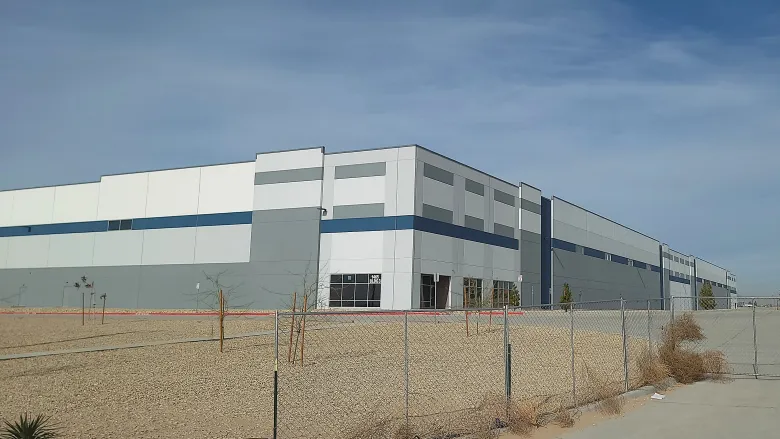
The three-building Eastwind Logistics Center off Gateway Boulevard East in the city of Socorro near Clint has been identified as the likely location of a new mega ICE detention facility in El Paso County. (Cindy Ramirez / El Paso Matters)
News4SA reported opposition to the Alamo City facility from Bexar County and San Antonio politicians.
“They don’t have to comply with city zoning regulations or anything like that so again, the city doesn’t have any power at all to dictate what the property can or can’t be used for,” District 10 Councilman Marc Whyte told the local NBC affiliate.
San Antonio City Council District 3 Councilwoman Phylis Viagran added that San Antonio should not take on any additional responsibility for federal policies.
The sweeping detention‑reengineering plan now moves from internal blueprint to public flashpoint, with ICE racing to build the infrastructure needed to carry out the administration’s accelerated removal agenda. As federal officials push ahead with mega‑centers and regional hubs designed to handle unprecedented enforcement levels, state and local leaders across the country are being forced to confront the political, logistical, and community impacts of hosting these facilities.
Whether embraced as a long‑overdue modernization or resisted as an unwanted federal footprint, the initiative signals a dramatic expansion of America’s detention and deportation machinery—and the debate over where these centers belong is only just beginning.
Bob Price is the Breitbart Texas-Border team’s associate editor and senior news contributor. He is an original member of the Breitbart Texas team. Price is a regular panelist on Fox 26 Houston’s What’s Your Point? Sunday morning talk show. He also serves as president of Blue Wonder Gun Care Products.