Undaunted by Iran’s claim that its ceasefire agreement was conditioned on Israel halting its operations against Hezbollah in Lebanon, the Israel Defense Forces (IDF) launched another round of airstrikes in Lebanon on Thursday.
The post Israel Escalates Attacks on Lebanon as Iran Blocks Strait of Hormuz appeared first on Breitbart.
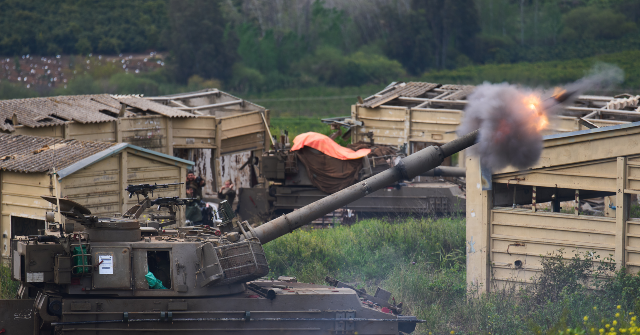
Undaunted by Iran’s claim that its ceasefire agreement was conditioned on Israel halting its operations against Hezbollah in Lebanon, the Israel Defense Forces (IDF) launched another round of airstrikes in Lebanon on Thursday.
Iran responded by declaring the Strait of Hormuz is once again closed to commercial traffic, but nevertheless appears willing to proceed with peace talks in Pakistan this weekend.
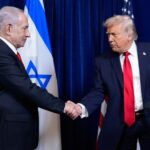
Israeli and U.S. officials, including Prime Minister Benjamin Netanyahu and President Donald Trump, have insisted Lebanon was never included in the ceasefire agreement, but Pakistan and Iran claim it was. President Trump had shared a statement on his website, Truth Social, including a Pakistani statement that listed Lebanon as part of the agreement.
International media outlets like Reuters appeared to side with Tehran on Thursday by claiming Israel’s strikes against Hezbollah “jeopardized” the ceasefire and threatened to “torpedo Donald Trump’s truce.”
“There was no sign Iran was lifting its near-total blockade of the Strait of Hormuz, which has caused the worst disruption to global energy supplies in history. Tehran said there would be no deal as long as Israel was striking Lebanon,” Reuters reported.
The IDF said its airstrikes on Wednesday night and Thursday were among the most effective blows it has dealt against the Iran-backed terrorists of Hezbollah, wiping out a large number of Hezbollah leaders including Al Yusuf Harshi, nephew and secretary to Hezbollah chief Naim Qassem.
“Harshi was a close associate and personal adviser to Hezbollah Secretary-General Naim Qassem, and played a central role in managing his office and his security,” said a statement from the Israeli military.
“Our message is clear: Whoever acts against Israeli civilians will be targeted. We will continue to strike Hezbollah wherever necessary, until we restore full security to the residents of the north,” Prime Minister Netanyahu said of Harshi’s elimination.
The IDF also said it bombed two crossings over the strategic Litani River, which Hezbollah has been using to move “thousands of weapons, rockets, and launchers” into southern Lebanon, as well as ten weapons depots, tunnels, and command headquarters Hezbollah had established south of the river.
The Lebanese Health Ministry said over 200 people were killed by Israel’s strikes on Wednesday without distinguishing between Hezbollah operatives and possible civilian casualties.
Hezbollah launched rockets at northern Israel on Thursday, describing the attack as retaliation for Israel’s alleged “ceasefire violations.”
Even before the ceasefire was announced, Israel said it would continue operations in Lebanon until the threat of Hezbollah terror attacks has been eliminated. The Lebanese government promised to disarm Hezbollah as part of the 2024 Gaza War ceasefire agreement, and was obliged by even older agreements to keep Hezbollah weapons out of southern Lebanon, but Israel has accused Beirut of failing to fulfill those obligations, losing faith in its ability or willingness to control Hezbollah.
The Israeli military deployed its 98th paratrooper division into Lebanon, reinforcing its incursion with six highly mobile elite brigades. Israel spokesmen said tasks for the 98th would include sweeping southern Lebanon for anti-tank weapons to pave the way for armored units.
Israeli political leaders have spoken of advancing further into Lebanon, and perhaps permanently annexing the territory south of the Litani River, while IDF officials appear to be focused on eliminating Hezbollah infrastructure in the area Israel has already occupied. Some military officials have grumbled about the gap between their war plans and the more aggressive declarations coming from the Netanyahu administration.
The National on Wednesday reported that Israel’s current plan would “leave almost 10 per cent of Lebanon inaccessible,” and the IDF’s evacuation orders to clear civilians from the conflict zone have “forced more than a million people — about a fifth of the country’s population — to flee their homes.”
“Most of southern Lebanon is depopulated, with the exception of villages with non-Shiite majorities, and the Lebanese Army has withdrawn from areas where Israeli troops are establishing a presence,” The National wrote.
Some residents of southern Lebanon, notably including Christian villagers who believe they should not be part of the battle between Israel and Hezbollah, say they are afraid to evacuate because their homes could be permanently destroyed.
Iran continued to insist on Wednesday that the ceasefire agreement included Lebanon, so it regards Israel’s strikes against Hezbollah as a breach, and the Strait of Hormuz was blocked again in response. Only two tankers were reportedly able to transit the strait before Iran began threatening to attack commercial shipping again.
“The Iran-U.S. ceasefire terms are clear and explicit: The U.S. must choose — ceasefire or continued war via Israel. It cannot have both,” Iranian Foreign Minister Abbas Araghchi said on Wednesday.
“The world sees the massacres in Lebanon. The ball is in the U.S. court, and the world is watching whether it will act on its commitments,” he said.
The White House responded that Iran’s claims regarding Lebanon and the ceasefire were “false” and its threats against maritime traffic were “completely unacceptable.”