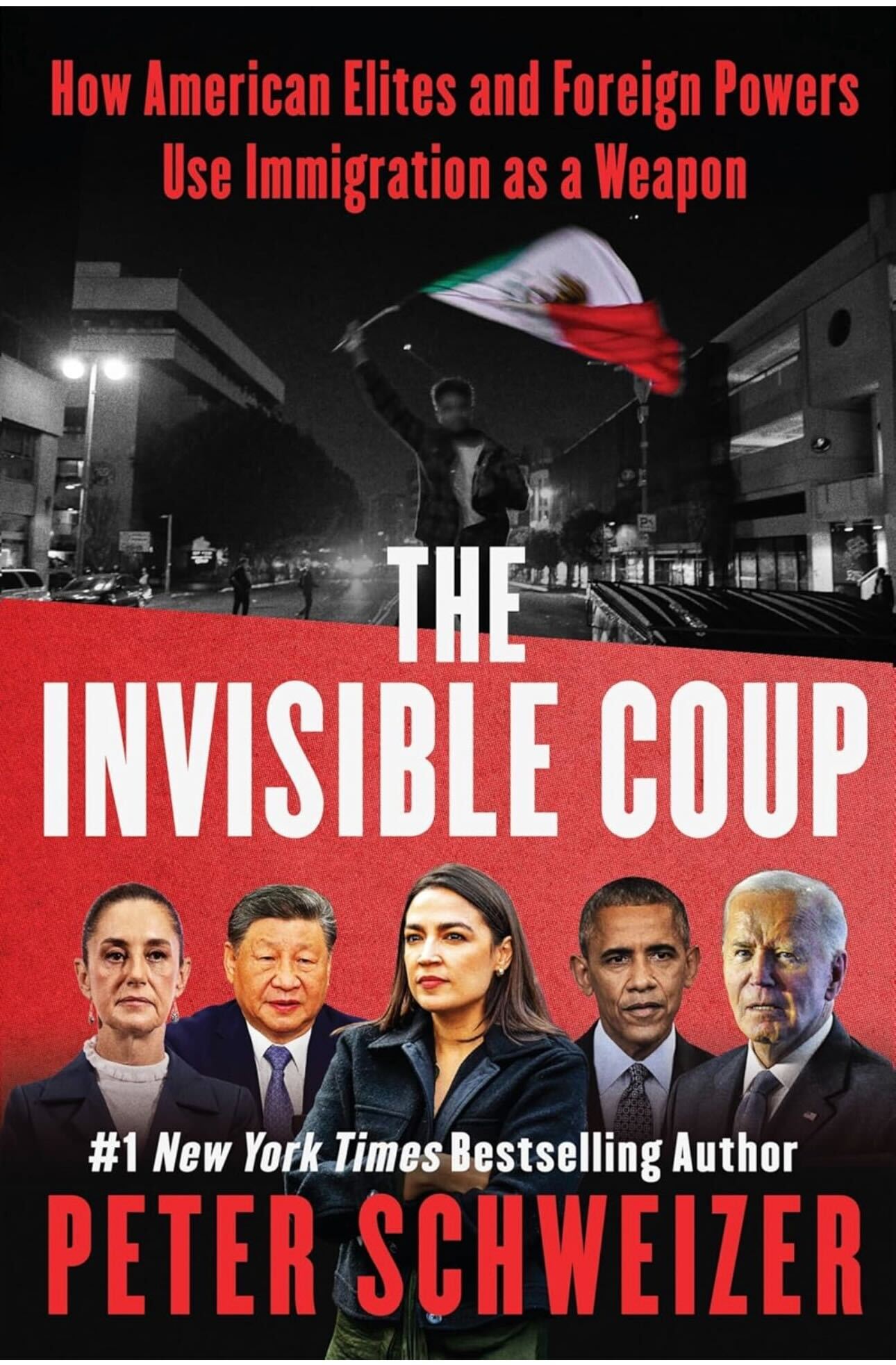
In his new book, "The Invisible Coup: How American Elites and Foreign Powers Use Immigration as a Weapon," Peter Schweizer exposes how radical foreign groups helped elect former President Barack Obama in 2008 and how this network remains a part of the Democratic Party machine today.
The post OBAMA’S HIDDEN FOREIGN ELECTION NETWORK: The Radical Foreign Groups That Helped Elect Obama and Whose Remnants Remain a DNC Tent Pole appeared first on Breitbart.
In his new book, The Invisible Coup: How American Elites and Foreign Powers Use Immigration as a Weapon, Breitbart News Senior Contributor and bestselling author Peter Schweizer exposes how radical foreign groups helped elect former President Barack Obama in 2008 and how this network remains a part of the Democratic Party machine today.
Schweizer focuses on one group in particular, the radical Salvadoran political party, Farabundo Martí National Liberation (FMLN) Front, which evolved into a party after beginning as a Marxist guerrilla group in El Salvador.
Thousands of immigrants linked to foreign radical movements, including the FMLN, “staked out important positions in American labor unions and became involved in American political campaigns, whether they were US citizens or not,” beginning in the early 2000s, Schweizer details.
He cites Dr. Arpi Misha Miller’s “sympathetic account” of the group staking a footprint in the United States political sphere in her 2013 PhD dissertation “Reconciling Americas: Salvadoran Immigrant Activists and Political Transnationalism,” at the University of California. Miller notably went on to become director of ISAAC of Northern Colorado, a nonprofit that describes itself as being “committed to equity, empowerment & justice” on its Facebook page.
Miller noted in her 2013 dissertation that FMLN activists “gained additional experience on the ground in community and labor organizing, as lead organizers with powerful” groups including AFSCME, Change to Win, OneLA, and the SEIU, between 2004 and 2009.
The activists aided in Obama’s 2008 campaign “as individuals and through their work in unions” with some activists taking on organizing positions that were full-time paid jobs, according to Miller.
Schweizer writes that these radicals carried on the Marxist insurgency from El Salvador in their political work in America, bringing “their cause with them when they crossed the border.”
“For Barack Obama and other progressive leaders, mi casa es su casa, ideologically. No wonder that Obama welcomed these activists to work hard on his campaign and pressed to get them citizenship as quickly as possible, in that order,” Schweizer details.
During a November 2008 Los Angeles rally, an activist told Miller that the City of Angels “is a strategic city for El Salvador with 800 thousand or more Salvadoreños!” and that the campaign “started YEARS ago.”
“These radical foreign activists would not remain on the fringes,” Schweizer emphasizes in The Invisible Coup.
[embedded content]
The activist group CASA, includes members of FMLN in its leadership, according to Schweizer. Two of CASA’s board members, Thomas Perez and Cecilia Muñoz, ascended into top levels of American government during the Obama administration. Perez, who would eventually come to head the Democratic National Committee, became assistant attorney general for Civil Rights under Obama. He later became an assistant to then-President Joe Biden.
Muñoz headed up the Domestic Policy Council during Obama’s presidency before serving on the Biden transition team after the 2020 election.
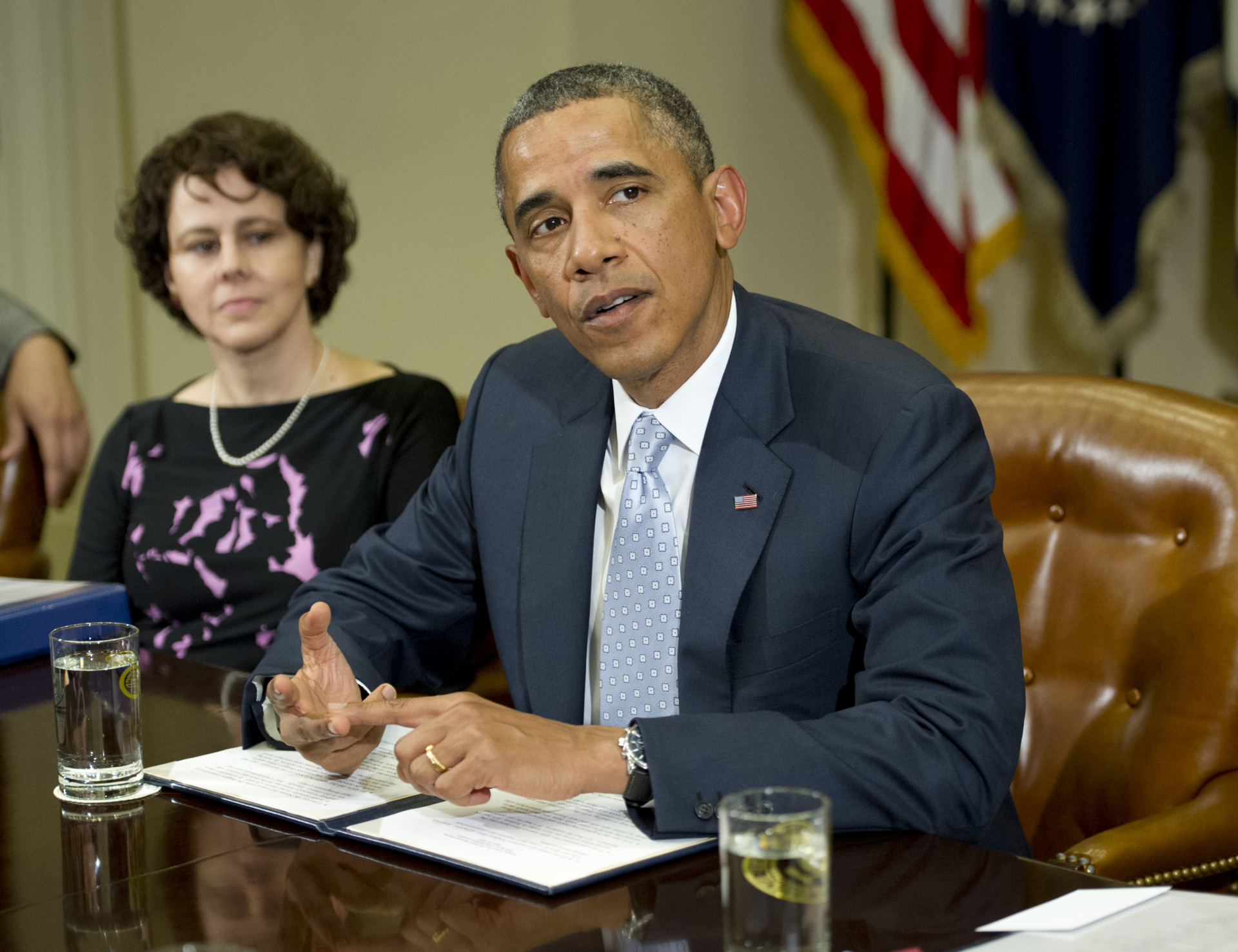
President Barack Obama, right, with his Director of the Domestic Policy Council Cecilia Muñoz, speaks to the press prior to a meeting with CEOs about immigration reform on June 24, 2013 in Washington, DC. (Ron Sachs/Getty Images)
Schweizer writes that Obama “rewarded FMLN members and adherents for their help,” with his administration taking action in 2013–shortly after the start of his second term–to remove “most of the terrorism-related rules” that had blocked FMLN members and leaders from accessing citizenship or resident status in America.
“While acknowledging that the FMLN was a ‘Marxist-Leninist armed insurgency that was backed by the Cuban government’ and that it once qualified as a ‘Tier III terrorist organization’ due to its violent activities, a waiver was granted anyway,” he notes.
American leftists enlist Latin American migrants in efforts to further socialist agendas, with the migrants serving “as political conduits in their host countries,” according to Schweizer, who points to United Nations migration officials Larisa Lara-Guerrero and Sebastien Rojon.
“They label these people ‘animators’ who ‘can encourage and guide [other] migrants to become political actors with enough agency to engage in contentious politics,’” Schweizer writes in The Invisible Coup.
“They call it ‘immigrant political transnationalism,’ when foreign nationals, often illegally in the United States, engage in political activities here ‘aimed at gaining political power or influence at the individual or collective level in the country of residence,’” he adds.
According to the bestselling author, “subversion” may be the more adequate term.
The FMLN’s efforts to influence American politics persisted once Trump emerged in the political landscape. Schweizer points to a meeting of 25 “travelers from the United States,” including American citizens and Salvadoran Embassy employees from Washington, DC, in San Salvador at a Sáo Paulo Forum meeting in 2016. Most of those in the group were FMLN members. Political leaders and government officials from Latin American countries were also at the meeting.
The Forum included a session to celebrate the 90th birthday of Fidel Castro, and featured another session regarding what Schweizer quotes as “the new challenges on the migration front and the imperial counteroffensive.”
“But beyond the speeches, there was plotting of how to influence an American election and defeat Donald Trump,” The Invisible Coup details:
Dan La Botz, an American socialist who was also present as an observer, noted that the FMLN “is both the leading party of El Salvador and an important political organization of Salvadoran immigrants in the United States in places such as the state of Maryland and in cities such as New York, Washington, D.C., and Los Angeles.” La Botz went on: “It is engaged in working to organize Salvadoran immigrant communities in social movements and in political action generally within the Democratic Party.
The US delegation, like everyone else at the meeting, wanted Donald Trump stopped because of his hard line on immigration. “FMLN members and leaders argued that registering voters and high turnout against Donald Trump served the best interest of those [immigrants] in the United States,” recalled La Botz.
Schweizer emphasizes that FMLN members were undeterred by the fact they, or any other foreign political party, are not supposed to influence American elections.
Schweizer’s The Invisible Coup: How American Elites and Foreign Powers Use Immigration as a Weapon is published by HarperCollins and is available to purchase now.