A North Carolina state audit is challenging former Gov. Roy Cooper’s hurricane recovery claims by showing that only 3,522 homes were completed through the state’s HUD-funded rebuilding program and that yearslong delays left more than 1,100 homes unfinished when he left office.
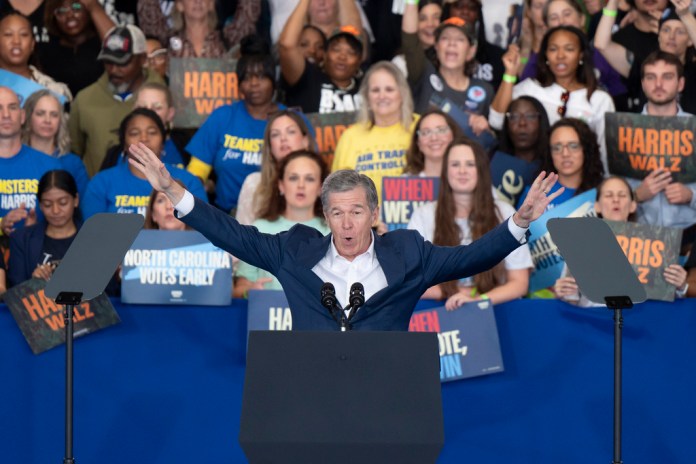
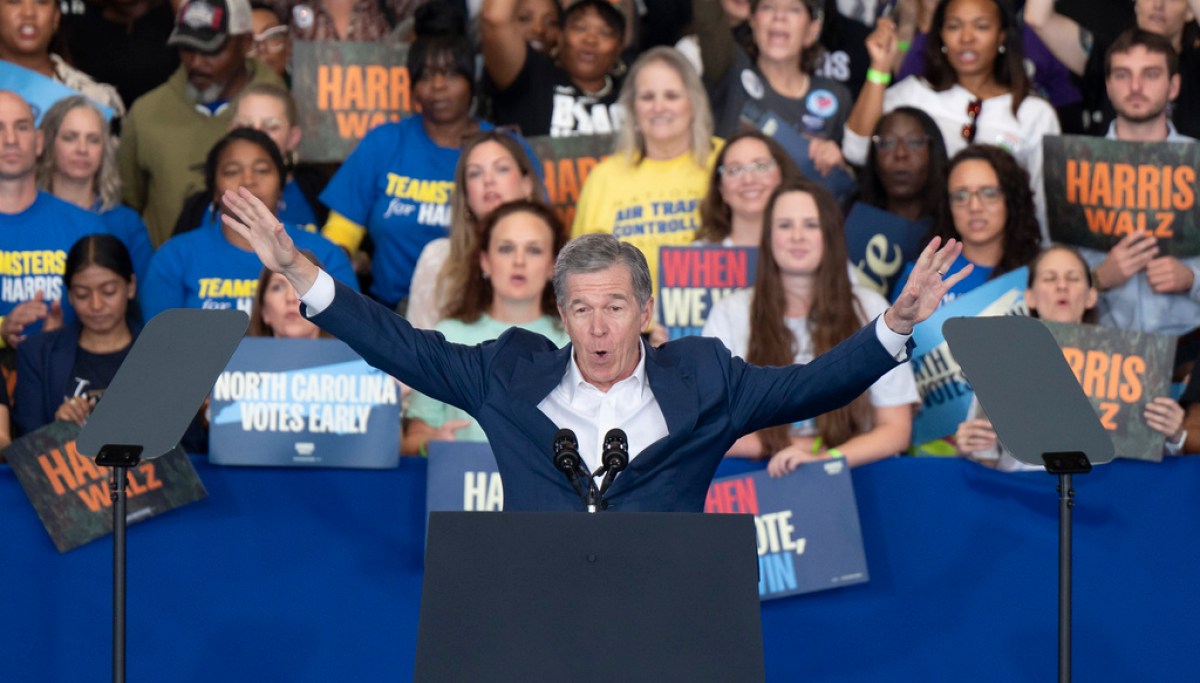
The audit, released by the North Carolina Office of the State Auditor, examined the state’s Homeowner Recovery Program, which relied primarily on federal Community Development Block Grant Disaster Recovery (CDBG-DR) funds following Hurricane Matthew in 2016 and Hurricane Florence in 2018. In March 2025, Cooper, a Democratic candidate for U.S. Senate, said his administration “helped repair or rebuild more than 14,000 homes,” a figure that extends beyond the HUD-funded program reviewed by auditors.
Republicans said the audit is evidence of broader mismanagement.
“Roy Cooper failed North Carolinians devastated by hurricanes and then rubbed salt in their wounds with horrible lies because he’s desperate to avoid accountability,” said Nick Puglia, a regional press secretary for the National Republican Senatorial Committee. “Cooper is a career politician that North Carolinians cannot trust.”
A Cooper campaign spokesperson disputed the audit’s conclusions, saying the report focuses on only one funding stream and does not reflect the broader scope of hurricane recovery efforts carried out under his administration.
According to the audit, the rebuilding process was marked by significant delays at nearly every stage. Auditors found the state took an average of 138 days to determine applicant eligibility. Even after homeowners were deemed eligible, construction did not begin for an average of four years, leaving some families in temporary or unsafe housing long after the storms.
The report found that some applicants remained in deteriorating or condemned homes while waiting for assistance, while others experienced long periods of uncertainty due to delayed or inconsistent communication from the state.
Auditors also found that more than 1,100 homes tied to Hurricanes Matthew and Florence still required construction after Cooper left office. In January 2025, the North Carolina Office of Recovery and Resiliency requested an additional $217 million from the General Assembly to complete the remaining projects, nearly a decade after Hurricane Matthew struck the eastern part of the state.
The Homeowner Recovery Program was overseen by the North Carolina Office of Recovery and Resiliency, an agency created by Cooper in 2018 to centralize disaster recovery efforts. The audit cited widespread management and budgeting failures within the agency, including unreliable data tracking, insufficient oversight of vendors, and the absence of accurate cost estimates. Those shortcomings contributed to a funding gap of approximately $300 million, necessitating emergency legislative action to keep projects moving forward.
Auditors also found that NCORR staff were at times instructed not to issue formal ineligibility notifications or close cases, contributing to application backlogs and prolonged uncertainty for homeowners.
In a statement provided to the Washington Examiner, a Cooper campaign spokesperson disputed the audit’s broader implications and said it presents an incomplete picture of hurricane recovery under his administration.
“After Hurricanes Florence and Matthew, the Cooper administration oversaw the repair and rebuilding of more than 13,000 homes from many different funding streams, even when the first Trump administration provided only about half of the funding that North Carolina needed,” the spokesperson said. “Meanwhile, FEMA recovery czar Michael Whatley has failed spectacularly, with hundreds calling for his resignation, Western communities waiting months for federal money they are owed, and absolutely nothing to show for his work leading the FEMA Review Council.”
The campaign stated that the auditor’s report focused solely on HUD-funded projects, which it described as just one source of recovery funding and typically the last portion of money used for rebuilding due to income eligibility requirements. The campaign stated that its broader total includes projects supported by HUD, as well as other federal programs, including CDBG-DR, FEMA, and funding administered through the Office of State Budget and Management, along with state, local, and volunteer organizations active in disaster recovery.
The Cooper campaign also said recovery efforts extended beyond housing, citing hundreds of bridges, roads, and public buildings, including town halls and courthouses, that were repaired or rebuilt after the storms.
Additionally, the campaign highlighted federal delays as a key factor slowing the recovery. Congress appropriated Hurricane Florence relief funding in October 2018, but federal rules governing how the money could be spent were not finalized until January 2020, a delay of nearly 500 days. The campaign stated that Cooper pushed for reforms to permanently authorize the CDBG-DR program, aiming to reduce such delays, and argued that, if elected to the U.S. Senate, he would work to cut red tape and expedite the delivery of federal disaster aid.
The audit’s findings land as North Carolina’s Senate race begins to take shape. Republican Sen. Thom Tillis (R-NC) is not seeking reelection in 2026, opening up a wide-open contest in the perennial swing state.
Early polling shows Cooper with a narrow advantage. A RealClearPolitics average puts the Democrat ahead of Republican Michael Whatley 46.0% to 41.3%, a 4.7-point lead, with recent surveys consistently showing Cooper ahead by mid-single digits in what is expected to be a competitive race.
The Republican primary field is continuing to take shape. Michele Morrow formally entered the race on Thursday, joining a GOP contest led by former Republican National Committee Chairman Whatley, who President Donald Trump has endorsed. Other Republican candidates include Don Brown, Margot Dupree, Thomas Johnson, and Elizabeth Ann Temple.
On the Democratic side, four candidates have filed, including Cooper, Daryl Farrow, Orrick Quick, and Marcus Williams. Libertarian Shannon Bray has also entered the race.