Kurdish Syrian Democratic Forces effectively capitulated to the Syrian government after suffering crushing losses from a major offensive.
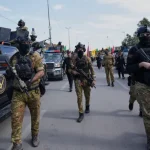
Weeks of on-and-off fighting culminated in a major offensive by government forces against long-held Kurdish areas, where they were joined by disgruntled Arab tribesmen. As SDF forces increasingly faced a full collapse, Kurdish leaders agreed to a ceasefire, the terms of which amounted to a complete capitulation to Damascus.
“This looks like the end of the S.D.F.,” Lara Nelson, the policy director at Etana Syria, told the New York Times.
The stipulations of Damascus’s 14-point agreement laid out significantly worse terms than the March 2025 agreement, which was signed but never implemented. Kurdish forces must completely turn over oil and gas fields to the government, all border crossings, and their thousands of ISIS prisoners. The SDF will turn over full control of two of their three provinces, much of which were lost in recent fighting, and cede most administrative control of their last province.
In a major blow, instead of the previous agreement where SDF militias would be integrated into the Syrian armed forces, they must now be dissolved, and instead, individual fighters will join the armed forces.
Syrian President Ahmad al Sharaa spoke with Kurdistan Democratic Party leader Masoud Barzani, during which the latter adopted a conciliatory tone. He praised a presidential decree issued by Sharaa in 2026 that guarantees the rights of the Kurdish minority.
U.S. special envoy Tom Barrack praised the agreement, thanking Syrian and Kurdish leaders for “their constructive efforts in reaching today’s ceasefire agreement, paving the way for renewed dialogue and cooperation toward a unified Syria.”
“Two great Syrian leaders, driven by the shared vision of liberating their country and people from tyranny, have now come together to forge a brighter future for all Syrians. This agreement and ceasefire represent a pivotal inflection point, where former adversaries embrace partnership over division,” he posted on X.
He said the U.S. was ready to help implement the agreement.
Damascus was celebratory, with the defeat of the Kurds marking an end to the biggest thorn in the new regime’s goal of a centralized state.
“Syria affirms that the unity and cohesion of the Syrian people, in all their diversity, is the solid foundation for any lasting stability,” Syria’s foreign ministry said in a statement reported by state media outlet SANA.
While the Kurdish response was largely muted, the agreement marked a huge blow to the minority group, which had hitched itself to the U.S. over a decade ago in an effort to finally establish its own state or autonomous zone. Left-wing Kurdish militias had carved out their own de facto state during the civil war that began in 2011, establishing a largely neutral position vis-a-vis the Assad government vs rebel forces. The U.S. was heavily reliant on its ground forces during the fight against ISIS, and Kurdish forces were the ones who stormed and captured the ISIS capital, Raqqa.
US STRUGGLES TO REIN IN SYRIAN ALLIES AS KURDS AND GOVERNMENT COME TO BLOWS IN ALEPPO
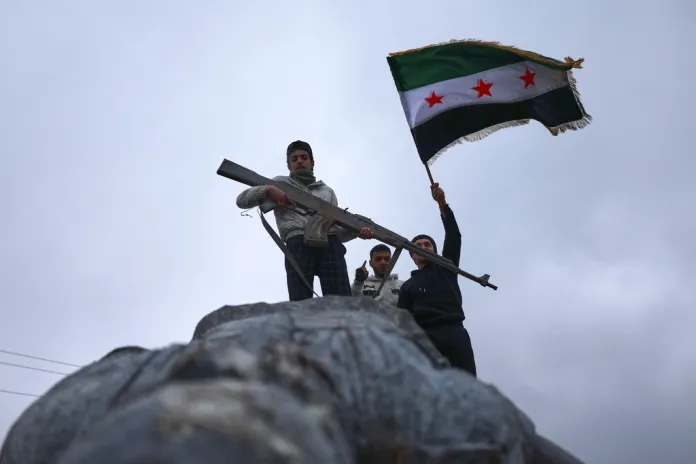
In a final humiliation for the Kurds, the former caliphate capital, the battle for which had claimed hundreds of Kurdish lives, fell almost without a fight as tribal forces defected to join the Syrian government. A statue of a female Kurdish fighter that had been raised in the city after its capture was toppled and danced on by locals.
While the Kurds were the U.S.’s longtime ally in Syria, the Trump administration threw its weight behind the new government of Sharaa in an effort to quickly rebuild the war-torn state.