
(function(d, s, id) { var js, fjs = d.getElementsByTagName(s)[0]; if (d.getElementById(id)) return; js = d.createElement(s); js.id = id; js.src = “https://connect.facebook.net/en_US/sdk.js#xfbml=1&version=v3.0”; fjs.parentNode.insertBefore(js, fjs); }(document, ‘script’, ‘facebook-jssdk’)); –>
–>
March 17, 2024
Americans today do not need advanced economics education to recognize rising costs due to inflation, but they do need an achievable solution.
‘); googletag.cmd.push(function () { googletag.display(‘div-gpt-ad-1609268089992-0’); }); document.write(”); googletag.cmd.push(function() { googletag.pubads().addEventListener(‘slotRenderEnded’, function(event) { if (event.slot.getSlotElementId() == “div-hre-Americanthinker—New-3028”) { googletag.display(“div-hre-Americanthinker—New-3028”); } }); }); }
In February, the TIPP Insights editorial board reported, “Prices have increased by 17.3%, while real wages have declined by 2.0%, meaning Americans have taken a 2.0% pay cut under the current administration. To put it differently, people now need 19.3% more income than they had in January 2021 to maintain their living standards. According to some estimates, Americans need an extra $11,400 a year to make ends meet.”
A number of factors have been blamed for inflation, including supply chain disruptions following the 2020 lockdown policies, market reactions to international conflict, major federal spending increases, and domestic energy policies.
In addition to these explanations, another more fundamental factor has been widely cited, especially within libertarian and conservative circles. That explanation is the expansion of the money supply driven by the U.S. Treasury and Federal Reserve.
‘); googletag.cmd.push(function () { googletag.display(‘div-gpt-ad-1609270365559-0’); }); document.write(”); googletag.cmd.push(function() { googletag.pubads().addEventListener(‘slotRenderEnded’, function(event) { if (event.slot.getSlotElementId() == “div-hre-Americanthinker—New-3035”) { googletag.display(“div-hre-Americanthinker—New-3035”); } }); }); }
Nobel Prize–winning economist Milton Friedman repeatedly explained, “Inflation is always and everywhere a monetary phenomenon. It is a result of a greater increase in the quantity of money, than in the output of goods and services, which is available for spending.”
Sharing in Friedman’s understanding, Congressman Ron Paul (R-Texas) led an effort to constrain this monetary phenomenon by restoring the United States to a gold standard, in response to the 1970s inflation crisis.
“During most of the nineteenth century, we had a functioning gold standard. Combined with classical liberal economic policies and limited government, this set the stage for the greatest economic growth in history,” he explained in his 1981 book on the subject.
Pre-emptively answering his critics, Congressman Paul explained, “Interventionist economists carelessly criticize the spreading of economic growth throughout a free-market society as the ‘trickle-down theory.’ But inflation, by trickling, then rushing, through society, spreads economic misery among the poor, working, and middle classes, while enriching the special interests. It is this ‘trickling-down’ that deserves condemnation from everyone concerned about poverty.”
Similarly, economist Murray Rothbard condemned the unfair results of inflationary policy, which he likened to counterfeiting.
New money injected into the economy has an inevitable ripple effect; early receivers of the new money spend more and bid up prices, while later receivers or those on fixed incomes find the prices of the goods they must buy unaccountably rising, while their own incomes lag behind or remain the same. Monetary inflation, in other words, not only raises prices and destroys the value of the currency unit; it also acts as a giant system of expropriation of the late receivers by the counterfeiters themselves and by the other early receivers. Monetary expansion is a massive scheme of hidden redistribution.
‘); googletag.cmd.push(function () { googletag.display(‘div-gpt-ad-1609268078422-0’); }); document.write(”); googletag.cmd.push(function() { googletag.pubads().addEventListener(‘slotRenderEnded’, function(event) { if (event.slot.getSlotElementId() == “div-hre-Americanthinker—New-3027”) { googletag.display(“div-hre-Americanthinker—New-3027”); } }); }); } if (publir_show_ads) { document.write(“
When the government is the counterfeiter, the counterfeiting … proclaims itself openly as monetary statesmanship for the public weal. Monetary expansion then becomes a giant scheme of hidden taxation, the tax falling on fixed income groups, on those groups remote from government spending and subsidy, and on thrifty savers who are naive enough and trusting enough to hold on to their money, to have faith in the value of the currency.
Spending and going into debt are encouraged; thrift and hard work discouraged and penalized. Not only that: the groups that benefit are the special interest groups who are politically close to the government and can exert pressure to have the new money spent on them so that their incomes can rise faster than the price inflation. Government contractors, politically connected businesses, unions, and other pressure groups will benefit at the expense of the unaware and unorganized public.
This “massive scheme of hidden redistribution” would play itself out around the world following the 2008 financial crash and the implementation of the inflationary practice known as Quantitative Easing (Q.E.) by central banks.
Will Dunn, business editor of the British progressive news magazine The New Statesman, describes the process unfolding.
On both sides of the Atlantic central bankers now decided that rather than being the careful guardians of the interest rate, they had a responsibility to stimulate their economies against the damage being inflicted by politicians. … But the wealth created by QE stayed where it was. QE, says [Mohamed] El-Erian “was very good in boosting asset prices. It wasn’t very good in boosting economic activity. And it had massive distributional effects.”
“QE, by its very nature, increases wealth for asset holders generally,” explains [Frances] Coppola. “Suddenly, we had these markets where everything was rising all the time. Anybody who was holding stocks and bonds was doing well … but also we saw appreciation in other asset classes, like art and fine wines, and, of course, property.”
Research published by the Bank of England in 2012 found that in just three years QE inflated the wealth of the top 10 per cent in Britain by up to £322,000 per household. It has continued to line the pockets of asset owners around the world, in still greater volumes, for more than a decade since.
In light of the unfair and deleterious effects of “interventionist economics” related to inflationary monetary expansion, concerned statesmen have begun pursuing methods to restrict the interventionists and limit the dangers to the average citizen.
Since January of 2023, legislation has been introduced within nine states (Alaska, Utah, Wisconsin, Oklahoma, Kansas, Iowa, Arizona, Florida, and Mississippi) to normalize the use of gold as a medium of exchange.
In addition to reaffirming gold and silver as legal tender and updating tax regulations to reflect this currency status, these states are considering the creation of state gold depositories. These depositories will enable citizens to store physical gold, and with gold-backed debit cards, the funds can be used to conduct transactions without the need to physically handle the stored gold.
In addition to the immediate protection such accounts would provide to the average citizen against inflationary devaluation of their dollars, the increased use of gold as an alternative to the dollar Federal Reserve Note could provide additional benefits.
In describing a related yet more difficult legislative effort, Professor William Greene explained, “Over time, as residents of the State use both Federal Reserve Notes and silver and gold coins, the fact that the coins hold their value more than Federal Reserve Notes do will lead to a ‘reverse Gresham’s Law’ effect, where good money (gold and silver coins) will drive out bad money (Federal Reserve Notes). As this happens, a cascade of events can begin to occur, including the flow of real wealth toward the State’s treasury, an influx of banking business from outside of the State (as citizens residing in other States carry out their desire to bank with sound money), and an eventual outcry against the use of Federal Reserve Notes for any transactions.”
Even short of complete abandonment of the Federal Reserve Note system, the competition could create an additional incentive for the Federal Reserve to rein in its inflationary practices.
Conservatives and libertarians looking to combat rising inflation do not need to depend on the unreliable leadership of Congress. Instead, the golden opportunity to combat inflation and the centralized power of the Federal Reserve lies much closer to home.
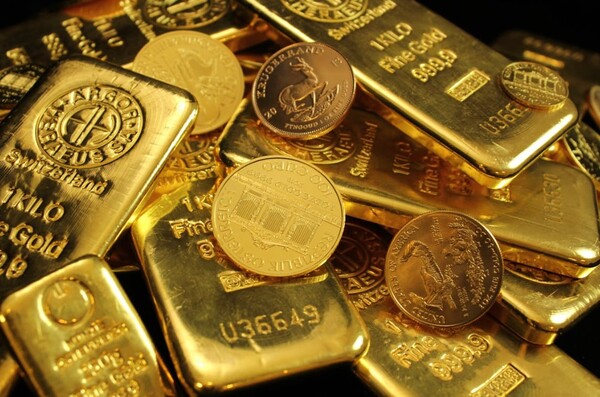
Image via Pexels.
<!–
–>
<!– if(page_width_onload <= 479) { document.write("
“); googletag.cmd.push(function() { googletag.display(‘div-gpt-ad-1345489840937-4’); }); } –> If you experience technical problems, please write to [email protected]
FOLLOW US ON
<!–
–>
<!– _qoptions={ qacct:”p-9bKF-NgTuSFM6″ };  –> <!—-> <!– var addthis_share = { email_template: “new_template” } –>