The Chinese Communist Party has begun playing hardball in negotiations over future control of the Panama Canal as United States intervention in Venezuela threatens to further disrupt Chinese economic interests in South America.
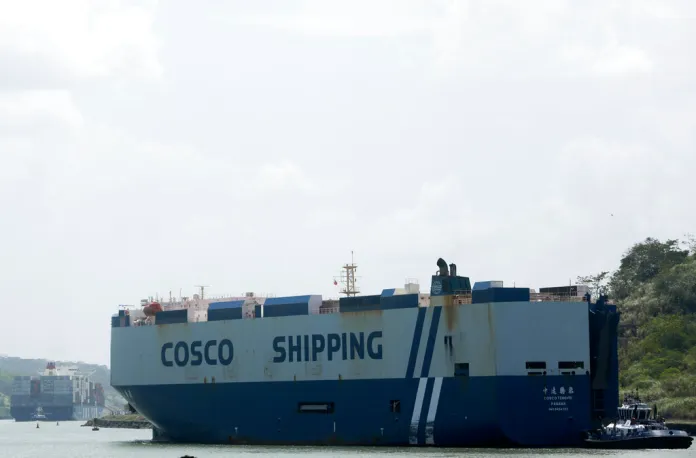
China is threatening to block a U.S.-proposed sale of two ports on the Panama Canal controlled by the Hong Kong firm CK Hutchinson to the American firm BlackRock. Having previously demanded Shanghai-based firm Cosco be brought in with an equal stake in the ports, the CCP is now demanding the company be given a majority stake, according to a report in The Wall Street Journal.
Steve Yates, a senior research fellow on China at the Heritage Foundation and former deputy national security adviser to Vice President Dick Cheney, told the Washington Examiner that he views the situation as an “accidental admission” that confirms accusations that these Hong Kong firms are “fronts for Chinese influence and potential control.”
“[Chinese officials] say, ‘Oh, no, no — these were just commercial companies out of Hong Kong. It’s not Communist Party-owned and controlled entities, et cetera, et cetera,’” Yates told the Examiner. “But as we start looking at transition away from their ownership to an American and international ownership model — lo and behold, they rear their ugly head and say, ‘Wait a minute, we want to control the interests.’”
“So which is it?” he continued. “Are these entities that ultimately you seek controlling influence? Is that controlling influence so that you can disrupt global trade at a time of crisis?”
Losing leverage of Panama Canal would be ‘disaster’ for US
Reestablishing control over the canal’s ports was among the first goals announced by President Donald Trump in his second administration.
A former U.S. diplomat with extensive experience in both China and Latin America told the Washington Examiner that the Panama Canal is the crown jewel of Chinese power centers on the southern continent.
“It is crazy how China has very intentionally built up such a presence around that canal over the past couple of decades,” the former official said. “This could be a place where some tough decisions are made.”
In addition to its importance for global economic interests, the Canal carries crucial military value.
“From a military standpoint […] if that canal is taken out of operation, when there is a conflict in the South China Sea, you probably don’t have any idea what the impact that would have on moving assets from one theater to the other. It’s enormous. We’re talking weeks of delay, all right?” the source continued. “If we were to lose access to that canal and, God forbid, something [were to] happen that would disable the use of it in a time of conflict, it would be a disaster for us.”
The most obvious scenario in which the Chinese could exploit a shutdown of traffic through the Panama Canal is in the event of an invasion of Taiwan.
The island territory, which Beijing is openly preparing to invade in the next few years, is a crucial economic and military asset for the United States. War games consistently show that response time and continued material support from the U.S. military are among the most critical variables in whether Taiwan could weather an onslaught from the mainland.
China’s irritation with the White House doesn’t stop at the canal.
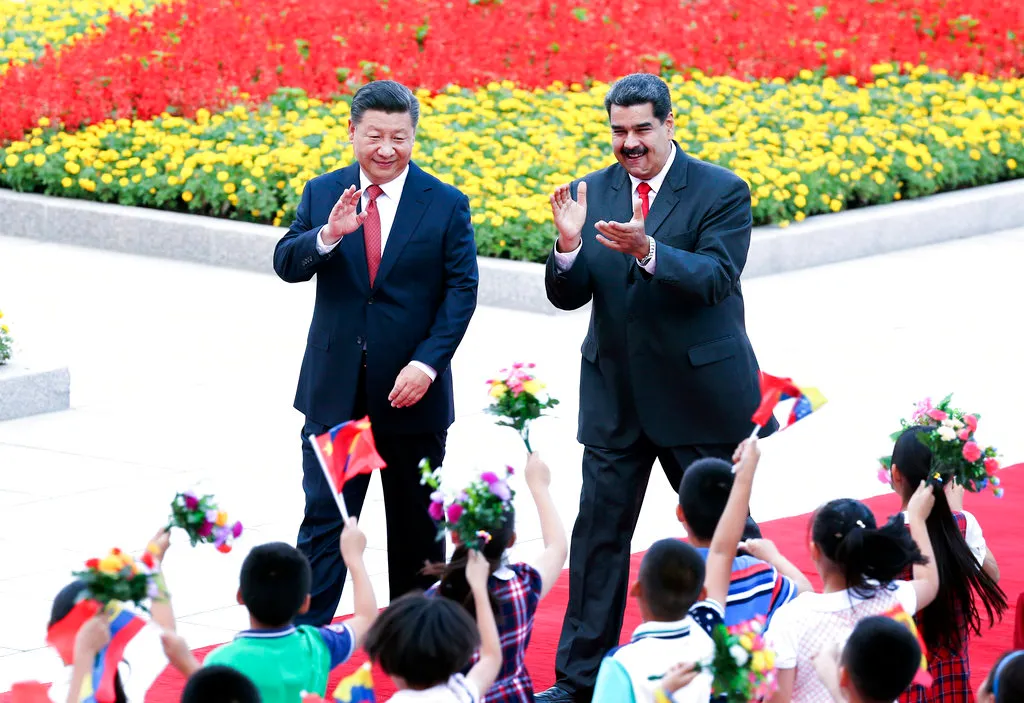
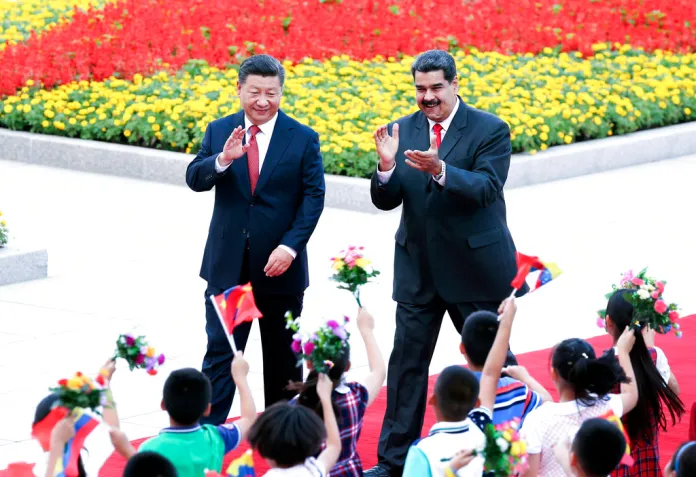
Trump’s campaign to isolate and depose Venezuelan President Nicolas Maduro will almost certainly hinder Chinese ambitions to use the region to benefit their production economy.
US priorities in Caribbean could realign diplomacy
Trump designated the Venezuelan government as a foreign terrorist organization on Tuesday, accusing the Maduro government of supporting “terrorism, drug smuggling, and human trafficking.” He has enacted a “total and complete blockade of all sanctioned oil tankers going into, and out of, Venezuela” as a means of leverage against the Maduro regime, citing the 2007 nationalization of oil assets owned by the United States and other foreign nations by Maduro’s predecessor, Hugo Chavez.
Trump stated bluntly in an interview earlier this month that Maduro’s “days are numbered” and that a ground invasion couldn’t be ruled out as an option.
“A lot of China’s assessment of this is going to depend on what are the results […] does the pressure campaign on the Maduro regime result in Maduro, like Asad, fleeing the country — and there’s kind of a peaceful evolution within Venezuela after his departure?” Yates told the Washington Examiner.
Yates explained that in the event of Maduro being toppled, there is a possibility of a “more reform-minded government” to emerge that would “open up much more manageable options for the United States in the region.”
The White House listed the Western Hemisphere as its area of preeminent concern in this year’s National Security Strategy, endorsing a high-handed intervention into South American geopolitics, a strategy dubbed the “Trump Corollary” to the Monroe Doctrine by officials.
Multiple nations on the continent have already embraced more MAGA-friendly governments on their own, including Argentina, El Salvador, Bolivia, and most recently, Chile.
The realignment of traditional socialist South American countries toward the U.S. could erode Western dependence on Chinese production and manufacturing.
“If South America emphasizes the ‘America’ more than the ‘South’ — and if North and South America, maybe together with some other allies, are maximizing access to resources, revitalizing supply chains, port facilities, shipping, manufacturing — those opportunities get diversified across North and South America,” Yates explained. “What that does is it decreases American and other dependencies on China. It will naturally slow down some of China’s export-led and mercantilist economic model that is their survival.”
MEXICAN PRESIDENT PLEADS FOR UN HELP TO COMBAT US OPERATIONS AGAINST VENEZUELA
Foreign Minister Fernando Aramayo told the Washington Examiner last week that “[Bolivian] arms are open” to the U.S. for investment and tourism following the election of conservative President Rodrigo Paz Pereira.
“You can feel confident that Bolivia will respect all the agreements that we are building right now,” he said. “We need to show to the world that this alliance between Bolivia and U.S. has an impact in the short term.”
Aramayo said he has already met with Chinese officials, and the administration is happy to have a “respectful dialogue,” but he’s wary of their track record.
“I’m an economist. And dramatically, if you see what China represents for the last 20 years in Bolivia, was a debt that represents 13% of our total bilateral debt,” Aramayo told the Washington Examiner. “So we can have better agreements with China … but at the present, China, they don’t represent for us benefits.”