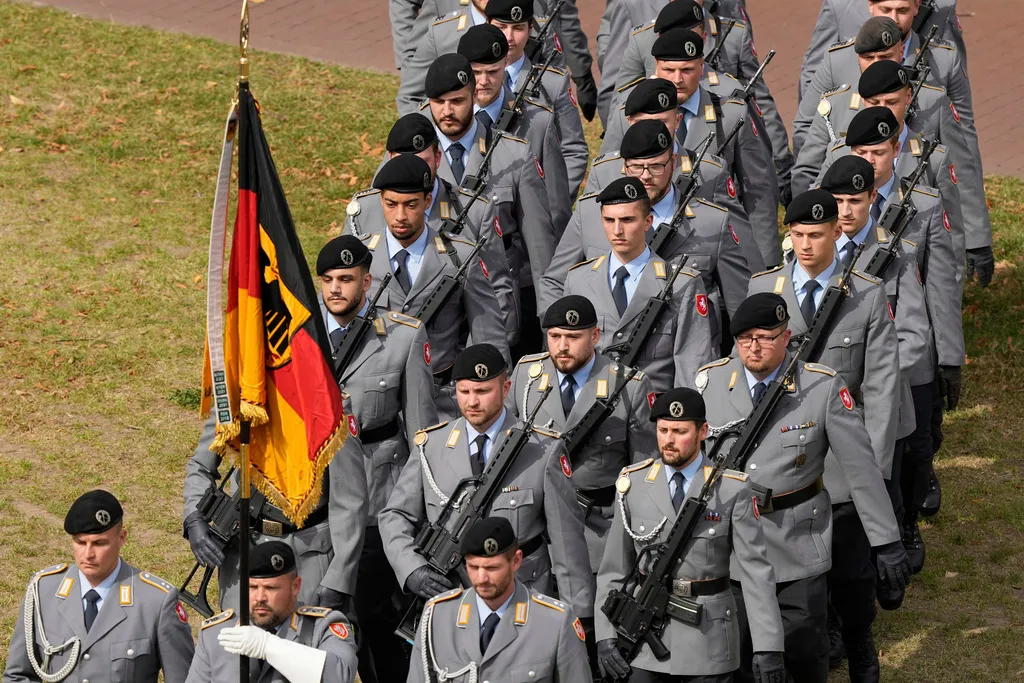
U.S. military leaders are demanding that Europe shoulder its own defense responsibilities, but overturning decades of Washington-led security arrangements requires a monumental effort.
The United States is reportedly pressing European powers to assume responsibility for the bulk of NATO defense capabilities on their continent by 2027 — a complete U-turn from the calculated dependency propagated by the White House in the postwar period.
John Hardie, deputy director of the Russia Program at the Foundation for Defense of Democracies, told the Washington Examiner that Europeans are right to complain that such an upheaval of the established order cannot be expected to be completed in such a short time frame.
“The system we built since World War II is designed to have the United States function at the center, and Europeans kind of plug in,” Hardie told the Washington Examiner. “That dependency is a feature, not a bug, and it was very much designed that way — and we can’t just rewrite that in a matter of a couple years.”
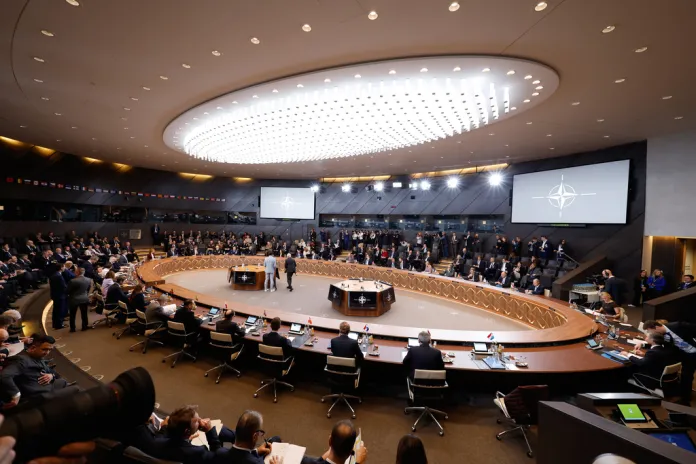
Nevertheless, U.S. officials allegedly told their European counterparts that if Europe does not take on the burden by 2027, the U.S. military could withdraw from various coordination mechanisms as punishment.
“That’s not really a realistic timeline for what Europe has to do,” Hardie told the Washington Examiner. ”It’s going to be a generational transition, and I think the United States is always going to have to play some role in the event of a major conventional war between Europe and Russia. It’s just not really realistic where we stand right now, within the next 10 to 15 years, to see the Europeans fight.”
In March, the European Union published a landmark document titled “White Paper for European Defence – Readiness 2030,” which laid bare the continent’s degraded military preparedness and the necessity for a coordinated rejuvenation.
“The moment has come for Europe to re-arm,” the white paper reads. “To develop the necessary capabilities and military readiness to credibly deter armed aggression and secure our own future, a massive increase in European defence spending is needed.”
“We need a stronger and more resilient defence industrial base,” it reads. “We need an ecosystem of technological innovation for our defense industries to keep pace with changes in the character of war. We need to learn the lessons from it and extrapolate to a possible large-scale conflict in the near future. We need faster and more efficient procurement. We need to find new ways of working with allies and partners who share the same goals.”
The short document laid out roughly four priorities: ensuring Europe secures and maintains a full spectrum of military capabilities necessary for the deterrence of rivals such as Russia and China in the short-to-long term; support for Ukraine’s “porcupine strategy” via an integration with European systems; a revitalization of defense manufacturers on the continent, with less reliance on U.S.-produced military technology; and an immediate, rapid increase in defense spending for member states.
In order to aid member states’ efforts to reach these goals individually and as a collective, the EU has rolled out the Security Action for Europe loan program, which “will provide up to €150 billion in competitively priced, long-maturity loans to Member States requesting financial assistance for investments in defence capabilities.”
Separately, NATO members committed in June to reaching defense and security expenditures of 5% of GDP by 2035.
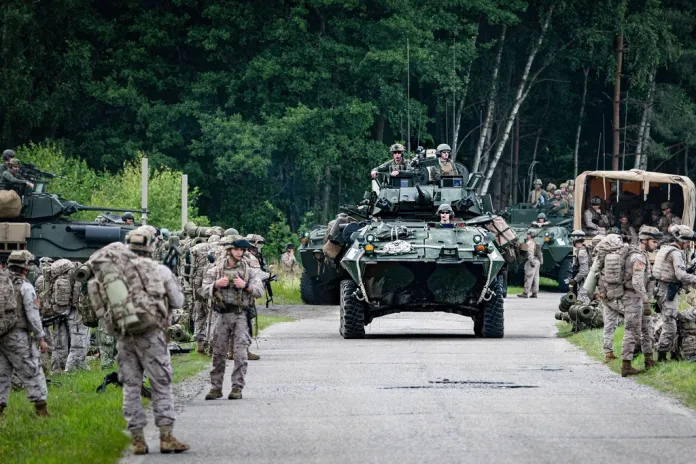
But even with these new financial mechanisms, the European path to self-reliance is moving far slower than the U.S. would like.
George Barros, head of the Russia Team at the Institute for the Study of War, told the Washington Examiner that “spending numbers have gone up, but it hasn’t necessarily translated to better readiness or better, normal credible deterrence.”
The main issue is the inertia of heavy industries such as defense, which require immense amounts of capital investment, planning, and long-term cooperation to make a profit and produce efficiently.
“You can’t just turn on and turn off an artillery shell assembly line with the flip of a switch,” Barros told the Washington Examiner. “It takes two to three years, by the time you break ground on a new factory, for the factory to actually become operational for turning out the product. And it’s just not profitable if you’re going to only run artillery factory for like five years.
“What the firms are wanting to see is long-term demand signal to help them pony up the money and the capital investors to hire the specialist, to build the specialized heavy industrial factories, to spin up these production lines, and then not just be a fad,” Barros continued. “I mean, they really want a robust thing, and the problem here is that the European governments largely have failed, I think, in actually putting forward that strong demand signal.”
The U.S.-centered “plug-in” model of European defense that has existed thus far makes it difficult for nations to move toward self-sufficiency with speed, as countries try to balance pressing demands for technology and munitions in-the-hand with bringing production back for the future.
Italian Defense Minister Guido Crosetto, at a multiyear defense planning hearing on Dec. 4, lamented that “the European defense industry still suffers from severe fragmentation.”
“We are witnessing unnecessary duplication, selfishness, and waste of resources,” Crosetto told the Italian Senate. “What may have seemed acceptable before Feb. 22,” the Russian annexation of Crimea, “is no longer tolerable today.”
Beyond military technology and munitions is the simple question of manpower — many European nations are suffering a severe personnel shortage in their military.
“One of the major lessons from the Ukrainian war is just the amount of mass needed on the modern battlefield,” Hardie told the Washington Examiner. “I think European armies in general are, especially the Germans, for quite some time, underfunded, undermanned. And so, you know, if you want to be able to take primary defense, primary responsibility for defensive Europe, you have to have the forces to be able to do that.”
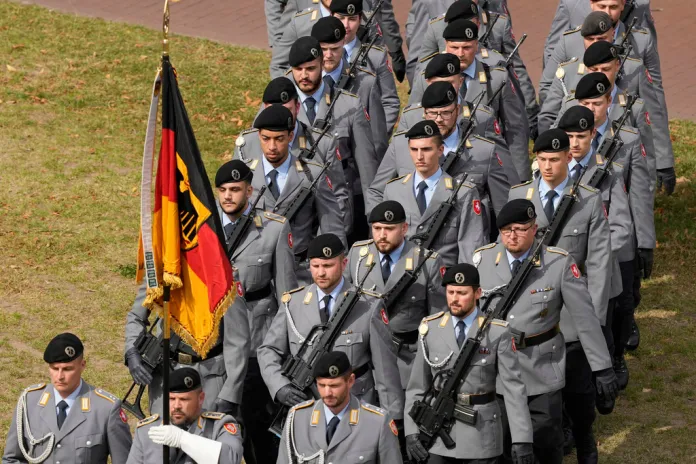
“These kind of post-Cold War, peacetime armies that a lot of these countries had … that’s just not really going to cut it,” Hardie said. “I think across the board, you’re going to need to see European countries investing in just more mass.”
Germany’s Bundestag and Bundesrat approved legislation last month to begin moving back toward a conscription system, hoping to bolster the approximately 182,000 troops and 100,000 reservists currently registered, up to 260,000 soldiers and 200,000 reservists by the 2030s.
The approved plan will begin requiring young people born from 2008 onward to fill out a questionnaire about their capability of military service. Women may fill out and submit the same questionnaire voluntarily, but German law does not require female service.
Leaders have tried to sweeten the deal for prospective volunteer soldiers, offering better pay and other incentives. But if enlistment continues to fall short, lawmakers would be able to pass a piece of follow-up legislation that could reactivate mandatory service.
“It’s a good thing that the Western European states are starting these initiatives because military service is not a particularly popular profession in these countries,” Barros told the Washington Examiner. “Not that it’s unpopular for any reason — I mean, it’s respected and honored enough — but they just, they don’t have the scale, and it’s important to build a scale.”
“We’re trying to deter a war, but when war comes and you need to build a force, you just can’t flip a switch and say, ‘Alright, fine, we’re going to warp speed a bunch of money into this and give us an army,’” Barros said. “To build a general actually requires having had an officer who’s been an officer for like 20, 30, 40 years. To create the junior field officers, you know, you need to have the academies who train people.”
France, meanwhile, announced a new volunteer program for 18- and 19-year-olds to help their country bolster its military personnel in noncombat roles.
Volunteers will sign up for 10-month paid stints working in France or its overseas territories, with a choice after completion to either reenter civilian life or consider further military service.
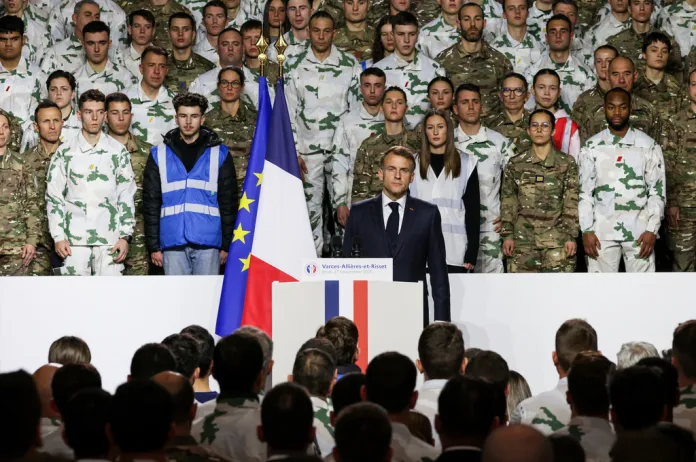
French President Emmanuel Macron said the program was “inspired by practices of our European partners … at a time when all our European allies advance in response to a threat that weighs on us all.”
Given the inertia of Europe’s military overhaul, increasingly harsh demands from the U.S. have contributed to cross-Atlantic tensions between continental leaders and President Donald Trump.
Following the release of the National Security Strategy, which stated a desire for Europe to “remain European and “regain its civilizational self-confidence,” European Council President António Costa warned that European nations must now “protect themselves even against the allies who defy them.”