
(function(d, s, id) { var js, fjs = d.getElementsByTagName(s)[0]; if (d.getElementById(id)) return; js = d.createElement(s); js.id = id; js.src = “https://connect.facebook.net/en_US/sdk.js#xfbml=1&version=v3.0”; fjs.parentNode.insertBefore(js, fjs); }(document, ‘script’, ‘facebook-jssdk’)); –>
–>
December 2, 2023
After a year-long investigation, the 562-page final report was recently released regarding the Michigan Oxford High School shooting tragedy on Nov. 30, 2021. I previously reported on this shooting within a month of the tragedy and focused on the serious decline in morality that exists in America. Now we have the details of what actually happened in that shooting.
‘); googletag.cmd.push(function () { googletag.display(‘div-gpt-ad-1609268089992-0’); }); document.write(”); googletag.cmd.push(function() { googletag.pubads().addEventListener(‘slotRenderEnded’, function(event) { if (event.slot.getSlotElementId() == “div-hre-Americanthinker—New-3028”) { googletag.display(“div-hre-Americanthinker—New-3028”); } }); }); }
After I read the final report, I concluded: this shooting didn’t need to happen! There were so many red flags, warnings, gaps, and deficiencies in security preparedness and implementation.
On Nov. 29, the day before the shooting, a teacher alerted school administrators that the shooter (a 15-year-old boy) had been looking at an image of bullets in class. Later in the day, the same teacher sent an index card to administration upon which the shooter had drawn a picture of a person holding a gun. The principal was not notified.
On Nov. 30, the shooter was caught watching a violent video in his first class of the day, despite having been warned the day before not to do so. Again, the teacher notified administration. Even more concerning was the shooter’s behavior in his second class. The teacher noted that the shooter had written on his math assignment paper the following: “the thoughts won’t stop,” “help me,” “blood everywhere,” “my life is useless,” and “the world is dead.” He had also drawn pictures of a crime scene body with multiple holes in it and blood flowing. But when this boy was taken to the school counselor’s office, he had crossed out most of the concerning statements. Instead, he wrote, “I love my life” and “OHS Rocks!”
‘); googletag.cmd.push(function () { googletag.display(‘div-gpt-ad-1609270365559-0’); }); document.write(”); googletag.cmd.push(function() { googletag.pubads().addEventListener(‘slotRenderEnded’, function(event) { if (event.slot.getSlotElementId() == “div-hre-Americanthinker—New-3035”) { googletag.display(“div-hre-Americanthinker—New-3035”); } }); }); }
The boy’s parents were then called to come to the school and were asked to take their son for mental health treatment that day. The parents said they had to get back to work and could not take him. Meanwhile, the boy’s backpack was brought to the office. None of the school officials asked for consent to search his backpack. Later, the shooter testified to a defense psychologist that he was relieved for the first time in his life when he was in the counselor’s office because he just knew that sheriffs would burst into the office and arrest him. After all they had witnessed, he felt there would be no way that they wouldn’t search his backpack.
Well, they didn’t search his backpack. Had they done so, they would have found a gun and bullets. This was the weapon the shooter used later in the day to kill four students and injure five other students and a teacher.
The school counselor and the dean of students never asked the parents if their son had access to a firearm. It was concluded that it would be okay to send the boy back to his classroom, as it would be a “controlled, supervised” setting, and “we know that students are happier when they’re with their peers.” Four individuals had knowledge of threatening behavior of the shooter, but this info was not shared through their computerized database. Had the principal been notified, he would have had the authority to trigger a Threat Assessment and a Suicide Assessment Intervention. The shooter’s social media posts would have been checked, which would have revealed that he did have access to a firearm.
The shooter should never have been sent back to the classroom. Concerns about invasion of privacy should not have precluded a check of his backpack.
No one was willing to connect the dots and make a decision to intervene. Bureaucratic inertia, to say the least.
There were two security staff members. The armed security guard had the day off, and the school resource officer (SRO) was off site at another school. They had an “understanding” between them that it would be a “good idea” for one or the other of them to always be present at the school, but it was not an official policy to require it.
‘); googletag.cmd.push(function () { googletag.display(‘div-gpt-ad-1609268078422-0’); }); document.write(”); googletag.cmd.push(function() { googletag.pubads().addEventListener(‘slotRenderEnded’, function(event) { if (event.slot.getSlotElementId() == “div-hre-Americanthinker—New-3027”) { googletag.display(“div-hre-Americanthinker—New-3027”); } }); }); } if (publir_show_ads) { document.write(“
There were over 177 surveillance cameras throughout the school. But no one was monitoring them. Had this been done, information as to where the shooter was could have been relayed via the P.A. system so that students and staff would know where not to evacuate to. It is not realistic to expect one person to monitor that many cameras. However, there is A.I.-powered software that can utilize existing cameras to monitor cameras and alert the human observer. Then a real-time alert can be sent to school officials and local police.
The P.A. system in the high school was inadequate. Communications were often garbled and hard to hear and did not access certain locations.
A dangerous situation existed for students because of the inability to lock down the bathrooms and doors from outside courtyards. The bathrooms did not have speakers for students to receive alert communications. One of the students was shot and killed in the bathroom. Another student was killed as he entered from a courtyard into the hallway where the shooter was.
It is common practice in schools not to provide lockdown devices for bathrooms. This is due to concern for self-harm, assaults, and drug use that would prevent staff from entering. However, panic (duress) buttons in bathrooms and Nightlock barricading devices with an overriding component placed near the bathroom would have compensated for this.
Opponents of having armed security guards in school complain about turning schools into “armed fortresses.” They say that armed SROs are costly. But there are retired police and military citizens who can be contracted for much less. In my school district, there is a $1-million grant allocated for school safety. Administration does not prioritize the hiring of armed security with this grant.
Opponents also say the school shooters are often suicidal, and the presence of armed guards is not a deterrent to them. They ignore those events wherein it clearly was established that shooters searched for sites with the absence of armed resistance. For examples, see this South Carolina shooting and the Nashville trans shooter (Audrey Hale).
We have an armed guard at our school board meetings in my district — just in case parental “domestic terrorists” get out of hand! We provide armed security for sporting events, concerts, VIPs. The ideology of liberals is to remove guns from society in general. So it doesn’t make sense to have “guns” in school to them. With that thinking, then why have armed security anywhere? We have armed security in hospitals, airports, government buildings, etc. The inability to solve the gun debate issue doesn’t preclude providing protection now for these people. Why don’t children merit the same level of concern?
Opponents also miss the point that if a shooter succeeds in shooting, it requires an armed individual to stop it. So if one person is shot, why not try to keep the body count down by stopping further shooting? Time is critical. Police usually cannot arrive in time to make a difference.
Finally, school board members need to know that they are responsible for ensuring that their school superintendent actually carries out the polices set by the board. This means that they need to know the details of implementation of those policies. In the Oxford school district, there were insufficient building-level guidelines for these policies. Many civil lawsuits against school board members have been filed in this school district now.
Parents need to be proactive in their school districts and make sure that best practices are followed in the area of safety and security. Don’t wait until a tragedy happens in your schools.
Rebecca Behrends, M.D. is a retired E.D. physician and is vice president for research for Michigan Citizens for Election Integrity at MC4EI.com.
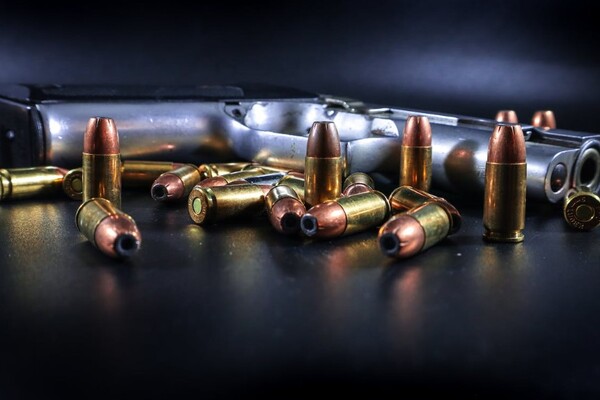
Image via Pexels.
<!–
–>
<!– if(page_width_onload <= 479) { document.write("
“); googletag.cmd.push(function() { googletag.display(‘div-gpt-ad-1345489840937-4’); }); } –> If you experience technical problems, please write to [email protected]
FOLLOW US ON
<!–
–>
<!– _qoptions={ qacct:”p-9bKF-NgTuSFM6″ };  –> <!—-> <!– var addthis_share = { email_template: “new_template” } –>