Few names have accrued as much infamy among Washington, D.C., conservatives as Arabella Advisors. The consulting firm, which, until recently, ran a sprawling network of liberal nonprofit organizations, has acquired a similar status to the likes of megadonors George Soros and Bill Gates in certain right-wing circles.
Among other things, conservatives accused the consultancy of operating as a multibillion-dollar dark money ATM for left-wing causes, allowing foreign money to flow into American politics, and blurring the lines between charitable work and political advocacy. The Republican crusade against Arabella has produced legislation, congressional investigations, litigation, and even an investigation from the district’s attorney general.
Following years of pressure, Arabella announced that it would be shuttering. To replace it, a trio of nonprofit organizations previously managed by Arabella has formed a public benefit corporation called Sunflower Services, which will be used to manage the three nonprofit organizations as well as a handful of additional undisclosed nonprofit organizations.
Reactions as to what this means for the network were mixed.
The Washington Free Beacon reported that “under the rebrand, things will remain functionally the same for Arabella’s dark money network.” Meanwhile, the Chronicle of Philanthropy, which is friendlier toward liberals, wrote that the reshuffling “marks a significant shift for the consultancy world.”
Before the reshuffle, Arabella managed the New Venture, Windward, Hopewell, Sixteen Thirty, North, Telescope, and Impetus funds — the first three of which are 501(c)(3) nonprofit organizations that will control Sunflower Services, while the latter four are 501(c)(4) organizations.
501(c)(3) groups face strict restrictions on their political activity, being barred from campaigning for or against candidates for public office and only being allowed to dedicate a limited amount of their expenditures to lobbying on nonpartisan matters. 501(c)(4) organizations, in exchange for not being able to offer tax deductions for donations, have much greater political license — being able to spend directly on electioneering, partisan lobbying, and political messaging. Donations to both types of nonprofit organizations are fully anonymous, leading to Arabella’s “dark money” label.

There was initially some ambiguity as to whether the Sixteen Thirty Fund, Arabella’s largest and most important 501(c)(4), would be involved with the Sunflower Services when the reshuffling was first announced. This fueled speculation that the reorganization could serve to remedy possible legal matters arising from the network’s unusual organizational structure, especially with a GOP-led IRS breathing down its neck.
However, a spokesperson for the Sixteen Thirty Fund told the Free Press on Dec. 12 that it would not take an ownership interest in Sunflower Services but that it would contract with it for services “to support finance, HR, grants management, and compliance.” The fate of the North Fund, Arabella’s other major 501(c)(4), which most recently reported holding $62.4 million in assets, remains uncertain.
Right-of-center nonprofit experts previously told the Washington Examiner that the organizational change could functionally be a simple rebrand, allowing Arabella to shed the toxic branding and defang GOP legal attacks given its new name and structure.
“Let’s say they’re still working hand-in-glove with the 501(c)(3)s and the 501(c)(4)s, but you’ve got the operation separated into two different legal entities,” Capital Research Center President Scott Walter told the Washington Examiner. “That makes the story much harder, and to the extent that we’ve succeeded in making Arabella well-known, now we have to make Sunflower and Vital Impact well-known.”
Eric Kessler, an alumnus of the Clinton administration, founded Arabella Advisors in 2005 as a philanthropic consulting firm and quickly grew it into what the Atlantic described as the “mothership” of the liberal financial world.
Walter, whose organization was at the forefront of documenting the network’s development, told the Washington Examiner that Arabella went through three major phases before its reshuffling.
“It starts with nothing to begin with,” Walter said. “It’s just Eric Kessler setting this thing up out of his garage in ’05, and ’07 is the first year the nonprofits take in more than a million. What’s now called the New Venture Fund takes in $1.7 million, and $1 million of that was from Hansjörg Wyss, a foreign national billionaire.”
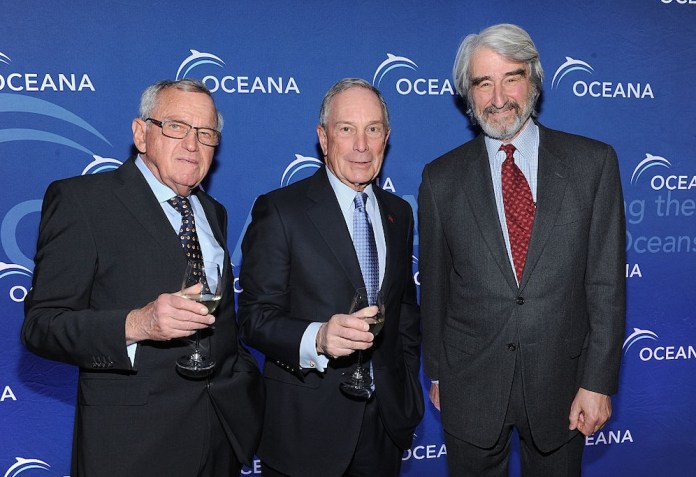
Wyss is a Swiss billionaire who some on the Right have likened to Soros, owing to his similar proclivity for bankrolling left-wing causes. His being a Swiss national has led to allegations that Arabella facilitated the flow of foreign funds into U.S. politics. Walter called Wyss the “original sugar daddy” of the Arabella network.
“Stage two is when they realize that, if they want to keep this fabulous growth going, they need to have somebody who really knows business,” Walter continued. “So that’s when they hire Sampriti Ganguli. She had no experience whatsoever in the nonprofit sector. She was just a sharp CEO-type. They hired her, and she focused on tripling revenue.”
As Walter pointed out, tax filings show that Arabella’s constituent nonprofit organizations saw explosive fundraising growth during Ganguli’s tenure as CEO. New Venture Fund, for instance, saw its revenue spike from $461 million in 2019 to $975 million in 2020. Meanwhile, Sixteen Thirty Fund saw its revenue increase from $181 million in 2019 to $390 million in 2020. Fundraising numbers remained high at Arabella’s nonprofit organizations from 2020 onward.
“But then they realize, if we want to keep getting even richer and bigger, we need serious capital infusions,” Walter said, explaining the genesis of the network’s third phase.
Concentric Equity Partners, a private equity firm based in Chicago, bought out Arabella in 2020. During the period, Walter said, Arabella purchased competing philanthropic management firms. Concentric Equity Partners was partially divested from Arabella at one point and, in November, Arabella announced its dissolution and the foundation of Sunflower Services to replace it.
Before its restructuring, Arabella wielded power through various means. Among them were “pop-up” groups that critics accused the network of using to spoof grassroots support for its favored policies, funding for local media operations, get-out-the-vote efforts that targeted pro-Democratic demographics, direct political contributions to liberal PACs, and funding for state ballot initiatives.
Perhaps the most controversial of Arabella’s tactics was the Sixteen Thirty Fund’s spending on state ballot initiatives.
The controversy arose from what conservatives described as widespread loopholes in state election laws nationwide. Several states allowed 501(c)(4) nonprofit organizations to financially support or oppose ballot initiatives. Conservatives alleged that, since 501(c)(4) nonprofit organizations are allowed to take funds from foreign donors, foreign money could be flooding state elections to help liberal activists achieve their policy objectives.
States were indeed flooded with money from the Sixteen Thirty Fund to sway their ballot initiatives, especially to provide expanded access to abortion following the Supreme Court’s overruling of Roe v. Wade in 2022. The Sixteen Thirty Fund spent roughly $79 million on 33 different state referendums between 2017 and 2023, according to Ballotpedia, a nonprofit election information resource.
During this same period, Wyss, the foreign billionaire, was counted among the fund’s largest known donors, directing hundreds of millions of dollars its way. Conservatives pointed to this as evidence that foreign funds could be finding their way into American elections. Representatives for both Wyss and the Sixteen Thirty Fund maintained that they were obeying the law when approached by the press, but they would stop short of confirming or denying that Wyss’s money was making its way into politics broadly.
In response, states such as Indiana, Kansas, Kentucky, Arkansas, and Wyoming enacted legislation that would expressly prohibit foreign funds from being spent on domestic ballot referendums.
Comparably controversial was the Arabella network’s vast array of groups, which it legally controlled, but which had branding suggesting they were local or grassroots in nature. Critics of the network dubbed these “pop-up” groups. District corporate records show that the Sixteen Thirty Fund operates groups such as these under reams of trade names, including “Families Over Billionaires,” “Arizonans United for Health Care,” “Keep Iowa Healthy,” “Floridians for a Fair Shake,” and “Michigan Families for Economic Prosperity.”
One investigation conducted by the Daily Caller News Foundation in 2023 found that the Log Off Movement and Design It For Us, a pair of nonprofit organizations that were presenting themselves as part of a grassroots youth movement to increase regulation of social media, were, in actuality, arms of the North Fund. Corporate records show that the organizations became independent after the investigation.
“These groups like to present as grassroots-driven, and too many reporters treat them that way, when in fact the Arabella ‘dark money’ empire is orchestrating these political campaigns at the behest of left-wing megadonors,” Walter said at the time.
Some have accused the Arabella network’s 501(c)(3) arms of pushing the limit regarding how political a charity can be.
During the 2022 midterm elections, Arabella network pumped over $62 million into groups focused on registering, engaging, and mobilizing voters, largely from demographics that have historically favored the Democratic Party. Much of this came from the network’s 501(c)(3) arms.
“The Arabella Advisors Network is not in the business of charity, and the tens of millions they have sent to ‘charitable’ get-out-the-vote and voter registration groups is just more proof that they aren’t either,” Parker Thayer, an investigative researcher at Capital Research Center, said at the time. “Voter registration nonprofits are nothing more than a cost-effective way to achieve partisan electioneering results for Democrats while keeping the donors totally anonymous and giving them a tax write-off for their troubles.”
LIBERAL DARK MONEY GIANT REBRANDS TO DODGE SCRUTINY, OBSERVERS SAY
For instance, the New Venture Fund reported an $8.5 million grant to the Voter Registration Project, an organization that was “commissioned” by top Democratic operative John Podesta to encourage primarily liberal demographics, such as low-income individuals, African Americans, and Latinos, to cast ballots.
According to some, that money is not going anywhere.
“They were the biggest ‘dark money’ operation anywhere on the political spectrum,” Walter said of Arabella. “Finally, after seven years of exposing them, we’ve embarrassed them enough that they felt the need to rebrand. And given that it doesn’t look like they’re going to change their operations much, we expect they’ll continue to be a heavyweight player in ‘dark money’ and politicized nonprofits.”