(function(d, s, id) { var js, fjs = d.getElementsByTagName(s)[0]; if (d.getElementById(id)) return; js = d.createElement(s); js.id = id; js.src = “https://connect.facebook.net/en_US/sdk.js#xfbml=1&version=v3.0”; fjs.parentNode.insertBefore(js, fjs); }(document, ‘script’, ‘facebook-jssdk’)); –>
–>
November 16, 2023
Many of my friends have immigrated to Israel throughout my lifetime in search of their Jewish roots. In Hebrew, the pilgrimage is known as “Aliyah.” Although it originally meant traveling to Jerusalem to observe Jewish holidays, in recent years, it has come to signify Jews returning to the Land of Israel.
‘); googletag.cmd.push(function () { googletag.display(‘div-gpt-ad-1609268089992-0’); }); document.write(”); googletag.cmd.push(function() { googletag.pubads().addEventListener(‘slotRenderEnded’, function(event) { if (event.slot.getSlotElementId() == “div-hre-Americanthinker—New-3028”) { googletag.display(“div-hre-Americanthinker—New-3028”); } }); }); }
Many North American Jews move to Israel each year. I’ve observed my Aliyah-seeking friends finding fulfilling careers, welcoming neighborhoods, and a balanced lifestyle.
I have traveled to Israel five times, sometimes as a government guest. I’ve cried at the Western Wall, walked the same streets as King David, and dined with dignitaries. I feel honored and humbled, having merited to make not one trip, but five.
Recently, I was exposed to the life of Yekusiel Yehudah Halberstam, the Klausenberger Rebbe. He embodied the essence of the Aliyah journey. The Klausenberger Rebbe moved to Israel in 1955, and his passage was anything but easy. It was extraordinary.
‘); googletag.cmd.push(function () { googletag.display(‘div-gpt-ad-1609270365559-0’); }); document.write(”); googletag.cmd.push(function() { googletag.pubads().addEventListener(‘slotRenderEnded’, function(event) { if (event.slot.getSlotElementId() == “div-hre-Americanthinker—New-3035”) { googletag.display(“div-hre-Americanthinker—New-3035”); } }); }); }
In the biography entitled The Klausenberger Rebbe, the Rebbe is described as a spiritual giant who maintained a fierce devotion to God and the Jewish people despite losing his wife and eleven children at Auschwitz.
The Rebbe, a descendant of a distinguished Hasidic dynasty, was born in Rudnik, Poland in 1905. He showed remarkable charisma, kindness, and Torah knowledge from a young age. He earned the moniker “genius of Rudnik” at 13, after his father died.
At 17, The Rebbe wedded Chana Teitelbaum, his second cousin. He was named rabbi of a devout Hasidic congregation in Klausenburg, Romania, at just 22.
He was well known for his profound knowledge and sincere affection for Jews from all backgrounds. He slept only three hours every night on a hard synagogue bench and ate only one meal daily because he was so focused on prayer. While still only in his mid-twenties, his special love for the children in his community led him to found a school for 100 students.
The Rebbe, his wife, and their eleven children were arrested and separated in 1941. The Rebbe was freed thanks to the efforts of his supporters, but his family was deported to Auschwitz. Between 1941 and 1944, the Rebbe devoted himself to prayer, Torah study, and aiding refugees rather than abandoning his followers in Hungary.
It is hard to fathom the gruesome atrocities done to Jewish victims by German Nazis. I was exposed to a tiny glimpse during a reporting trip to Belarus in 2011, including visiting the Khatyn Holocaust Memorial. The memorial, the size of 10 football fields, was haunting. Three million civilians, including 800,000 Jews, were killed by the Nazis in Belarus. The memorial includes soil from each of the 186 villages that were destroyed.
‘); googletag.cmd.push(function () { googletag.display(‘div-gpt-ad-1609268078422-0’); }); document.write(”); googletag.cmd.push(function() { googletag.pubads().addEventListener(‘slotRenderEnded’, function(event) { if (event.slot.getSlotElementId() == “div-hre-Americanthinker—New-3027”) { googletag.display(“div-hre-Americanthinker—New-3027”); } }); }); } if (publir_show_ads) { document.write(“
Looking back to that experience, I imagine that the Rebbe saw horrifying piles of naked, dead Jews covering the streets of the Warsaw ghetto while being forced to assist in its demolition. For the first time, he understood the terrible extent of the destruction of European Jewry and Jewish life.
The Nazis chose the Rebbe for particular torture and public mockery because of his righteousness and prominent religious status. The Rebbe was a pillar of strength for his fellow prisoners despite being severely beaten and still not knowing what had become of his wife and children.
As Jews nearby passed out and died of exhaustion, he was forced to embark on a death march to Dachau. He was shot and would have bled to death if he hadn’t made an improvised bandage out of leaves and branches. The Rebbe was one of the rare survivors.
He made a vow at that moment, saying, “If G-d granted me life and I was healed — for I looked like a walking skeleton — and if I left this place and the evil Nazis, I would build a hospital.”
The Rebbe was informed after being freed of the murders of his wife and ten of his children. Before being reunited with his father, his oldest son tragically passed away from illness.
Despite enduring unspeakable tragedy, the Rebbe never complained. He dedicated his life to motivating and inspiring others. On the first Shabbat after liberation, immediately following the terrible news about his family, he delivered a passionate address to hundreds of fellow survivors in a displaced persons camp. He urged them to commit to religious observance and faith in G-d.
The Rebbe transformed into a torch that shed light on the sea of darkness as he traveled from city to city and from camp to camp. He was a beacon of hope for the broken survivors.
While still in the refugee camps of the defeated Nazi Germany, he established shelters, Torah, and educational institutions for the survivors. He also provided for all their needs, both spiritual and physical. He also showered them with intense affection and fatherly love.
In the autumn of 1946, the Rebbe decided to establish his court in the Williamsburg section of Brooklyn and continue to work for Holocaust survivors from this side of the Atlantic. He wedded Chaya Nechama Ungar, a fellow Holocaust survivor, on Aug. 22, 1947, in Sommerville, N.J., and had seven more children. He spent his entire life raising funds for schools, orphanages, and nursing homes to rebuild Jewish communities in Israel and the United States.
Laniado Hospital in Netanya, Israel, founded by the Rebbe in 1975, has become the standard for excellent medical care in the Jewish community and beyond. Sanz-Klausenberg Chassidim manages the hospital today under the direction of the current Rebbe, Rabbi Zvi Elimelech Halberstam.
His inspiration didn’t stop with the hospital. Kiryat Sanz is a Haredi neighborhood located at the northwestern end of Netanya, and was founded in 1956 by the Klausenburger Rebbe. In 1960, the Rebbe made Aliyah and established his court here. The community continues his legacy by providing housing assistance for young couples and has grown to one of the largest Hasidic communities in Israel.
Equitable housing was a significant concern for the Rebbe. He was distraught with what he witnessed: dedicated Torah-observant and hardworking Jews living in extreme poverty. He once said, “The greatest crisis facing the citizens of Eretz Yisrael is the housing shortage. A Jew doesn’t have to worry where to rest his head at night.” The Rebbe did not want the Kollel families to live in cramped apartments or an unfavorable part of Kiryat Sanz. Instead, he wanted them to live in comfort.
He initially concentrated on raising money in South America to support his construction projects. R’ Yechezkel Reich, the father of R’ Shmuel Refoel, accompanied the Rebbe on his travels. He made his first trip to Mexico City a year earlier to establish Torah institutions and provide chizuk. When he returned to buy the land, the people of Kiryat Sanz welcomed him with open arms. The Rebbe’s vision was soon realized when, through tireless fundraising efforts, he could purchase all of the land needed for Kiryat Sanz’s buildings, passing along the savings to future homeowners.
The Rebbe encompassed the Hasidic ideal. Now Jews around the world seek to keep his legacy alive. Those coming on Aliyah are penning the next generation of Jewish history. Now it is your opportunity to join the Sanzer Rebbe’s journey and continue his legacy. Let’s work to preserve his vision.
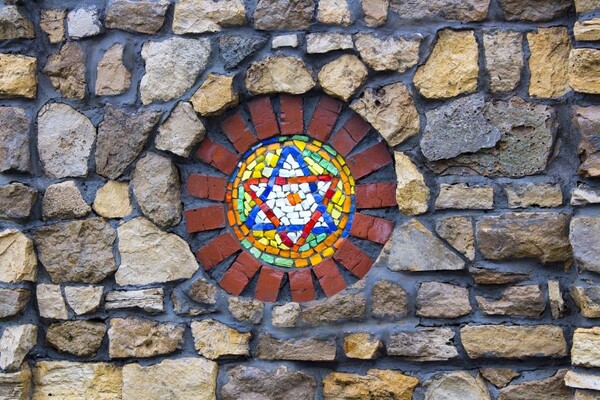
Image: hendricjabs via Pixabay, Pixabay License.
<!–
–>
<!– if(page_width_onload <= 479) { document.write("
“); googletag.cmd.push(function() { googletag.display(‘div-gpt-ad-1345489840937-4’); }); } –> If you experience technical problems, please write to [email protected]
FOLLOW US ON
<!–
–>
<!– _qoptions={ qacct:”p-9bKF-NgTuSFM6″ };  –> <!—-> <!– var addthis_share = { email_template: “new_template” } –>