(function(d, s, id) { var js, fjs = d.getElementsByTagName(s)[0]; if (d.getElementById(id)) return; js = d.createElement(s); js.id = id; js.src = “https://connect.facebook.net/en_US/sdk.js#xfbml=1&version=v3.0”; fjs.parentNode.insertBefore(js, fjs); }(document, ‘script’, ‘facebook-jssdk’)); –>
–>
October 7, 2023
In the world of public relations and marketing there is a tactic called “third-party validation.” At its most innocent, third-party validation is akin to word-of-mouth advertising, except organized.
‘); googletag.cmd.push(function () { googletag.display(‘div-gpt-ad-1609268089992-0’); }); document.write(”); googletag.cmd.push(function() { googletag.pubads().addEventListener(‘slotRenderEnded’, function(event) { if (event.slot.getSlotElementId() == “div-hre-Americanthinker—New-3028”) { googletag.display(“div-hre-Americanthinker—New-3028”); } }); }); }
If you know that Bob really knows his steak and Bob says you have to try this new steakhouse, you go because you trust Bob’s judgement — it’s based on that idea.
A group with a specific intended outcome — say, approval of a new shopping center — will build off this concept and ask around town to find out whose word carries weight and ask them to publicly support the project. Therefore, in the mind of the public, the efficacy of the project has been confirmed by someone or something (like the local Chamber of Commerce) they trust — it has received validation from an unbiased third party
And then there are the not-so-innocent versions of this tactic, such as when the developer offers the chamber a new HQ building in exchange for its support or tells a local charity it will get a big donation if the development is approved so they really need to show up in force at that council meeting.
‘); googletag.cmd.push(function () { googletag.display(‘div-gpt-ad-1609270365559-0’); }); document.write(”); googletag.cmd.push(function() { googletag.pubads().addEventListener(‘slotRenderEnded’, function(event) { if (event.slot.getSlotElementId() == “div-hre-Americanthinker—New-3035”) { googletag.display(“div-hre-Americanthinker—New-3035”); } }); }); }
An even ickier version of this is when the proponents recruit a major respectable non-profit to support their project even when the project is completely unrelated (or even antithetical) to what they do on a regular basis.
An even more icky version is when the proponents literally create their own benign-sounding non-profit and then use that front to push a project, a la “The National Association for Wicker Baskets Full of Yawning Golden Retriever Puppies” publicly declares that burying that toxic waste down the street from the elementary school is really not a bad idea at all.
Much worse is when proponents regularly and intentionally buy support from well-established, very respected groups; say, Big Pharma at least partially funding almost every medical association in the nation. Pfizer’s not doing that for their — let alone your — health.
The ickiest form is when massive non-profit, public-benefit foundations stop doing what they are meant to do and spend all their time, money, and energy pushing a political agenda that will benefit itself and its funders, the public be damned.
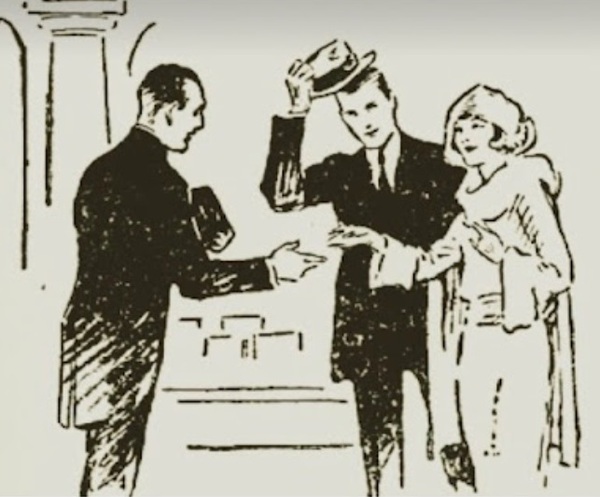 Third-party validators remove — or at least distance — the stink of a terrible or dangerous or illegal proposal or project or plan from the proponent. And they are very convenient things for the media to use when they try to be “fair” but want to make sure the reader clearly understands on which side of an issue they — like the great and good of the world — should be. (Reporters can control content by asking certain groups that they know will respond in a certain way.)
Look at all of these other people who say it’s right — so we must be right.
‘); googletag.cmd.push(function () { googletag.display(‘div-gpt-ad-1609268078422-0’); }); document.write(”); googletag.cmd.push(function() { googletag.pubads().addEventListener(‘slotRenderEnded’, function(event) { if (event.slot.getSlotElementId() == “div-hre-Americanthinker—New-3027”) { googletag.display(“div-hre-Americanthinker—New-3027”); } }); }); } if (publir_show_ads) { document.write(“
Take the pandemic. Practically every acronym the public relies on — CDC, NIH, etc. — trotted out the same line, the same approach, and the same vilification of anyone or thing that disagreed with them.
Take the justice system. Practically every acronym the public relies on — FBI, DoJ, etc. — trots out the same line, the same approach, and the same vilification of anyone or thing that disagrees with them.
The examples are too numerous to mention, though it should be noted that — unlike private “take the money and run” groups — government agencies are usually in on the game — or even started it — very early on in the process.
But one of the most devastating examples currently occurring involves the censorship industry. Groups were created and funded — quite often by government agencies — to silence opponents while giving the government, again, some distance from the stink (although Missouri V. Biden may be cutting in that scheme.)
One of these groups is the Center for Countering Digital Hate (CCDH,) a “non-profit” created out of whole cloth to police the internet for bad thought. Funded by foundations, the CCDH sprung from the loins of the British Labour Party. Like the (formerly) U.S. State Department-funded Global Disinformation Network, the foundation-funded CCDH hunts hate and misinformation (read: honest opinions and anything that challenges the elite narrative) and then writes reports about and then tells advertisers they shouldn’t do business with people or companies it doesn’t like or it finds threatening to its vision of a not at all free future.
For example, CCDH targeted Elon Musk for spreading hate on X (Twitter) advertisers fled, and now Musk is suing (good for him.)
But by sounding impartial and important and authoritative and making sure their word is spread far and wide through a media that is bought and paid for as well, CCDH can come across as a trusted third-party validator.
No matter that this process is destroying (rightfully so) the public’s faith in the institutions it once relied on and the experts they once trusted — if it scores in the here and now, in this news cycle, if it keep them in power than that’s all that matters.
Government funds/leans on foundations and universities (most are slaves to federal grant money) and private companies, foundations and private companies fund CCDH (or universities house groups like the Stanford Virality Project,) and they they openly work to abjectly destroy anything the government considers a problem.
And the circle is complete.
And the public is kept on the wrong side of the fence.
Thomas Buckley is the former mayor of Lake Elsinore, Cal. and a former newspaper reporter. He is currently the operator of a small communications and planning consultancy and can be reached directly at [email protected]. You can read more of his work at his Substack page.
Image: Public Domain
<!–
–>
<!– if(page_width_onload <= 479) { document.write("
“); googletag.cmd.push(function() { googletag.display(‘div-gpt-ad-1345489840937-4’); }); } –> If you experience technical problems, please write to [email protected]
FOLLOW US ON
<!–
–>
<!– _qoptions={ qacct:”p-9bKF-NgTuSFM6″ };  –> <!—-> <!– var addthis_share = { email_template: “new_template” } –>