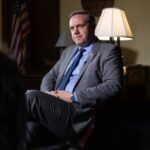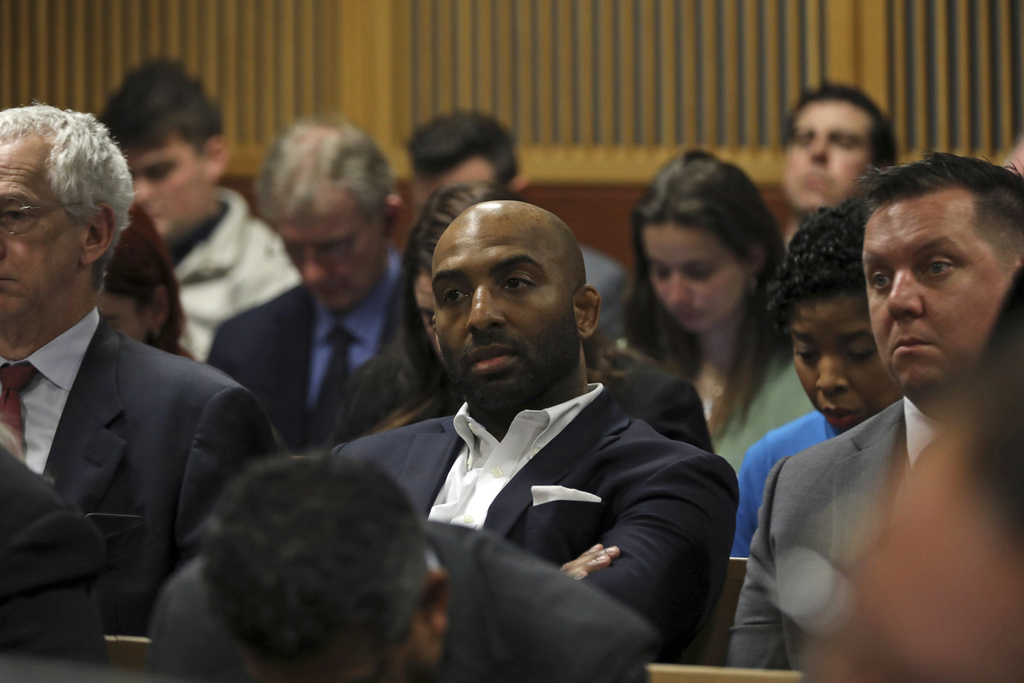
President Donald Trump and several former codefendants from the collapsed Fulton County, Georgia, 2020 election racketeering case are preparing to pursue millions of dollars in legal reimbursements, arguing that the prosecution never should have been brought and that its failure demands accountability in the upcoming year.
The effort is expected to unfold under a new Georgia statute passed by Republican Gov. Brian Kemp, which allows defendants to recover “all reasonable attorney’s fees and costs” when a prosecutor is disqualified for improper conduct, and the case is later dismissed — a provision enacted with the Trump prosecution squarely in mind.
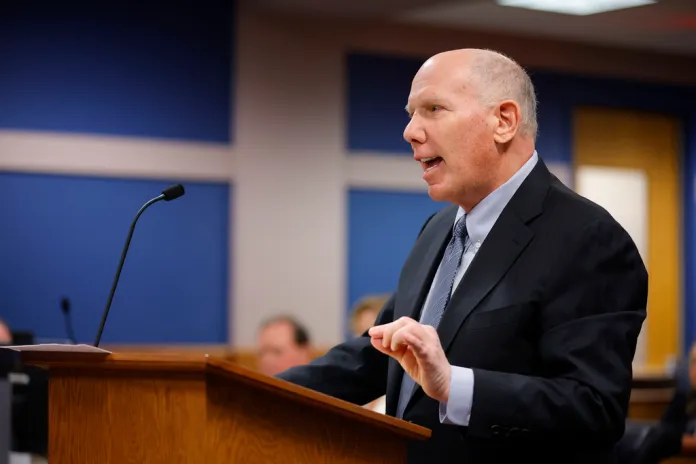
Trump’s lead attorney, Steve Sadow, has already made clear that the former president intends to pursue reimbursement aggressively.
“Now that President Trump has won his Georgia case, we will be moving for attorney’s fees and costs under Georgia code,” Sadow told the Washington Examiner last month, adding that the defense will seek reimbursement dating back to the beginning of the investigation. “We will pursue every dollar allowed under the law.”
Trump, the most prominent and most heavily resourced defendant in the case, spent millions of dollars defending against the prosecution. Campaign finance and accounting records show Trump paid more than $1.5 million to Sadow alone, with total Georgia-related legal spending exceeding $5 million when other attorneys and costs are included.
Former Trump codefendant and founding director of the Claremont Institute’s Center for Constitutional Jurisprudence, John Eastman, told the Washington Examiner that most defendants whose cases were dismissed after District Attorney Fani Willis was disqualified are preparing motions seeking compensation for years of legal work.
“Being made whole, or something close to whole, is what that statute was designed to do,” Eastman said, arguing the case inflicted “huge” financial, reputational, and personal damage on defendants swept into what he described as a partisan prosecution aimed at derailing Trump’s presidential campaign.
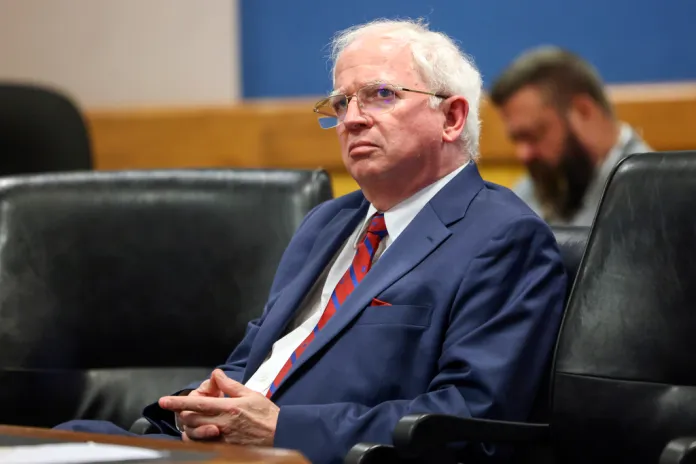
Eastman also clarified that not every defendant is likely eligible. Several codefendants accepted plea deals earlier in the case, resolving their charges before Willis was removed and before the prosecution collapsed.
“The case was not dismissed for them after the disqualification,” Eastman said, explaining that because their pleas were entered before Willis was removed, those defendants would likely not qualify for reimbursement under the statute.
The original indictment charged 19 defendants, including Trump, under Georgia’s racketeering law. In addition to Trump, those named included Rudy Giuliani, Mark Meadows, John Eastman, Jeffrey Clark, Kenneth Chesebro, Jenna Ellis, Michael Roman, David Shafer, Shawn Still, Stephen Lee, Harrison Floyd, Trevian Kutti, Sidney Powell, Cathleen Latham, Scott Hall, Misty Hampton, Ray Smith, and Robert Cheeley.
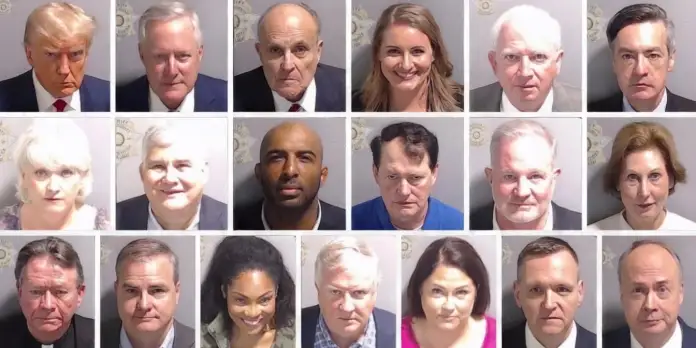
The prosecution unraveled after revelations that Willis had hired special prosecutor Nathan Wade — with whom she had a romantic relationship — and paid him hundreds of thousands of dollars in public funds. A judge later found the arrangement created an appearance of impropriety and disqualified Willis from the case, which was eventually dismissed in its entirety.
Former codefendant Harrison Floyd said he believes nearly all remaining defendants are now moving in lockstep to seek reimbursement and framed the statute as an important check on prosecutorial overreach.
“As I’m aware, everyone is definitely pursuing it,” Floyd said. “This would be a great start to prevent lawfare in the future.”
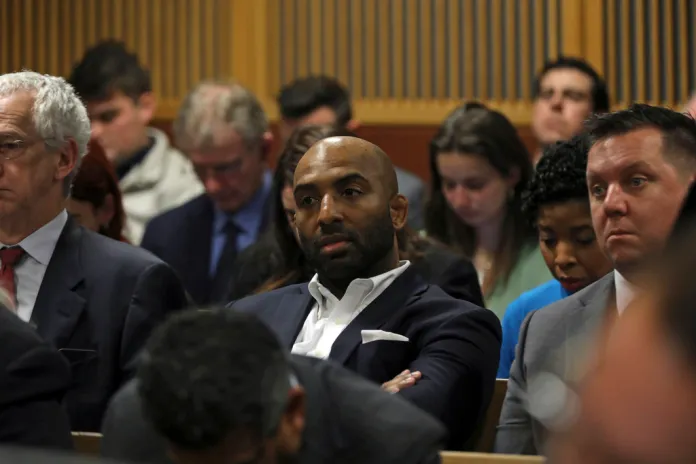
Floyd described his own experience as uniquely harsh, saying he believes his treatment was influenced by the fact that he was the only black male defendant in the case. He said he learned of his indictment through social media while attending a Christian retreat and was never contacted directly by prosecutors beforehand.
According to Floyd, members of Willis’s office contacted and intimidated his family members before he surrendered, and authorities initially refused to allow him to turn himself in — a sequence he believes was designed to portray him as a flight risk.
“I was the only one they tried to deny bond,” Floyd said. He ultimately spent nearly a week in the Fulton County Jail and later faced efforts by prosecutors to revoke his bond and reincarcerate him.
“If I hadn’t shown up the same day the president did, I’d probably still be sitting there,” Floyd said, adding that prosecutors appeared determined to keep him detained and quiet because evidence tied to his case undercut the broader narrative advanced against Trump.
Floyd said the financial toll of the case is only one piece of the damage.
“The legal fees are the least of it,” he said, describing codefendants who lost homes, marriages, and relationships with their children during the yearslong prosecution. “There is damage that was done that just can’t be repaired.”
Eastman estimated Fulton County’s total exposure could reach well into eight figures.
“My guess is it’ll be between $10 and $20 million,” he said, noting that some defense attorneys initially demanded seven-figure retainers simply to take on a case of this magnitude.
The reimbursement push comes as Willis faced renewed scrutiny at the state Capitol one week before Christmas. During a combative hearing before the Republican-led Georgia Senate on Dec. 17, Willis was unapologetic about the failed case, repeatedly referring to Trump and his former codefendants as “criminals” and “crooks.”
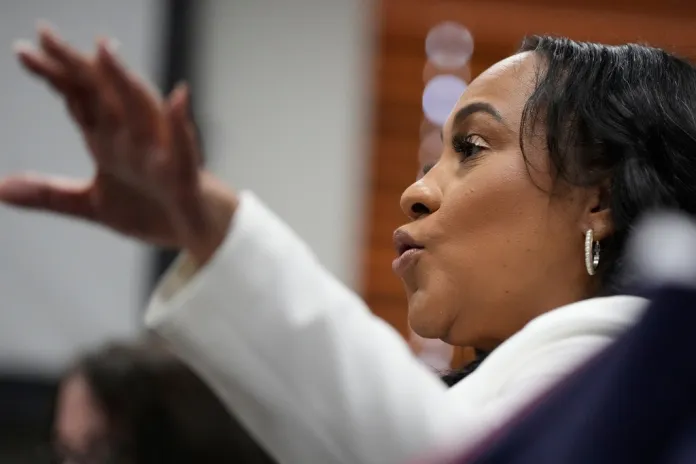
“You all want to intimidate people from doing the right thing,” Willis told lawmakers. “But I took an oath to do the right thing.”
Pressed on the cost of the investigation and her decision to hire Wade, Willis dismissed questions as “ignorant” and “dumb-ass,” insisting, “Whatever it cost, they tried to steal the rights of thousands of Georgians. It couldn’t have been enough.”
When asked by senators how she could allow Wade to bill taxpayers for 160 hours per week when there are only 168 hours in a week, Willis answered the question by saying he was a “leader” who taught her team that “showing up at 8:30 really means 7:45,” defending how her prosecutors were able to rack up an abnormally large amount of billable hours dedicated to the racketeering case.
Meanwhile, her attorney at one point echoed Trump’s own rhetoric, branding the Senate inquiry a “witch hunt.”
Trump pleaded not guilty to all charges before the case was dismissed and has denied any wrongdoing.
As the reimbursement fight moves forward, conservative legal advocates are calling for a far broader reckoning. In a recent Fox News op-ed, Article III Project founder Mike Davis argued that financial reimbursement should be only the beginning and urged federal prosecutors to examine whether Willis and Wade engaged in criminal misconduct.
Davis asserted that Willis and Wade should face “maximum legal accountability,” citing Wade’s visit to the Biden White House — time he billed to Fulton County taxpayers — and arguing that the prosecution amounted to a coordinated “conspiracy against rights” under federal law.
DEFIANT FANI WILLIS GRILLED BY GEORGIA SENATE COMMITTEE OVER DISMISSED 2020 ELECTION CASE
“The U.S. Justice Department has subpoenaed records from Willis,” Davis wrote, calling for a grand jury investigation and possible indictments over the handling of public funds and the conduct of the prosecution.
Whether Fulton County ultimately foots the bill, and how large that bill may be, will be decided in court in the months ahead.